 ParisaZ / CC BY-SA 4.0 via Wikimedia Commons
The Story
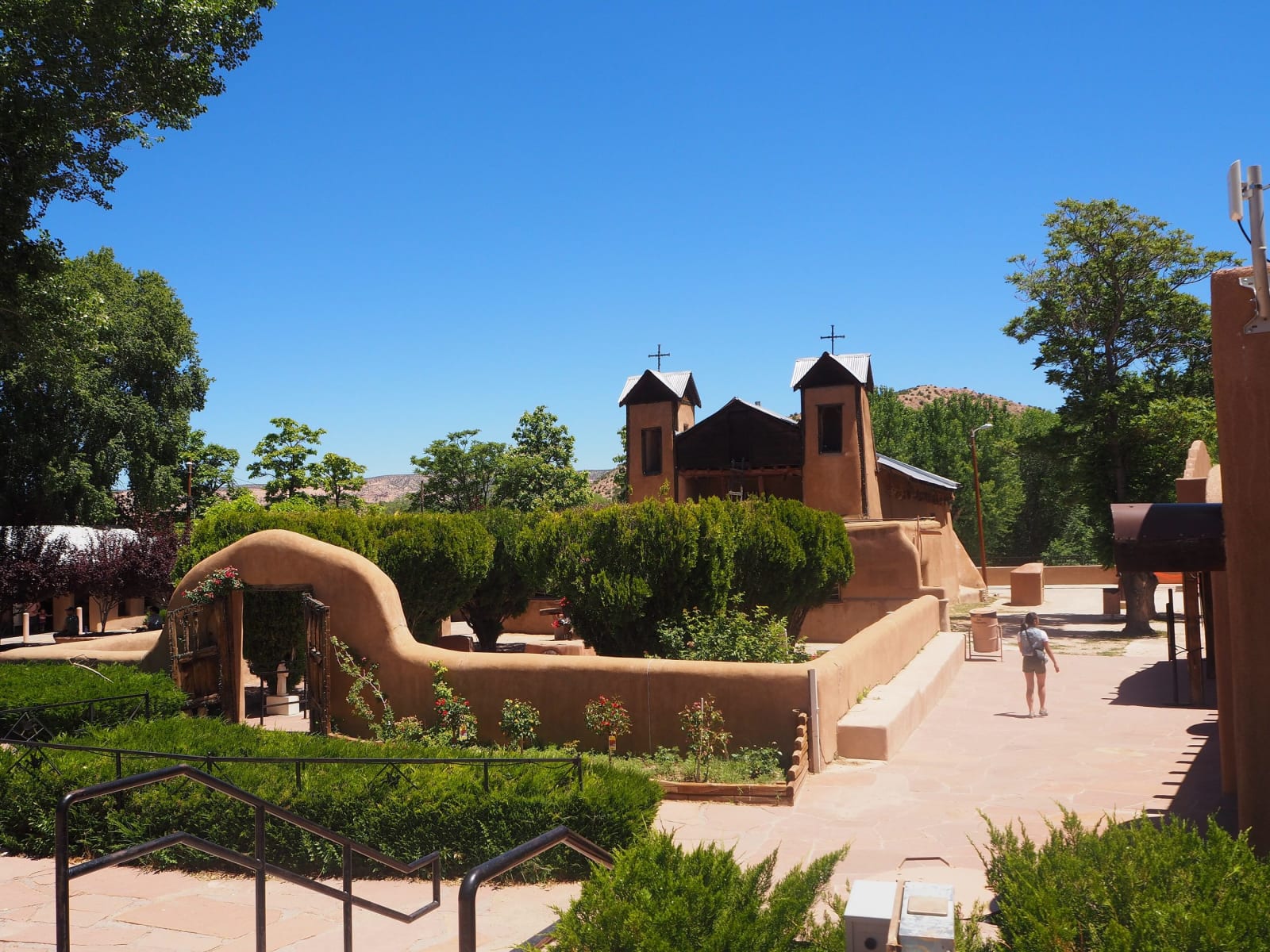
El Santuario de Chimayó sits in a small valley of orchards and adobe houses on the High Road between Santa Fe and Taos, a twin-towered adobe church behind a walled yard. The village takes its name from a Tewa word, Tsimayo, usually given as good flaking stone, for the hill above it.
In the early 1800s nineteen families lived here in El Potrero de Chimayó. Bernardo Abeyta, a member of the local Penitente brotherhood, is said to have seen a light coming from the ground one Good Friday about 1810 and dug up a crucifix there. In November 1813 he asked permission to build a chapel on the spot to Our Lord of Esquipulas, the miraculous crucified Christ of a shrine in Guatemala, and the present church replaced his first chapel by 1816. The Abeyta family kept it until 1929, when it passed to the Archdiocese of Santa Fe.
Beside the altar a low doorway opens into a small room with a round hole in its floor, el pocito, filled with earth that pilgrims take away in hope of a cure for themselves or for someone at home; the room next to it is hung with crutches, photographs and notes. Down the lane a second chapel honors the Santo Niño de Atocha, and New Mexican soldiers who survived the Bataan Death March began walking here in thanksgiving after 1945. Tens of thousands now walk to Chimayó during Holy Week, from Santa Fe, Albuquerque and farther, the roads busiest on Good Friday.
It is a working shrine, and a National Historic Landmark since 1970.
Visitor Info
On the Map
Nearby
The closest stops worth working into your route