 James St. John / CC BY 2.0
The Story
Fremont Indian State Park exists because of a highway. In the early 1980s, construction crews building Interstate 70 through Clear Creek Canyon in central Utah accidentally uncovered the largest Fremont culture village ever found — over 500 structures, including pit houses, granaries, and work areas, along with thousands of artifacts and some of the most significant rock art panels in the state. The village had been buried and forgotten for roughly 700 years, and the interstate was about to pave over it. What followed was a scramble to excavate, document, and preserve as much as possible before the bulldozers returned, and the park that exists today is the result of that rescue — a museum and trail system built to protect what the highway nearly destroyed. The park sits within the sprawling Fishlake National Forest — whose namesake lake and the ancient Pando aspen grove lie in the high country to the northeast — near the junction of I-70 and US-89, where the mineral-streaked slopes of Big Rock Candy Mountain rise a few miles down the Sevier River.
The Fremont people are one of the least understood ancient cultures in the American West. They inhabited Utah from roughly AD 200 to 1300, overlapping in time with the better-known Ancestral Puebloans to the south but maintaining a distinct cultural identity. They were a flexible people — farming corn, beans, and squash in the more productive valleys while hunting and gathering in the uplands — and their material culture reflects that adaptability. Their pottery is different from Ancestral Puebloan ware. Their rock art has a distinctive style — large trapezoidal figures with elaborate headdresses and broad shoulders. And their settlement patterns varied widely, from small family camps to the large village discovered here in Clear Creek Canyon.
The Five Finger Ridge Village, as the site is known, was home to a substantial community. The 500-plus structures included residential pit houses — semi-subterranean dwellings with timber and earth roofs — along with storage granaries, work areas where tools were manufactured, and communal spaces whose functions archaeologists are still debating. The scale of the village suggests a population of several hundred people, making it one of the largest known Fremont settlements and a strong counter to the older assumption that the Fremont were primarily small-band nomads.
The museum, built into the hillside near the canyon floor, houses artifacts recovered from the excavation — pottery, projectile points, bone tools, basketry fragments, clay figurines, and ornamental objects that paint a picture of a culture far more complex and sophisticated than early archaeologists assumed. The clay figurines are particularly striking — small, carefully shaped human forms with distinctive hairstyles and facial features that suggest individual identity rather than generic representation. Some archaeologists believe they may represent specific people rather than abstract concepts, which would make them among the most personal artifacts in the Fremont record.
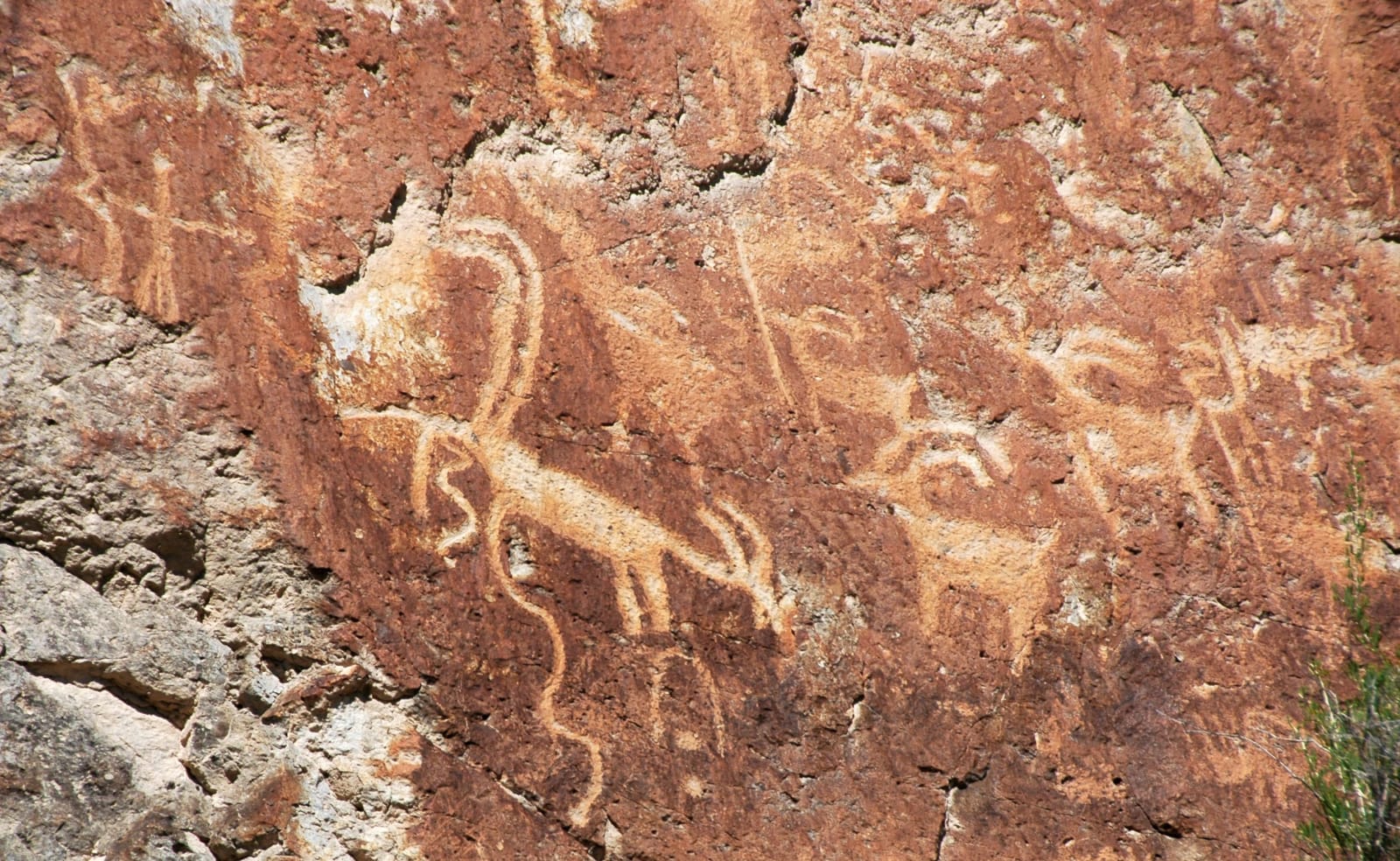
The rock art is the park's other major draw, and it is spectacular. Several trails lead to petroglyph and pictograph panels scattered across the canyon walls, and the imagery is classic Fremont — large, imposing human figures with trapezoidal bodies, elaborate headdresses, and arms that often hold shields or other objects. The figures are pecked into the dark desert varnish, revealing the lighter sandstone beneath, and their size and detail suggest significant investment of time and skill. The Parade of Rock Art interpretive trail passes multiple panels and provides context for the imagery, though the meaning of most Fremont rock art remains debated.
The park sits directly along Interstate 70, one of the most scenic interstate stretches in America. The highway through Clear Creek Canyon passes through layers of volcanic rock and sedimentary formations in a corridor of vivid color — reds, oranges, purples, and grays — that makes even interstate driving feel dramatic. The park entrance is just off the highway, and the detour takes only as long as you want it to — an hour for the museum and a short trail, half a day if you explore the more remote rock art sites.
The irony of Fremont Indian State Park is impossible to ignore. The largest Fremont village ever found was discovered because we were building a road through it, and the park exists because enough people recognized that the road should not erase the village entirely. The interstate still runs through the canyon, and the sound of trucks is audible from some of the trails. The juxtaposition is uncomfortable and instructive — ancient and modern infrastructure occupying the same narrow canyon, separated by 700 years and a chain-link fence. The Fremont chose this canyon for the same reasons the highway engineers did: it was the easiest route through the mountains. Some geographical logic transcends millennia.
Visitor Info
On the Map
Nearby
The closest stops worth working into your route
Historical markers nearby
Roadside plaques and monuments within a short detour