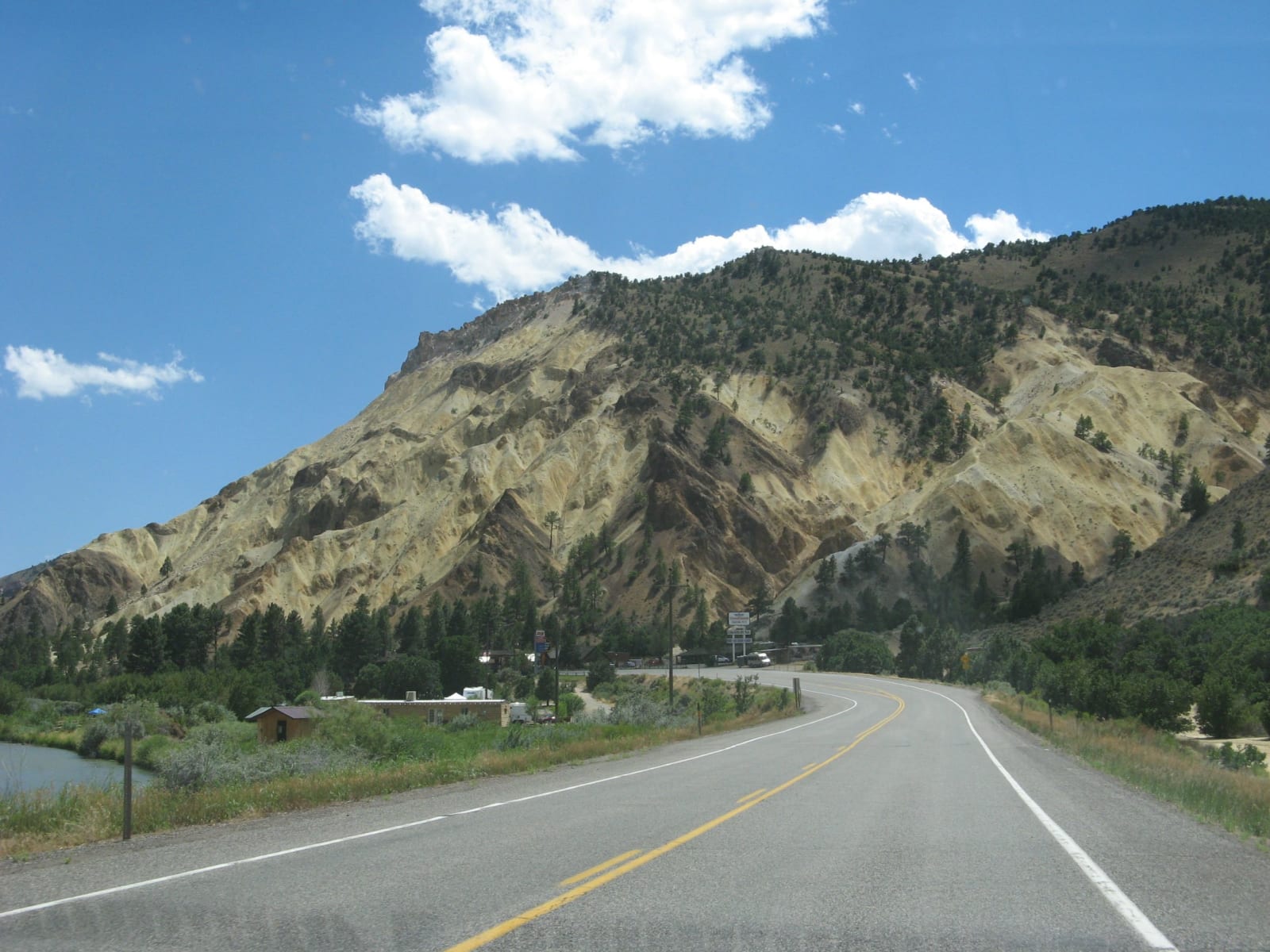
 hakkun / CC BY-SA 3.0
The Story
Big Rock Candy Mountain is the real place that inspired one of the most famous hobo folk songs in American history, and seeing it for the first time you understand why a hungry, wandering man looked at this mountainside and imagined paradise. The slopes above the Sevier River in central Utah are streaked with vivid bands of yellow, orange, red, and cream — volcanic rock stained by mineral deposits into colors so bright and varied that the mountain looks like it was decorated by someone with access to the entire crayon box and no concept of restraint.
The colors come from hydrothermally altered volcanic rock. The mountain is composed of ancient volcanic ash and lava flows that were deposited roughly 20 to 30 million years ago during a period of intense volcanic activity in central Utah. After deposition, hot, mineral-rich groundwater percolated through the rock, chemically altering the minerals and depositing iron oxides, sulfur compounds, and other chemicals that stained the rock in the vivid palette visible today. The yellows come from sulfur and limonite. The reds and oranges come from iron oxide in various oxidation states. The whites and creams come from kaolin and other clay minerals formed by the alteration of the original volcanic rock. The result is a mountainside that looks like a geological paint sample card.
Harry McClintock recorded "Big Rock Candy Mountain" in 1928, and the song became one of the defining anthems of Depression-era American folk music. The lyrics describe a hobo's fantasy of a land where the sun always shines, the birds and bees are cigarette trees, and the lemonade springs flow freely — a paradise for the wandering poor, imagined in the vivid, desperate language of people who had nothing. Whether McClintock actually saw this specific mountain or simply borrowed the name from local lore is debated, but the connection has been embraced by the community, and the mountain has been trading on its musical association ever since.
A small resort and rest stop at the base of the mountain — also called Big Rock Candy Mountain — offers lodging, food, and a hot springs soaking pool fed by the same geothermal activity that colored the mountain. The facility is modest and family-friendly, positioned along Highway 89 in the Sevier River valley between Richfield and Junction. The hot springs pool is small but pleasant, and soaking in warm mineral water while looking up at the technicolor mountainside is an experience that combines geological education with physical relaxation in a way that few roadside stops can match.
The mountain sits along the Piute Scenic Byway, a stretch of Highway 89 that follows the Sevier River through a narrow valley flanked by volcanic formations. The drive is beautiful in an understated way — the valley lacks the drama of southern Utah's canyon country, but the combination of the river, the colorful volcanic hills, and the pastoral ranchland creates a landscape that feels peaceful and distinctly different from the red rock terrain to the south.
The mountain is best viewed from the highway or from the resort property at the base. There are no maintained hiking trails on the mountain itself, and the volcanic rock is loose, crumbly, and potentially unstable — not the kind of terrain that rewards scrambling. The colors are most vivid in the afternoon, when direct sunlight hits the western-facing slopes and saturates the mineral stains. Overcast days flatten the palette, and the difference between a sunny and cloudy visit is dramatic.
Big Rock Candy Mountain is a 30-second stop or a half-day stop, depending on your inclination. You can pull over, photograph the mountain from the highway, and continue on your way in a few minutes. Or you can check into the resort, soak in the hot springs, eat lunch by the river, and spend the afternoon exploring the Sevier River valley, which offers fishing, quiet back roads, and the kind of unhurried rural Utah atmosphere that the tourism corridors to the south have largely lost.
The mountain is a reminder that Utah's geological palette extends well beyond the sandstone reds and canyon creams that dominate the state's visual identity. The volcanic history of central Utah produced landscapes that are chemically and visually distinct from the Colorado Plateau, and Big Rock Candy Mountain is the most colorful expression of that volcanic legacy. It is also a reminder that folk songs come from real places, that real places carry the dreams of the people who passed through them, and that a mountain stained yellow and orange by ancient hot springs can, if you squint just right and hum the right tune, look a little bit like paradise.
Visitor Info
On the Map
Nearby
The closest stops worth working into your route
Historical markers nearby
Roadside plaques and monuments within a short detour