 Acroterion / CC BY-SA 4.0 via Wikimedia Commons
The Story
Red Lodge was a coal town, founded on the mines at the foot of the Beartooths in the 1880s and home to more than four thousand people by the 1920s. Then the mines closed, undercut by natural gas and cheaper coal elsewhere, and the town needed another way to live. A local doctor, known to everyone as Doc Siegfriedt, led the campaign for a road straight over the mountains to Yellowstone's northeast entrance. When Herbert Hoover signed the national park approaches act in January 1931, the Red Lodge to Cooke City road was the first to be funded under it. Crews cut it through the rock from 1932, and on June 14, 1936, Siegfriedt led a honking caravan of cars up from town to open it.
From Red Lodge the road follows Rock Creek, then climbs a wall of switchbacks onto the plateau and crosses into Wyoming, topping out at Beartooth Pass, 10,947 feet up. The rock underfoot, gneiss, granite and schist, formed about 3.3 billion years ago and is among the oldest exposed anywhere; glaciers scoured it into a tundra of lakes that holds snow into summer. Off to the side stands the spire the Apsáalooke named for a bear's tooth, the name the range now carries in English. The road was made an All-American Road in 2002, one of the first.
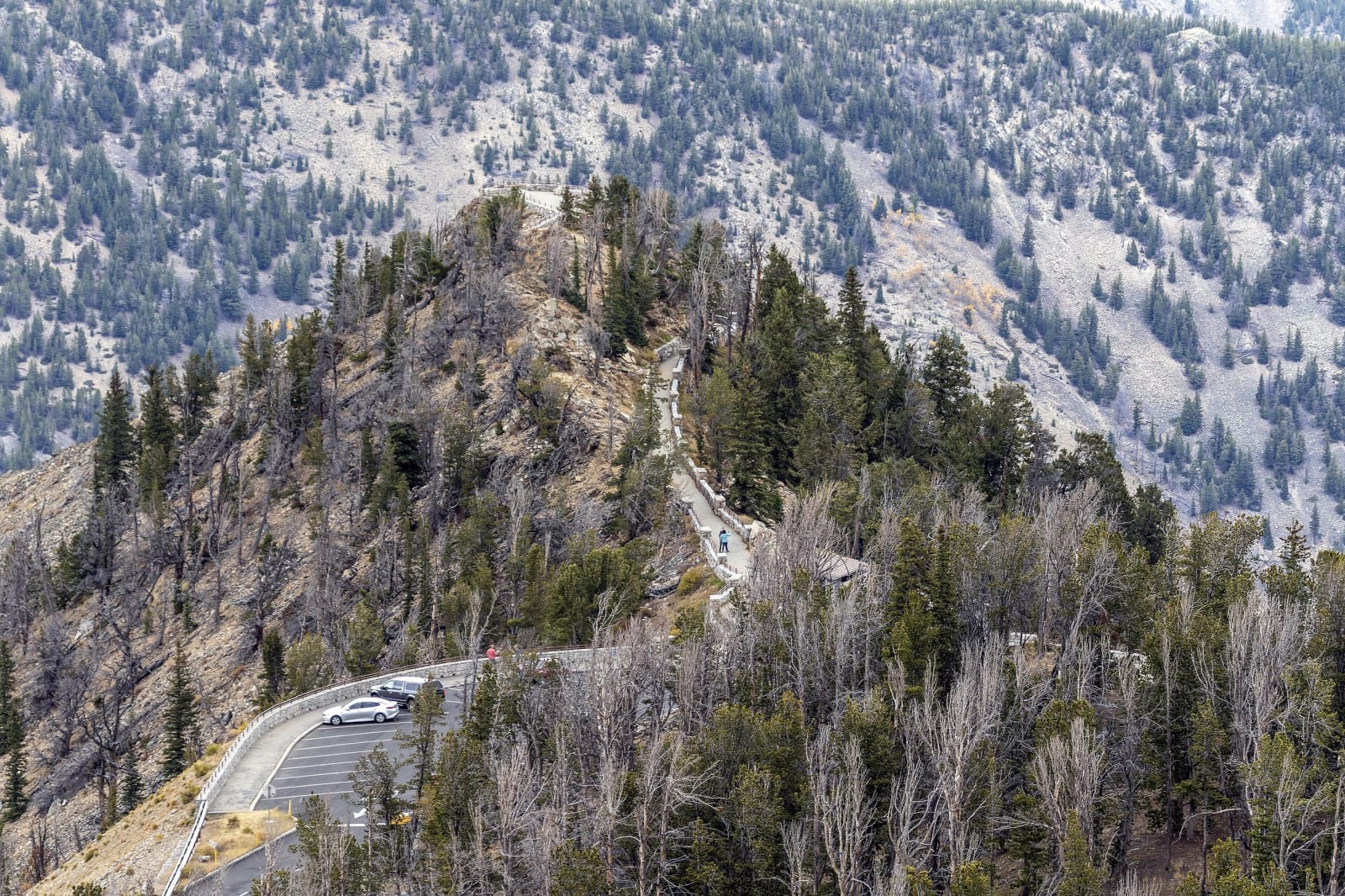
It is a summer road. Snow usually closes the high section from mid-October until the Memorial Day weekend, and storms can shut it any month. Rock Creek Vista Point is a pullout on the Montana side below the pass. Plan on at least two hours for the sixty-eight miles to Cooke City.
Visitor Info
On the Map
Nearby
The closest stops worth working into your route