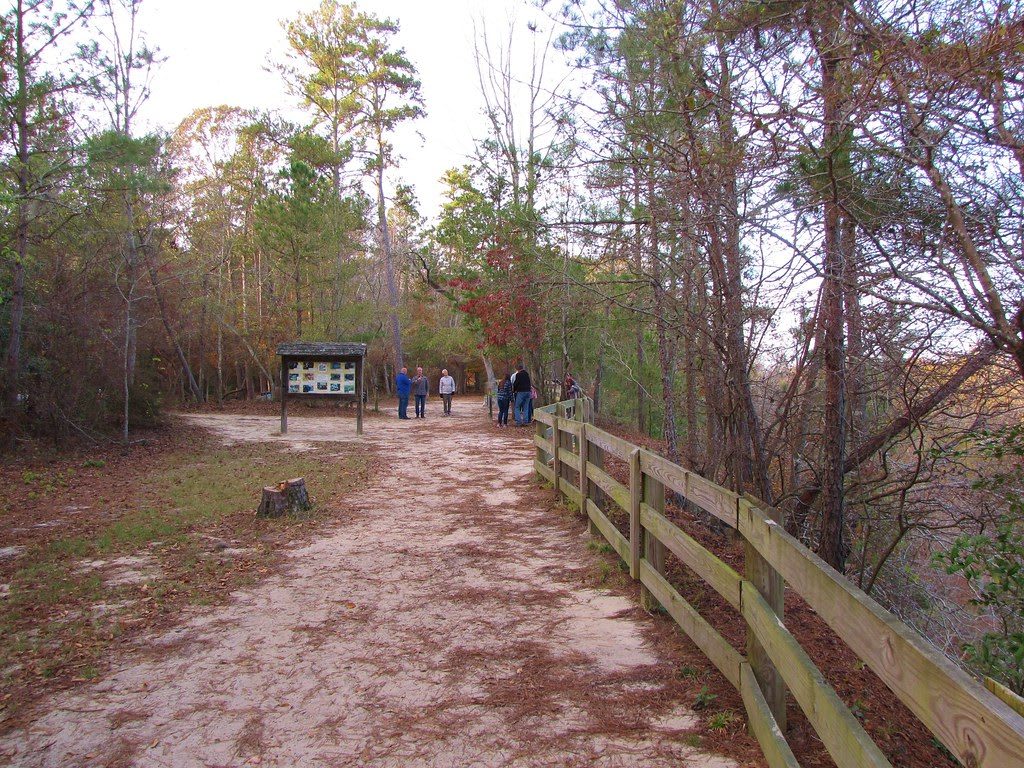
A sandy trail runs along a split-rail fence through autumn woods at the top of the Neuse River bluffs.
Gerry Dincher / CC BY-SA 2.0 via Flickr
North Carolina · Region

New Bern, Beaufort & the Crystal Coast

Tuscarora and Coree country on the Neuse and Pamlico: Bath, New Bern and Tryon Palace, Beaufort, Fort Macon, Cape Lookout, Portsmouth, Hammocks Beach and Montford Point.

11 places to explore

The Tuscarora, Coree, Neusiok and Pamlico held these rivers when the colony came. Bath was chartered on the Pamlico in 1705 and New Bern laid out at Chattoka in 1710, and the Tuscarora War began in September 1711; by its end hundreds of Tuscarora had been killed or sold into slavery and most of the nation had moved north. Beaufort rose on the Coree town of Cwarioc, and Cliffs of the Neuse keeps a gathering ground of Tuscarora country.

Slavery built the colony's wealth. Tryon Palace now names Tom, Surry and the others who served the governors' households; Portsmouth's lightering trade landed captive Africans; and the wreck off Beaufort was a slave ship before Blackbeard took her. Enslaved and free Black laborers repaired Fort Macon in 1861, and when Union troops held New Bern from 1862, thousands escaped slavery to the camp that became James City. Kinston keeps the burned hull of the Confederate ironclad Neuse.

The coast tells the twentieth century too. In 1950 the Hursts steered Bear Island to North Carolina's Black teachers, and it became Hammocks Beach State Park; at Jacksonville a memorial honors the Black Marines trained at segregated Montford Point. Out on the banks, the checkered Cape Lookout Lighthouse stands a ferry ride from Harkers Island.

What to See in New Bern, Beaufort & the Crystal Coast

11 places across the region, grouped by what they are.

Geology & Rock Formations
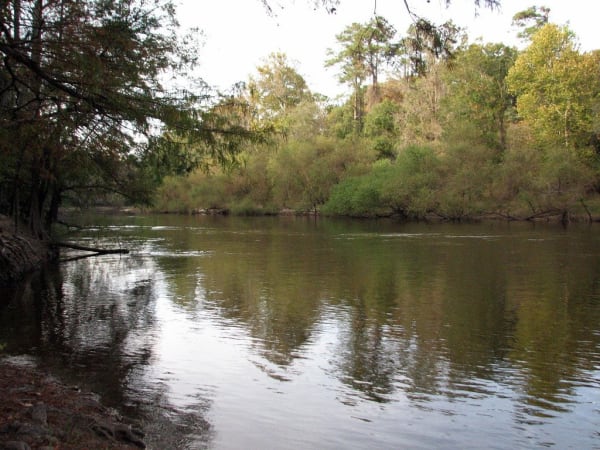
The still Neuse River reflects green trees along its wooded banks.

Cliffs of the Neuse State Park

Seven Springs

Ninety-foot bluffs of sand, clay and shell above the Neuse River, a gathering ground in Tuscarora country, saved as a park in 1945 by Goldsboro's Lionel Weil.

View details →

Natural Areas

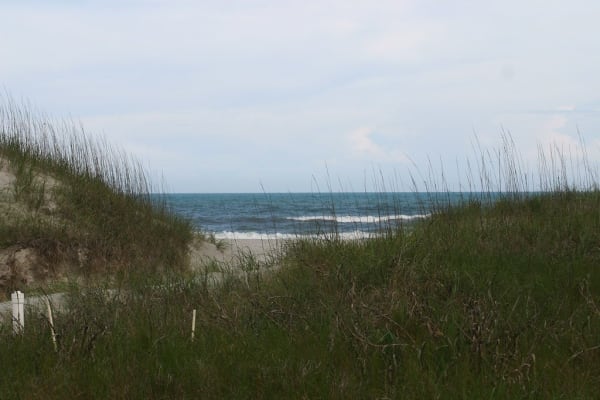
Sea oats and dune grass frame a glimpse of the ocean on Bear Island.

Hammocks Beach State Park

Swansboro

Bear Island and The Hammocks, a gift steered by Gertrude and John Hurst to North Carolina's Black teachers in 1950, when segregation kept Black families off the state's beaches.

View details →

Historic Sites

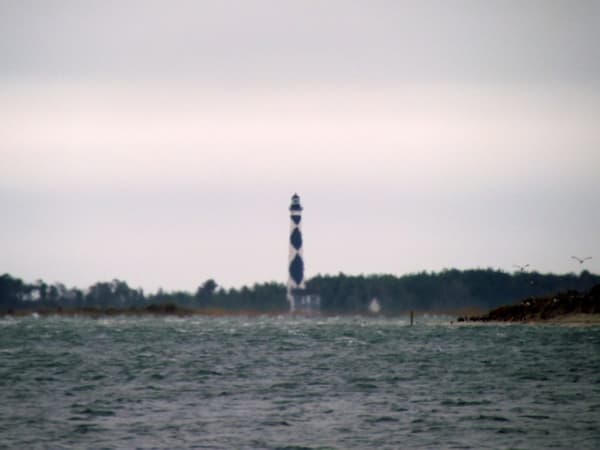
A black-and-white checkered lighthouse rises from a low green shore across choppy gray water.

Cape Lookout Lighthouse

Harkers Island

The 1859 diamond-checkered tower on South Core Banks, darkened and raided in the Civil War, reached by a half-hour passenger ferry from the Harkers Island visitor center.

View details →

CSS Neuse Civil War Museum

Kinston

The burned lower hull of a Confederate ironclad that never reached the sounds, raised from the Neuse in 1963 and shown in downtown Kinston with Lenoir County's war.

View details →
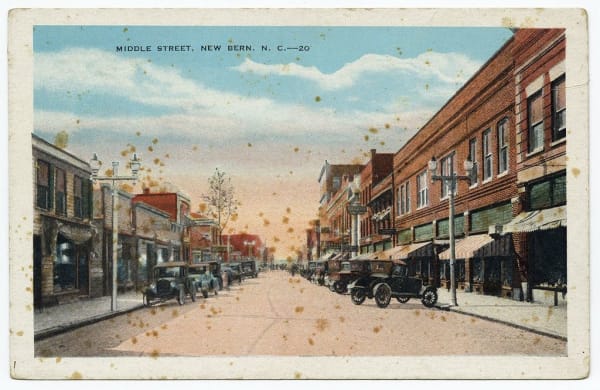
An early twentieth-century postcard of Middle Street in New Bern, lined with brick storefronts and parked cars.

Downtown New Bern

New Bern

The river town where the Neuse meets the Trent: Chattoka, the 1710 Swiss settlement that set off the Tuscarora War, the Union-held city of 1862 and the freedpeople of James City.

View details →
Grassy ramparts and a brick-walled covered way curve around the outer works of a masonry fort under a cloudy sky.

Fort Macon State Park

Atlantic Beach

An 1834 five-sided brick fort on the tip of Bogue Banks, repaired in 1861 with enslaved labor and breached in eleven hours by Union rifled guns, now North Carolina's first working state park.

View details →
An old postcard of St. Thomas Episcopal Church in Bath, a small brick church behind a picket fence.

Historic Bath

Bath

North Carolina's first town, chartered in 1705 on the Pamlico River, struck in the Tuscarora War of 1711 and keeping the state's oldest church and Blackbeard's brief retirement.

View details →
Old headstones and brick-covered graves stand among live oaks in a shaded town cemetery.

Historic Beaufort

Beaufort

North Carolina's third-oldest town, laid out in 1713 on the Coree town of Cwarioc, home port to the wreck of Queen Anne's Revenge and to an Old Burying Ground of shell and brick graves.

View details →
A 1943 platoon photograph of Black Marine recruits in uniform rows, captioned 61st Platoon, Montford Point Camp.

Montford Point Marine Memorial

Jacksonville

The memorial to the 20,000 Black recruits trained at segregated Montford Point from 1942 to 1949, the first African Americans in the Marine Corps, beside the Camp Johnson museum.

View details →

Portsmouth Village

Ocracoke

The 1753 lightering port at Ocracoke Inlet, through which cargo and captive Africans passed, empty since its last residents left in 1971 and reached only by boat.

View details →
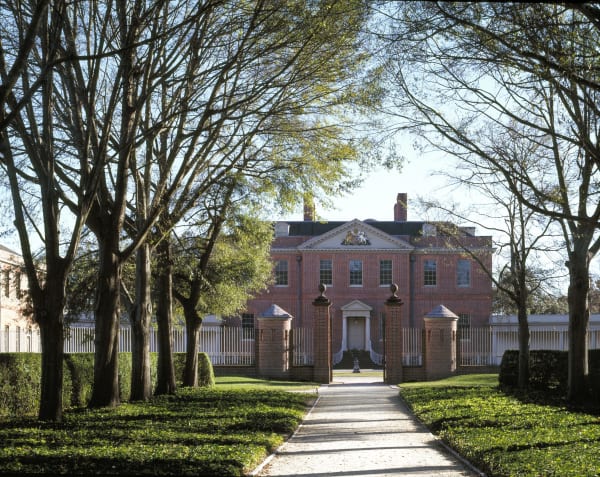
A red-brick Georgian palace with a pedimented center seen down a tree-lined walk through brick gateposts.

Tryon Palace

New Bern

The rebuilt 1770 Governor's House of colonial North Carolina, told now with Tom, Surry, Prima and the other enslaved people whose labor kept its households running.

View details →

Scenic Drives through New Bern, Beaufort & the Crystal Coast

Scenic Byway

The Albemarle and Pamlico Colonial Towns: Somerset Place, Edenton, Hope, Bath and New Bern

About 161 miles through North Carolina's oldest towns, from Somerset Place on Lake Phelps across Albemarle Sound to Edenton, west to Hope Plantation at Windsor, down US 17 through Williamston and Washington to Bath on the Pamlico, and south to Tryon Palace and the confluence at New Bern.

161 mi · 3.8 hrs

New Bern, Beaufort & the Crystal Coast rewards the unhurried. Pick a base, fan out, and let the country between the headline stops surprise you.

← Explore more of Open Road Guide