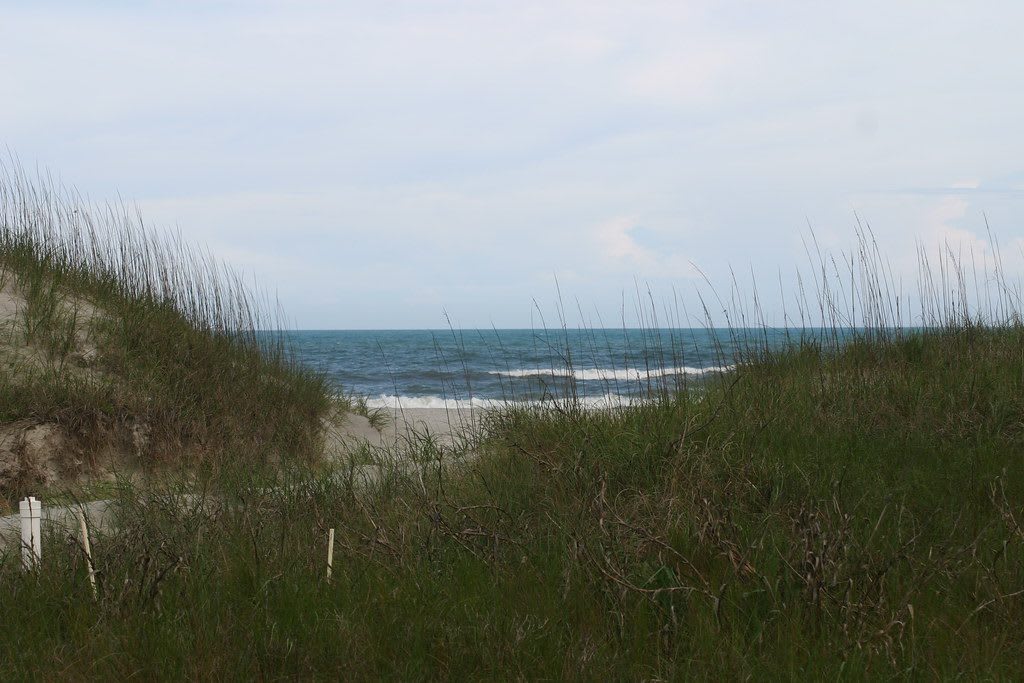
 Chris Ballance / CC BY 2.0 via Flickr
The Story
In 1914 John Hurst, a hunting and fishing guide on this stretch of the Onslow coast, was assigned to a New York neurosurgeon named William Sharpe. In the early 1920s Sharpe bought The Hammocks and Bear Island, about 4,600 acres, and Hurst managed them for thirty years. His wife, Gertrude Hurst, born in 1900 in a settlement now inside Camp Lejeune, the daughter of a Sneads Ferry ferryman who had been enslaved, left teaching to work on the estate. Late in the 1940s the Sharpes offered the whole property to the Hursts. Segregation barred Black North Carolinians from the state's public beaches, and Gertrude Hurst and Sharpe settled on another plan.
In 1950 the Sharpes and Hursts deeded the land, minus a few family parcels, to the North Carolina Teachers Association, the state's organization of Black teachers. Over the next years it held a motel, the Gertrude Hurst Assembly Hall and the S. B. Simmons Camp, where rural Black high school students of the New Farmers of America learned leadership and often saw the ocean for the first time. In 1961 the association gave Bear Island to the state, which opened it as a park for Black visitors; it opened to everyone after the Civil Rights Act of 1964. Long court fights over the mainland land ended in 2015 with the state agreeing to buy it.
Bear Island is four miles of beach and dunes, a National Natural Landmark since 1980, reached by a seasonal passenger ferry through the marsh or by paddling. It has the only oceanside campsites in North Carolina's state parks.
Visitor Info
On the Map
Nearby
The closest stops worth working into your route
Historical markers nearby
Roadside plaques and monuments within a short detour