 Gerry Dincher / CC BY-SA 2.0 via Flickr
The Story
Beaufort stands on the site of Cwarioc, a Coree town. A record of September 1711 says the area had been emptied by the war of that year, and some of the unmarked graves in the oldest corner of the town cemetery may be settlers killed in fighting with the Coree and Neusiok. The town was surveyed in 1713, after the Tuscarora War, named a port in 1722 and incorporated in 1723. Its ships carried tar, pitch and turpentine to the West Indies.
In June 1718 Blackbeard ran his flagship aground in Beaufort Inlet. Before he took her she had been La Concorde, a French ship carrying captive Africans on the Middle Passage. Searchers found the wreck on November 21, 1996, in 28 feet of water about a mile off Fort Macon, and the state confirmed it as Queen Anne's Revenge in 2011; more than 300,000 artifacts have come up, and the North Carolina Maritime Museum on Front Street shows many of them. Union troops took Beaufort in March 1862, and by 1863 people escaping slavery had built a settlement called Union Town on the north side of town.
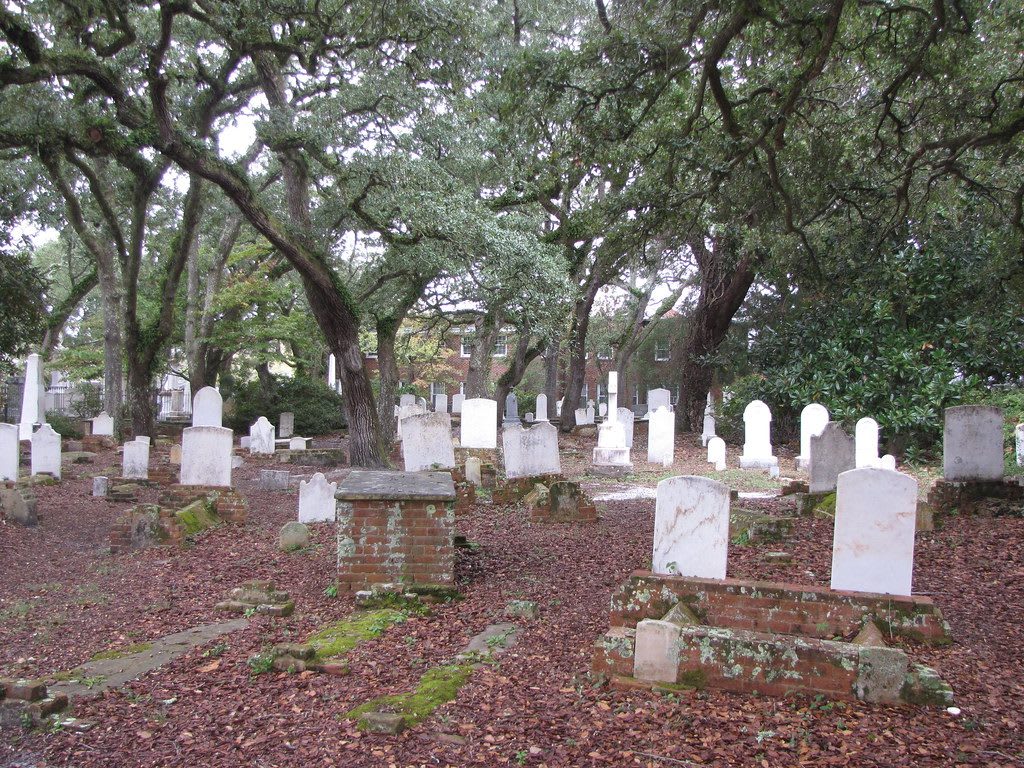
The Old Burying Ground on Ann Street, deeded to the town in 1731, is open to all. Many graves are marked with shell, brick or wood, since stone had to come by sail. Among them are a child buried at sea in a keg of rum, the privateer Otway Burns and the crew of the schooner Crissie Wright, lost on Shackleford Banks in January 1886. The Beaufort Historical Association keeps six restored buildings nearby on Turner Street.
Visitor Info
On the Map
Nearby
The closest stops worth working into your route
Historical markers nearby
Roadside plaques and monuments within a short detour