 Carol M. Highsmith / public domain via Library of Congress
The Story
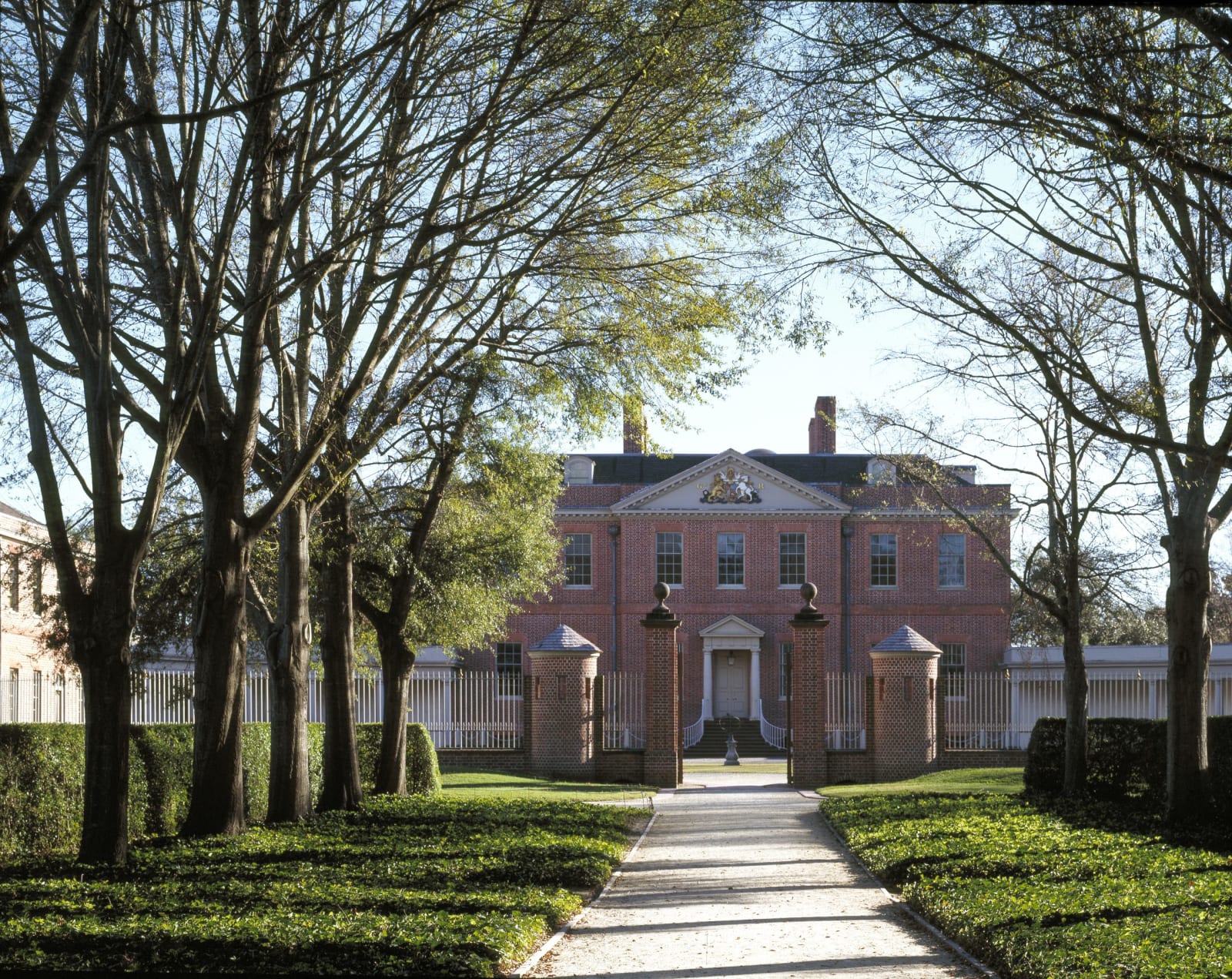
Governor William Tryon wanted a seat of government worthy of the Crown, and in December 1766 the assembly voted 5,000 pounds for it; Tryon pressed for twice that, and the colony's taxes rose to pay. Architect John Hawks finished the brick Governor's House in 1770. Backcountry farmers already overburdened with taxes counted its cost among their grievances, and Tryon's militia broke the Regulators at Alamance in May 1771. His successor, Josiah Martin, fled in May 1775; the new state's first assemblies met here, and Richard Caswell lived here as governor. Fire took it in 1798; only the Stable Office is original.
The households here ran on enslaved labor. Tryon held ten to twelve enslaved men and women. He rented a man named Tom from a Wilmington merchant, bought him for 110 pounds and took him to New York. He sold Surry, a man born in Africa, to his secretary, and in 1777 Surry freed himself by running away. Martin's father sent three enslaved people from Antigua, Tool, Prima and Kate. Receipts for work on the grounds name Will, Mallett, Jim, Rawlings, Turner, Spooner and Pomp, most likely Black laborers.
After a trust begun in 1944, more than fifty later buildings were moved and US 70 rerouted, and the rebuilt palace opened in 1959. The grounds include the Stanly House, whose builder's estate listed 78 enslaved people. His son John Carruthers Stanly, born to an enslaved Igbo woman, won his freedom, prospered as a barber and bought his family's freedom, yet himself enslaved more than a hundred people. Visits begin at the North Carolina History Center.
Visitor Info
On the Map
Nearby
The closest stops worth working into your route
Historical markers nearby
Roadside plaques and monuments within a short detour