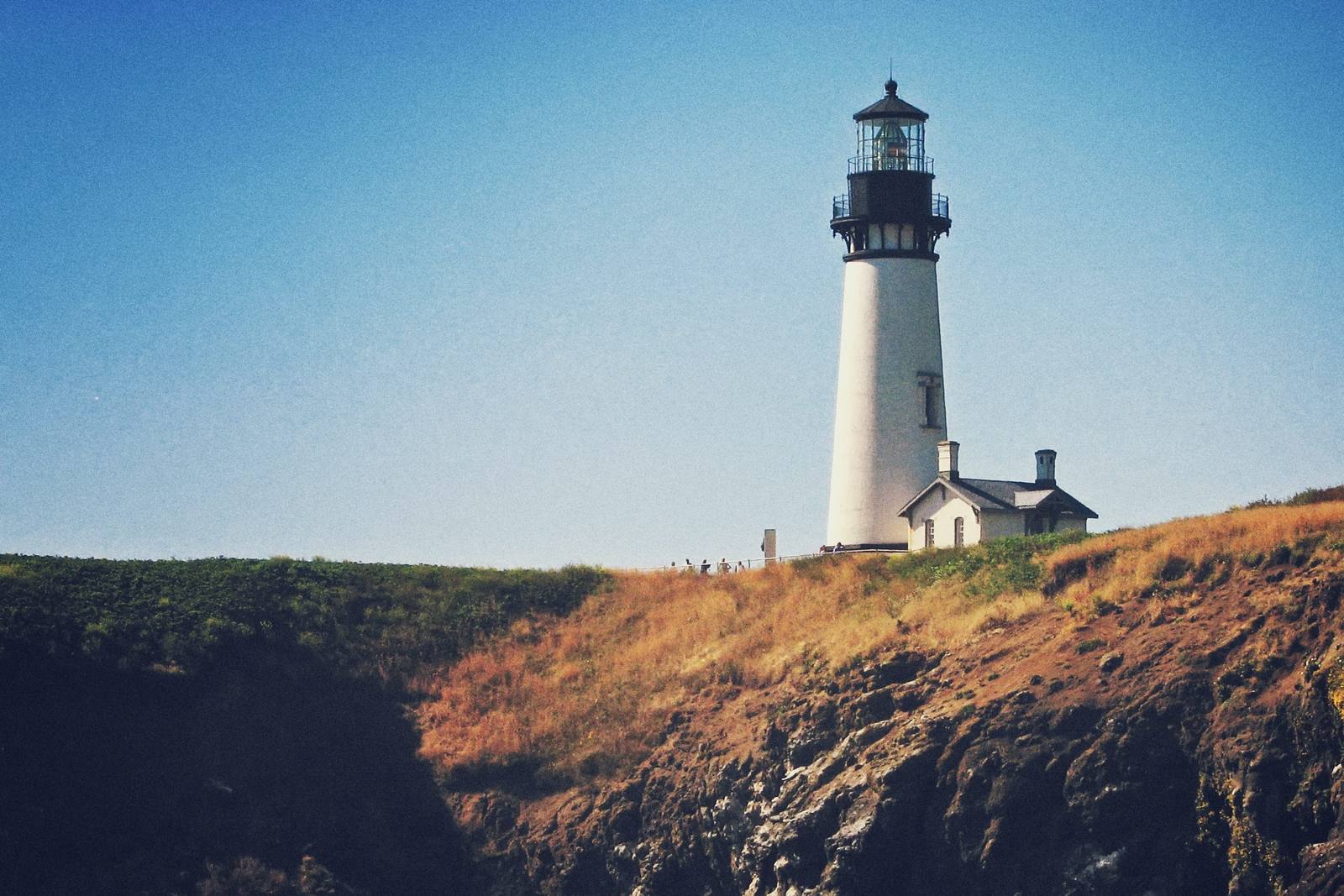
 Steven Pavlov / CC BY-SA 4.0 via Wikimedia Commons
The Story
Yaquina Head runs a mile out into the Pacific north of Newport, a finger of lava at least fourteen million years old from the same flows that built the north coast's headlands. The lighthouse at the tip is 93 feet tall, the tallest in Oregon, first lit on August 20, 1873, and still working. In its early years it was often called the Cape Foulweather light, after the headland James Cook named a few miles north. Guided tours climb the tower.
What sets the headland apart is what happened to it later. Before it was protected, its south side was quarried for rock. In 1980 Congress made it an Outstanding Natural Area under the Bureau of Land Management, and in the early 1990s the BLM let the tide into the old quarry floor and left the sea to settle it. The result, Quarry Cove, is a tidepool area that marine life has colonized on its own, with paths built so that people in wheelchairs can reach the pools, a rarity on any coast.
Below the lighthouse, Cobble Beach is the natural version: a long staircase down to rounded black basalt that rattles as each wave draws back, and tide pools of anemones, sea stars and chitons at low water. From the overlooks you look straight down on Colony Rock, crowded from April into summer with nesting common murres and cormorants, and harbor seals haul out on the rocks off both beaches. The BLM's interpretive center is near the entrance, and the site charges an entry fee.
Visitor Info
On the Map
Nearby
The closest stops worth working into your route