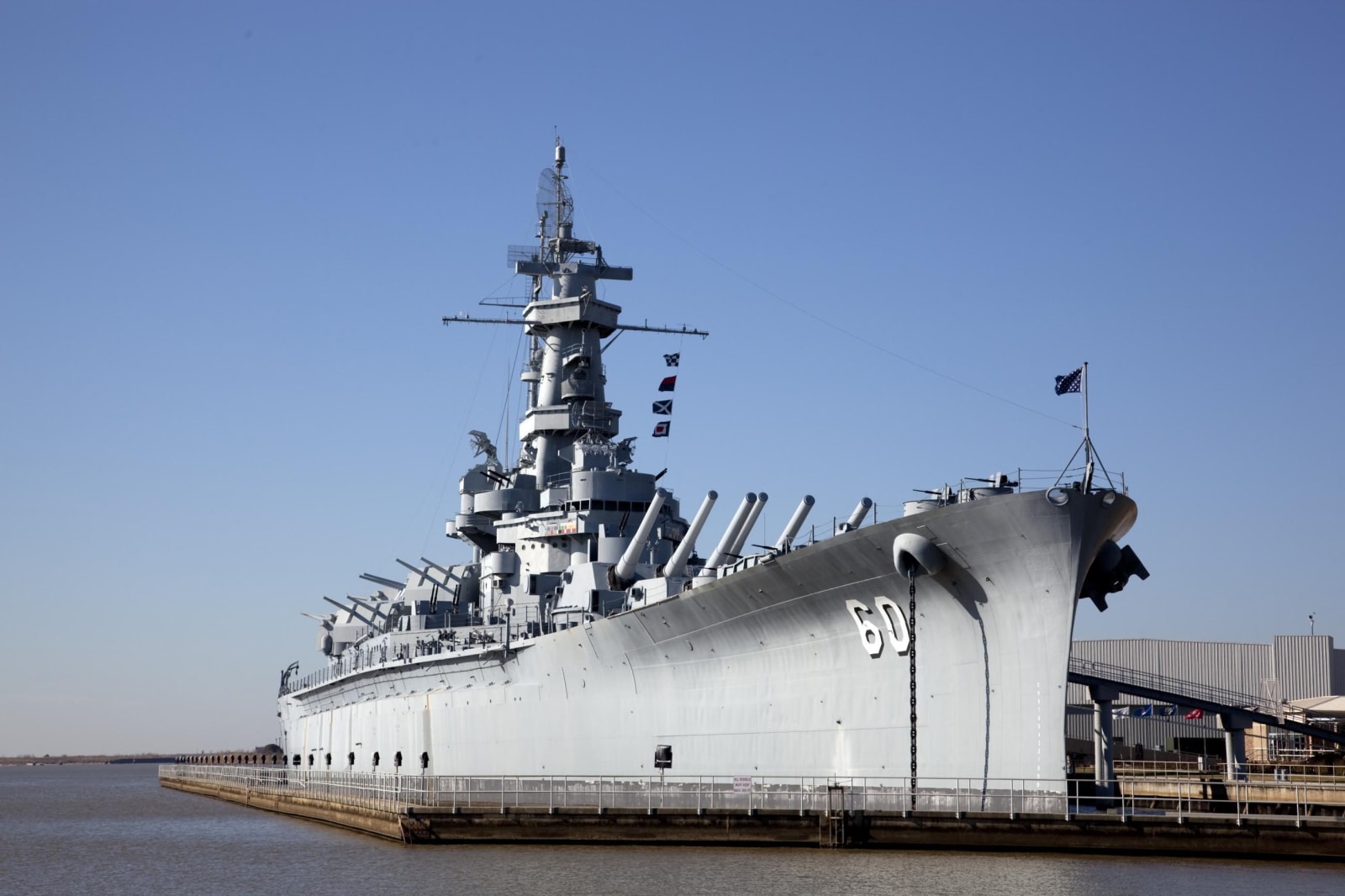
 Carol M. Highsmith / public domain via Library of Congress
The Story
The USS Alabama was launched in February 1942 and commissioned that August. Her first months were in the Atlantic, steaming to Scapa Flow in the Orkneys with the British Home Fleet; in 1943 she went to the Pacific for the Gilberts and Marshalls, Truk, the Marianas and the long carrier war that followed. Her worst day came from her own guns: during a Japanese air attack on February 21, 1944, one of her 5-inch mounts fired into another, killing five men and wounding eleven. In September 1945 she anchored in Tokyo Bay.
Decommissioned in 1947 and slated for scrap, the ship was saved by a statewide campaign in 1964 that raised more than $800,000, about $100,000 of it in nickels and dimes from more than a million schoolchildren. Towed 5,600 miles from Bremerton, she squeezed through the Panama Canal with 11 inches to spare on each side and was dedicated here in January 1965. She became a National Historic Landmark in 1986.
Self-guided routes cover about two-thirds of the ship, from an engine room and the galley to bunks stacked five high. The submarine USS Drum, credited with sinking 15 Japanese ships, sits on land nearby, and a pavilion holds aircraft and a tribute to Alabama's Medal of Honor recipients. The park pays its own way from tickets, and in 2025 Mark K. Fields became its first African American executive director.
Visitor Info
On the Map
Nearby
The closest stops worth working into your route
Historical markers nearby
Roadside plaques and monuments within a short detour