 Carol M. Highsmith / public domain via Library of Congress
The Story
Native people were eating oysters and fish on Dauphin Island long before any fort: a great shell heap on the north shore, piled up between about 1100 and 1550, holds their refuse and broken pots, and Choctaw, Creek and Seminole people used the island until their forced removal west in the 1830s. The French kept a port here until sand filled it in the 1720s; Spain, Britain and Spain again followed, and the United States took the island in 1813. Work on a fort at the east tip began in 1821 as a twin of Fort Morgan across the channel, and stopped the same year when Congress cut the money.
When building resumed in 1857 the Army's chief engineer, Joseph Totten, threw out the old plans and drew the five-sided fort that stands now. It was still unfinished when Alabama militia took it in January 1861, and Confederate engineers completed it. Union infantry landed on the island on August 3, 1864, and after Farragut's fleet entered the bay two days later, ships and guns on shore shelled the fort until Col. Charles Anderson surrendered it at 9:30 on the morning of August 8, with about 800 men.
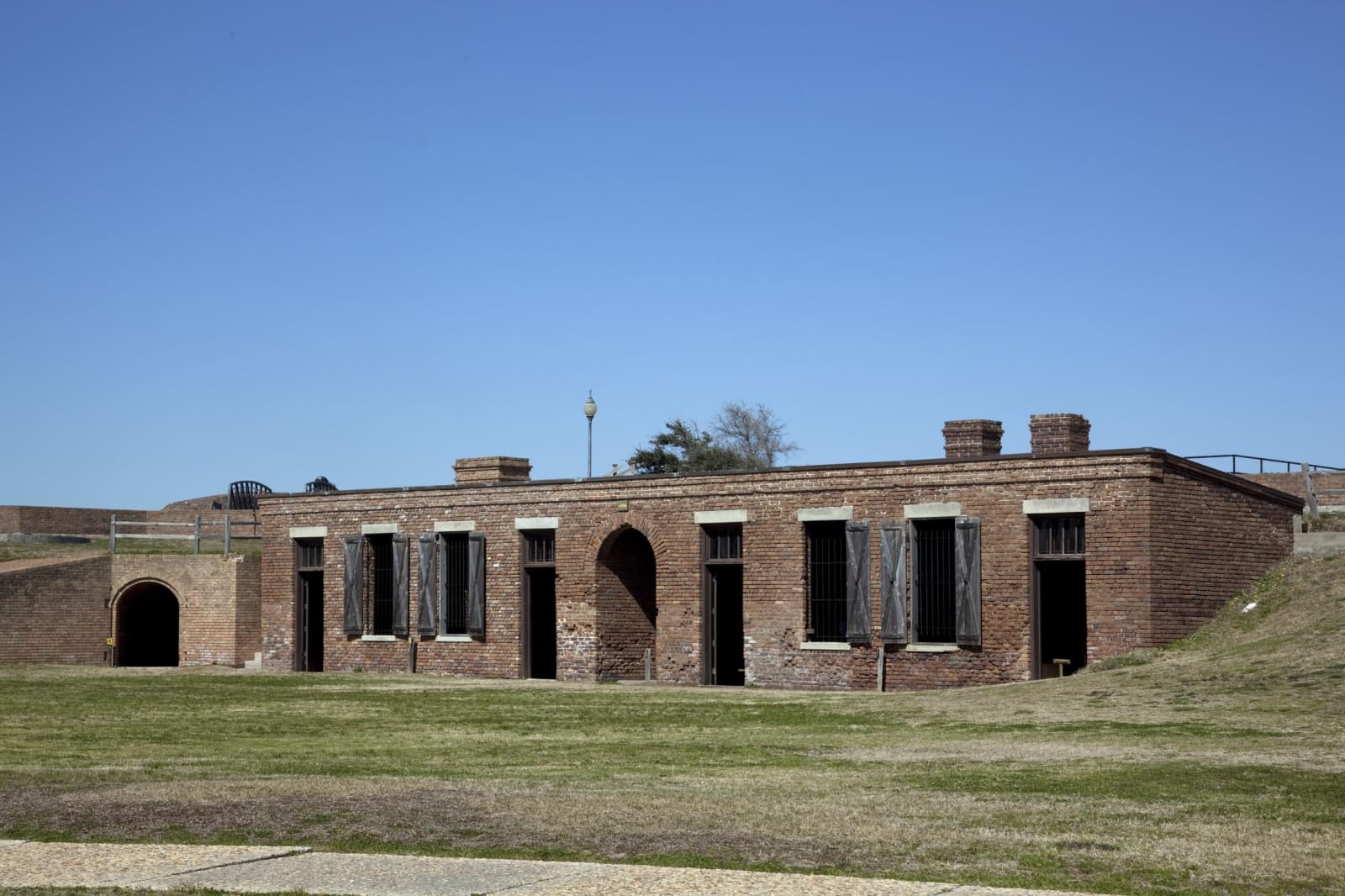
The fort keeps original cannon, brick buildings around the parade, a working blacksmith shop and tunnels out to the corner bastions, and the anchor of Farragut's flagship Hartford lies in the courtyard. The Gulf is its enemy now: the beach at its foot has lost up to ten feet a year.
Visitor Info
On the Map
Nearby
The closest stops worth working into your route
Historical markers nearby
Roadside plaques and monuments within a short detour