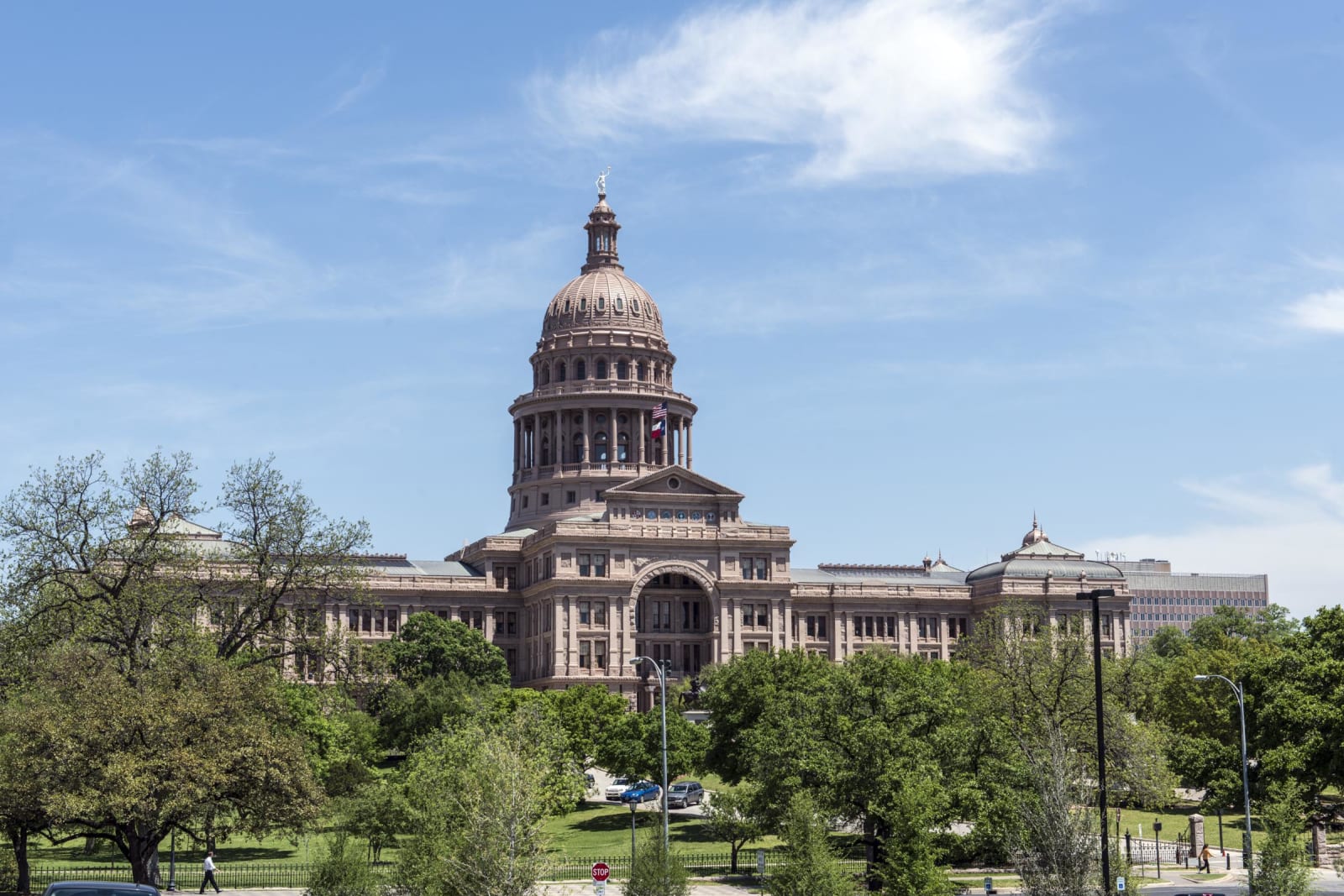
 Carol M. Highsmith / public domain via the Library of Congress
The Story
The present Texas Capitol, built between 1882 and 1888, is the fourth statehouse in Austin. Eight architects entered eleven designs in the state's competition, and in May 1881 the Capitol Board chose a Renaissance Revival plan by Elijah E. Myers of Detroit, modeled on the national Capitol in Washington. How Texas paid for it with Panhandle land, and who quarried and cut its red granite, is told in the story The Statehouse Paid in Land. The building cost $3,744,630.60, of which the state assumed about $500,000.
When it was finished it held 392 rooms, 18 vaults, 924 windows and 404 doors, and it stands 311 feet from the ground to the top of the statue on the dome. It opened to the public on the evening of April 21, 1888, before it was complete, and was dedicated in a week of celebration from May 14 to 19 that year.
A fire in the east wing in February 1983 led the legislature to form the State Preservation Board. Its first project was the Goddess of Liberty: the zinc original came down by helicopter in November 1985, and an aluminum copy cast from molds of it went up in June 1986, paid for with more than $450,000 in private gifts. The original is now in the Bullock Museum. The Governor's Public Reception Room was restored in 1987, an underground extension to the north was finished in 1993, and the restored building was rededicated on April 21, 1995. Guided tours are free.
Visitor Info
On the Map
Nearby
The closest stops worth working into your route
Historical markers nearby
Roadside plaques and monuments within a short detour