 Carol M. Highsmith / public domain via the Library of Congress
The Story
France recognized the Republic of Texas on September 25, 1839, when King Louis Philippe signed a treaty of amity, navigation and commerce. Its envoy was Alphonse Dubois de Saligny, a chargé d'affaires, well below an ambassador. He came hoping for the Franco-Texian bill, which would have planted French colonists across West Texas, and Texans suspected he and his partners stood to profit by it.
Then came the pigs. Dubois complained that hogs belonging to Richard Bullock, an Austin hotelkeeper, invaded his stables, ate his horses' corn and even got into his bedroom to chew his linen and papers. His servant killed some of the pigs, Bullock thrashed the servant and threatened the diplomat, and Dubois demanded that the government punish Bullock at once. When the secretary of state insisted on due process, Dubois broke relations without orders from Paris and left Texas in May 1841. He returned in April 1842 after Sam Houston's government offered explanations. The Handbook of Texas calls the Pig War an isolated episode with few repercussions.
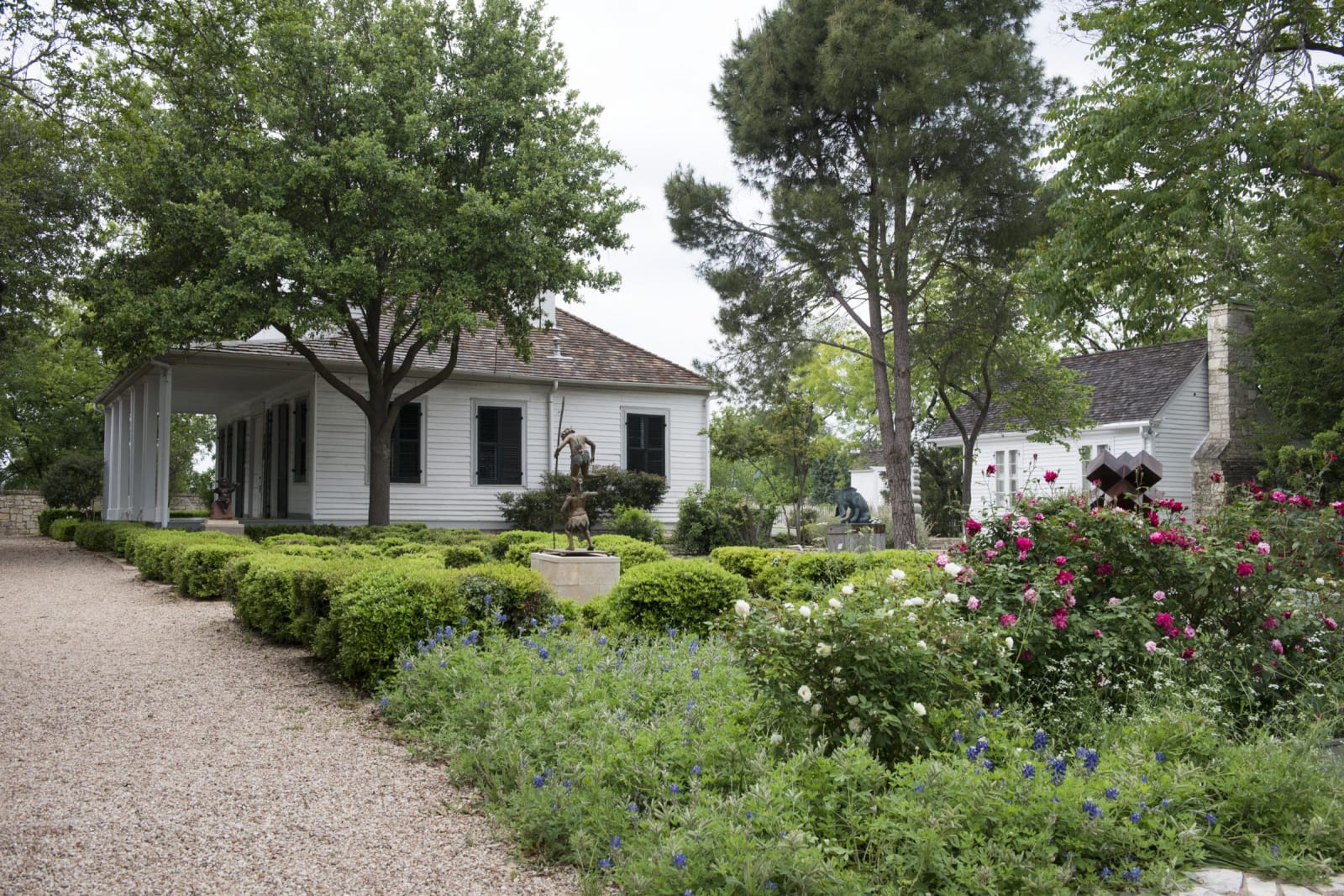
The house stands on a hilltop that Dubois bought from Anson Jones in 1840. Carpenters likely trained in East Texas or Louisiana built it of Bastrop loblolly pine in a blend of Greek Revival and Mississippi Valley French, set two feet off the ground as if on a bayou. Dubois probably never lived in it finished. The Robertson family owned it for a century, the state bought it in 1948, and the museum opened on April 5, 1956, with a kitchen rebuilt on slim evidence in 1966.
Visitor Info
On the Map
Nearby
The closest stops worth working into your route
Historical markers nearby
Roadside plaques and monuments within a short detour