 Carol M. Highsmith / public domain via the Library of Congress
The Story
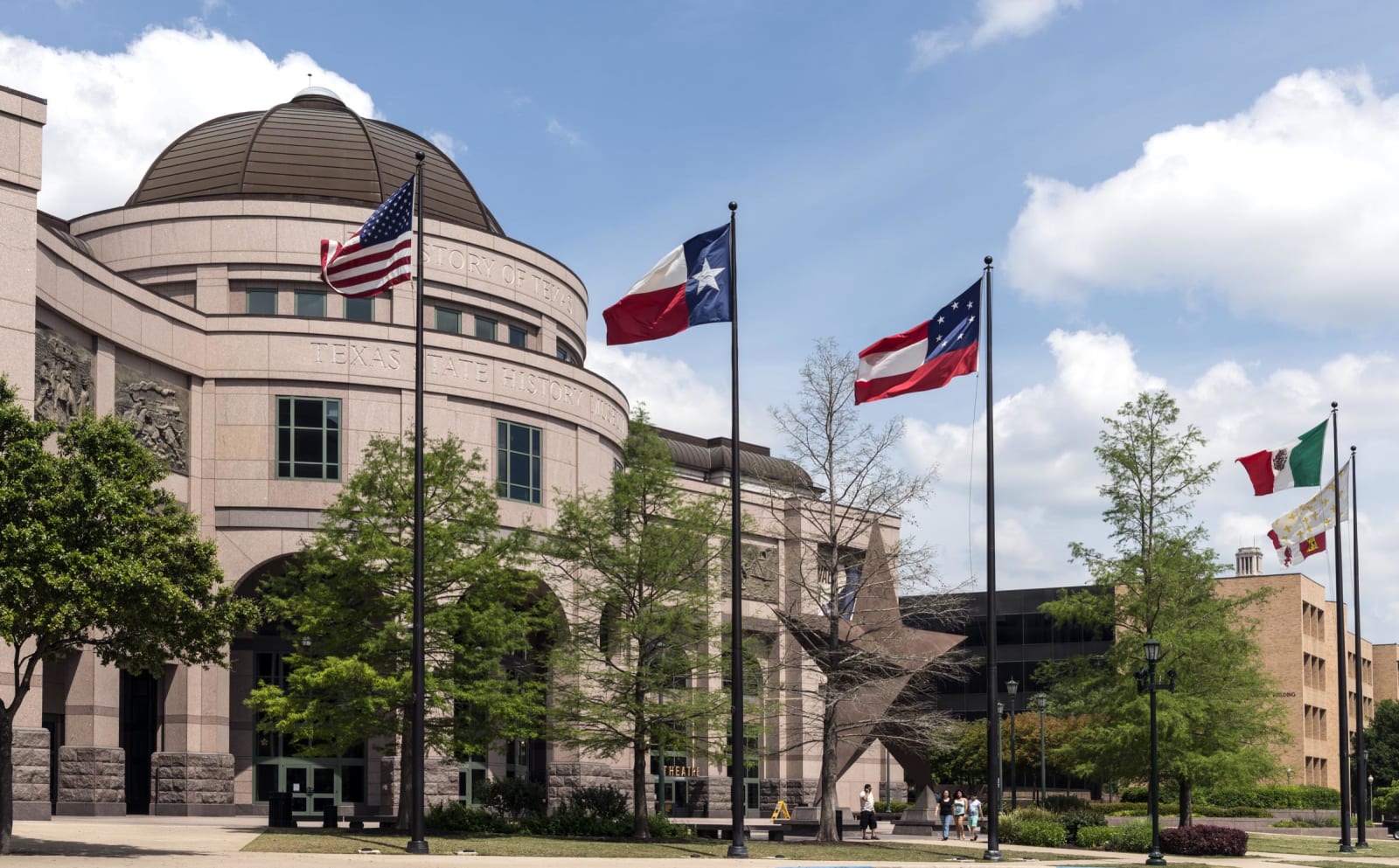
The Bullock Texas State History Museum is named for Bob Bullock, the lieutenant governor who pushed for a state history museum; he was guest of honor at the groundbreaking in April 1999 and died that June, and the museum opened on April 28, 2001. Its first-floor gallery, Becoming Texas, renovated in 2018, begins more than 16,000 years ago with a projectile point from the Gault site, 40 miles north of Austin, one of the earliest known objects made by people in the Americas.
The centerpiece is a ship. In 1684 Louis XIV sent René-Robert Cavelier, Sieur de La Salle, across the ocean with four ships and 400 people to found a colony at the mouth of the Mississippi. La Salle lost ships, sailed past his destination and was murdered by his own men; in 1686 La Belle, the last of his ships, went down in a storm in Matagorda Bay. State archaeologists found the wreck in 1995, built a cofferdam around it, pumped it out and finished the fieldwork in May 1997. Texas A&M's nautical archaeologists then spent more than ten years conserving the hull, and La Belle went on display here in October 2014.
The cargo shows what a colony was expected to need: trade goods such as 1,617 brass hawk bells, glass beads and brass pots, and weapons from the king, among them a bronze cannon. Upstairs, the third floor covers ranching, oil, civil rights, space and music, with a theater showing performances from Austin City Limits, the long-running PBS series made in this city.
Visitor Info
On the Map
Nearby
The closest stops worth working into your route
Historical markers nearby
Roadside plaques and monuments within a short detour