 Carol M. Highsmith / public domain via the Library of Congress
The Story
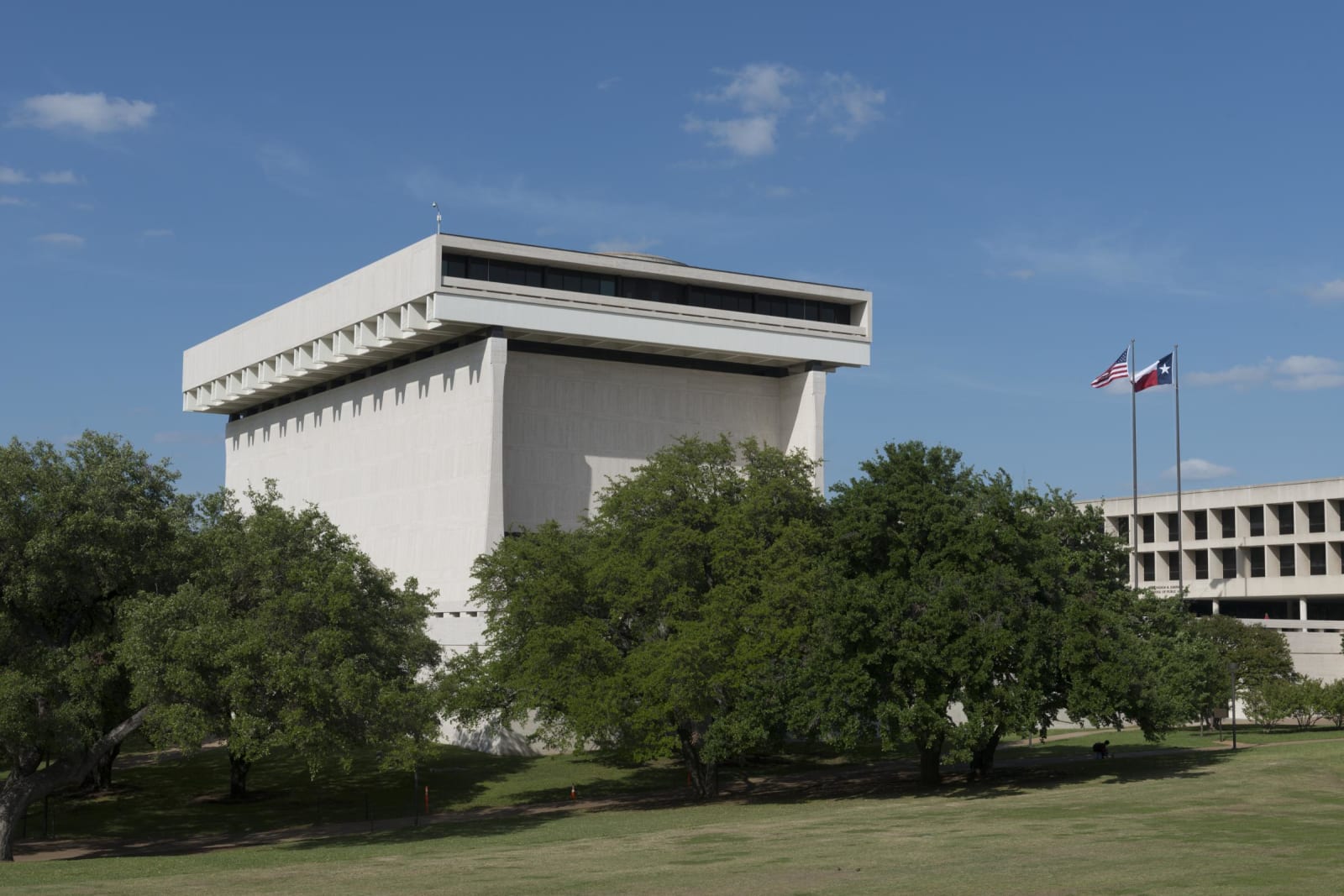
The Lyndon Baines Johnson Library and Museum was dedicated on May 22, 1971, the nation's fifth presidential library and the first on a university campus, with President Richard Nixon at the ceremony. Lady Bird Johnson toured other libraries and campuses and put forward three architects; Gordon Bunshaft of Skidmore, Owings and Merrill drew an unadorned ten-story block clad in cream Italian travertine. The University of Texas paid $15 million of the $18 million cost and supplied the land, which had been a low-income neighborhood taken by eminent domain.
It is an archive first. The National Archives runs it, and it holds more than 45 million pages of documents, more than 650,000 photographs, 12,000 hours of audio recordings and more than 2,000 oral history interviews. They are the working record of the presidency that signed the Civil Rights Act of 1964 and the Voting Rights Act of 1965, waged the War on Poverty and widened the war in Vietnam. The museum charged admission for the first time in 2013. Since 1983 the view of the Capitol from the library's terrace has been one of the corridors protected by law from tall buildings.
The permanent exhibit closed in October 2025 for a renovation aimed at younger visitors and reopened in March 2026. It keeps a seven-eighths-scale replica of the Oval Office as Johnson had it, with his desk, and the animatronic LBJ. Johnson's birthplace, ranch and grave are about an hour west, in the Hill Country.
Visitor Info
On the Map
Nearby
The closest stops worth working into your route
Historical markers nearby
Roadside plaques and monuments within a short detour