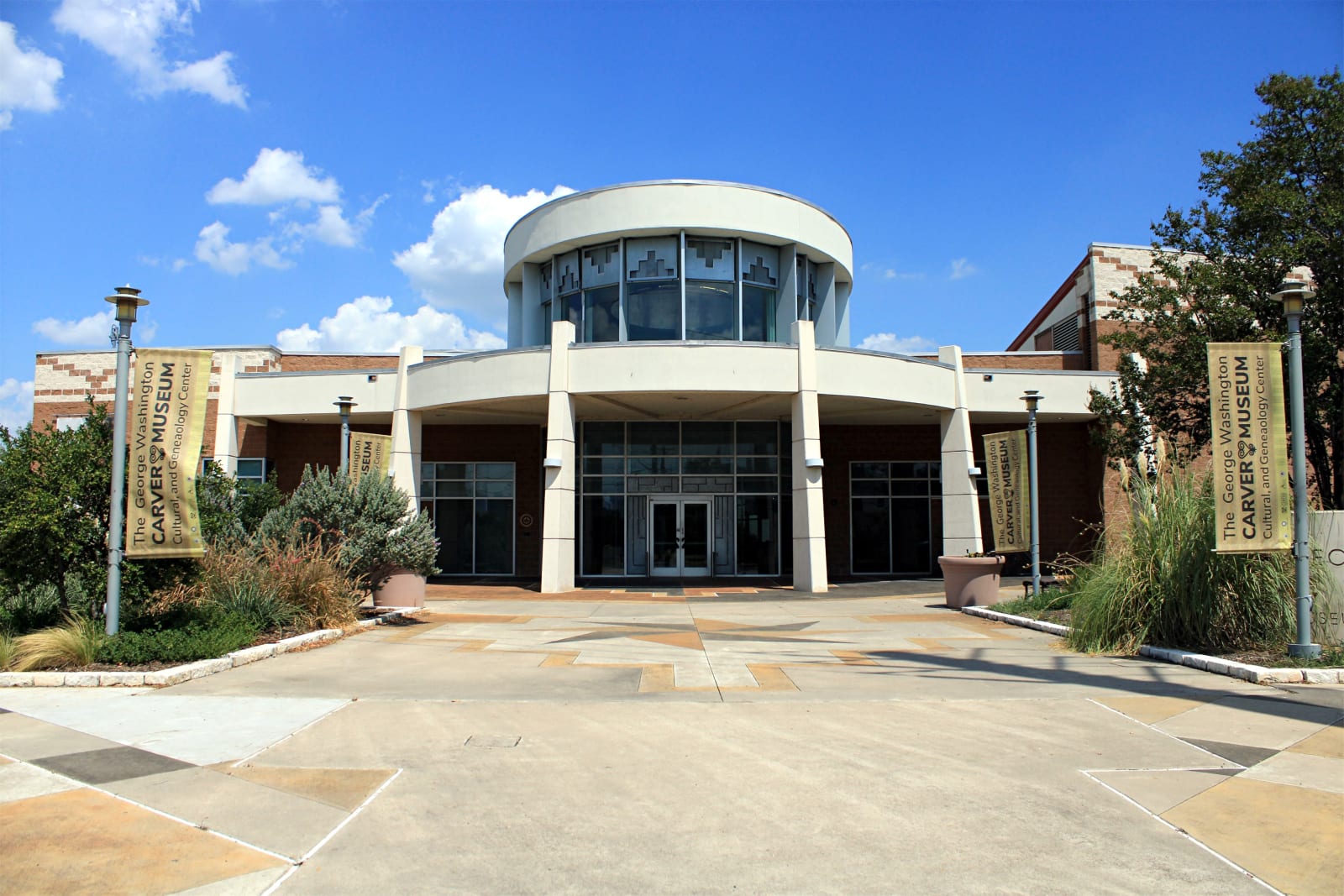
 2C2K Photography / CC BY 2.0 via Flickr
The Story
The George Washington Carver Museum began as a library building. A small wood-frame branch was built in 1926 at Ninth and Guadalupe streets downtown. When a larger stone library replaced it in 1933, the frame building was moved east to Angelina Street to serve Austin's African American community, and for years it was known as the Colored Branch. In 1947 it was renamed for George Washington Carver, the scientist and inventor. It served as a library until a new building opened next door in 1979, and work then began to turn it into a cultural center.
The museum opened on October 5, 1980, and grew into a larger building in 2001; the original Colonial Revival library was listed on the National Register in 2005. Its stated mission is to preserve and show African American material culture, history and art, telling local stories and connecting them to larger ones. It has two rotating galleries and four permanent exhibits honoring African Americans in Austin and beyond.
Juneteenth is at its core. The permanent exhibit traces June 19, 1865, when a Union order read in Galveston declared that the enslaved people of Texas were free, and follows the celebrations from the first years to the present. Outside, a memorial opened on June 27, 2015, with bronze figures and a paved timeline from the Middle Passage to emancipation. The museum also runs a free genealogy center, the Boyd Vance Theatre and a year of programs, and it holds a Juneteenth celebration each June.
Visitor Info
On the Map
Nearby
The closest stops worth working into your route
Historical markers nearby
Roadside plaques and monuments within a short detour