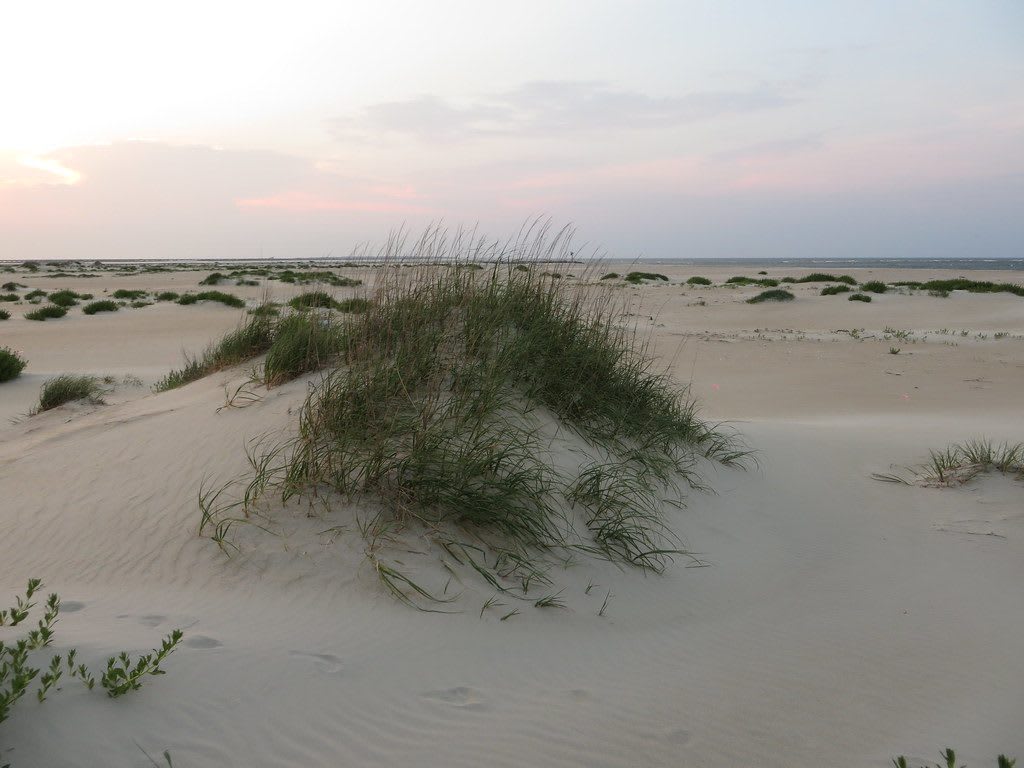
 Ken Lund / CC BY-SA 2.0 via Flickr
The Story
Richard Etheridge was born enslaved on Roanoke Island in 1842, probably the son of the man who held him, and learned to read and write in that household. He served in the 36th U.S. Colored Infantry from 1863, came home a sergeant, and in 1875 joined the Life-Saving Service at Bodie Island as surfman number six, the lowest rank, the only one a Black man could hold in a mixed crew.
In 1879 survivors of a wreck reached Pea Island station and found its white crew asleep. The crew was dismissed, and in 1880 Etheridge became the first Black keeper in the service. He filled it with Black surfmen, many of them fellow veterans. Soon after, the station house burned, a fire many blamed on the old crew though no one proved it. On October 11, 1896, the schooner E. S. Newman grounded in a hurricane, too rough for the boat or the line gun. Etheridge tied ropes to his two strongest swimmers and sent them through the surf until all nine aboard, a woman and her three-year-old son among them, were ashore. In 1996, long after all of them had died, the crew received the Gold Lifesaving Medal. The station kept an all-Black crew until it closed in 1947.
The refuge was set aside in 1938 for migrating birds, greater snow geese above all, and more than 370 species have been counted. Telescopes at the visitor center on NC 12 look over North Pond. Etheridge is buried at the Pea Island memorial at the North Carolina Aquarium on Roanoke Island.
Visitor Info
On the Map
Nearby
The closest stops worth working into your route
Historical markers nearby
Roadside plaques and monuments within a short detour