 Ken Lund / CC BY-SA 2.0 via Flickr
The Story
Carolina Algonquian people had lived along these sounds for over 1,200 years, in a country they called Ossomocomuck, when English ships came in 1584. Wingina, the leading werowance, held villages of the Roanoke, Secotan and Croatoan from this island south to Croatoan. He sent two men back to England with the visitors: Manteo, a Croatoan whose mother led her people, and Wanchese of the Roanoke. In London they were shown off to foreign guests, and Manteo helped Thomas Hariot work out an alphabet for their language.
In 1585 Wingina let the English build a fort near his village on the island's north end. Disease then killed many of his people, his brother Granganimeo among them, and he took the name Pemisapan and held back food. On June 1, 1586, Ralph Lane's men attacked his village at Dasemunkepeuc, near present-day Manns Harbor, shot him and beheaded him. A week later the English sailed home. Wanchese, who had turned against them, survived. The 117 men, women and children John White landed in 1587 were gone when he returned in 1590.
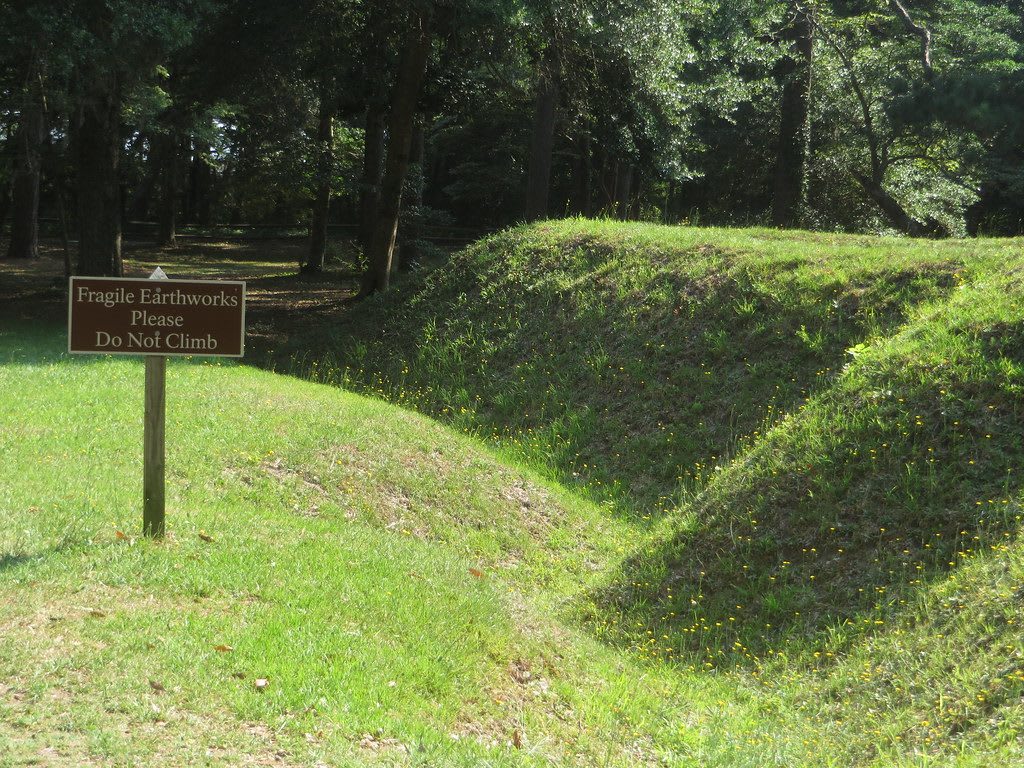
After Union troops took the island in February 1862, people escaping slavery came by the hundreds. Martha Culling, formerly enslaved, opened the first school, and by 1865 the Freedmen's Colony had 561 houses and 3,901 residents, with more than 150 of its men in the Union army. Then the government returned the land to its old owners and cut rations, and by 1867 the colony was closed. Today the grounds hold the First Light of Freedom memorial to the colony, the visitor center and an earthen fort.
Visitor Info
On the Map
Nearby
The closest stops worth working into your route
Historical markers nearby
Roadside plaques and monuments within a short detour