 Kent Wang / CC BY-SA 2.0 via Flickr
The Story
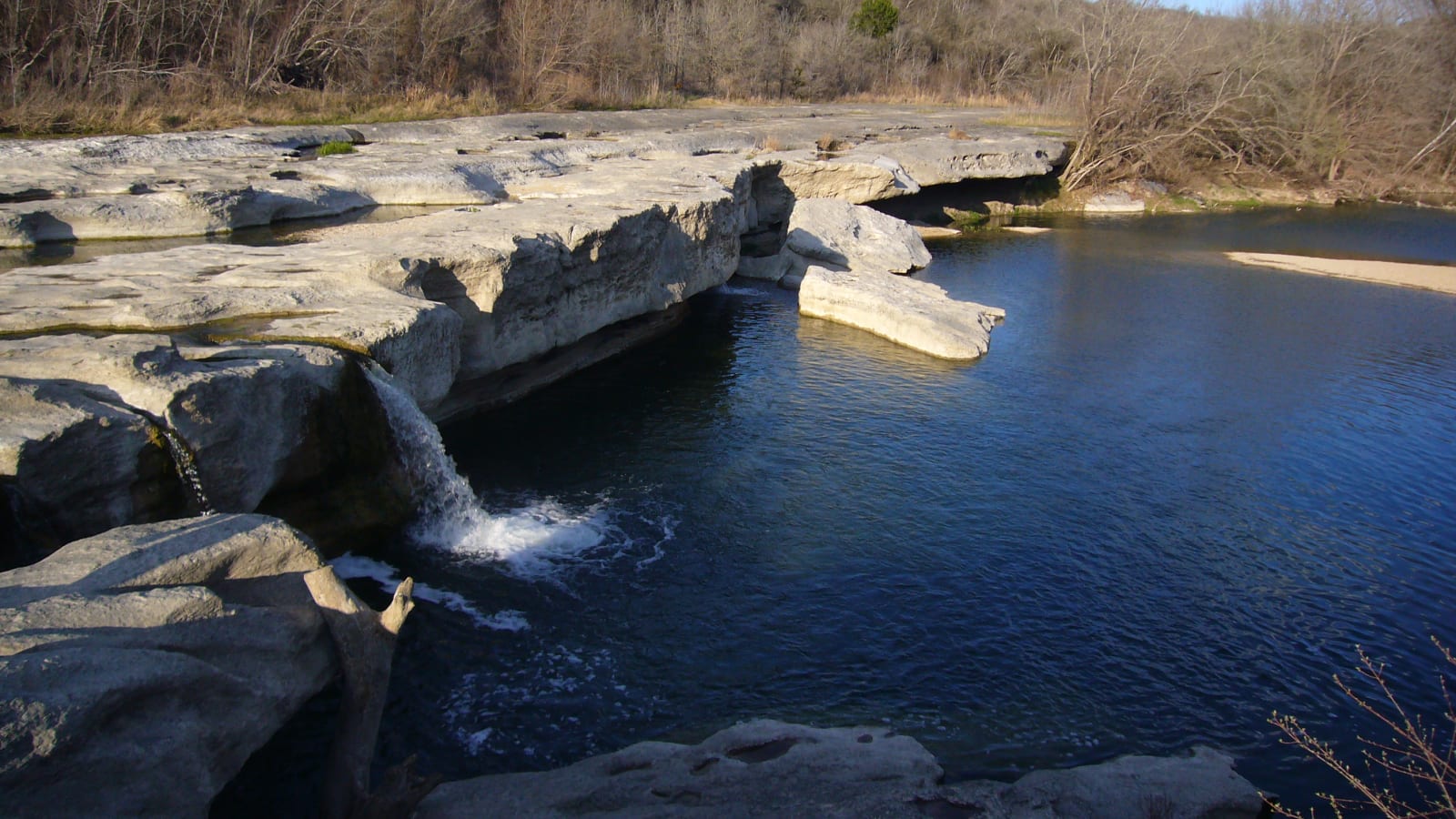
McKinney Falls State Park lies inside Austin's city limits, 13 miles from the Capitol, where Onion Creek and Williamson Creek meet. Onion Creek pours over limestone ledges at the Upper and Lower Falls. The ground here was once sea floor, broken by the eruption of the now-extinct volcano Pilot Knob just to the south. People began living here about 8,750 years ago, and the rock shelters along Onion Creek were campsites about 2,000 years ago; which groups used them is not known, though some may have become part of modern tribes such as the Tonkawa. Rangers lead walks to the Smith Rockshelter.
The park is named for Thomas F. McKinney, one of Stephen F. Austin's first 300 colonists. His firm with Samuel May Williams was the main source of men, money and supplies for the Texas army in 1835 and 1836, financing more than $150,000, over a tenth of the Revolution's cost, and its ships formed part of the Texas Navy. Between 1850 and 1852 he built a two-story limestone house, a gristmill and a dam here, and enslaved people did the work of developing the ranch. He bred racehorses, and he died here deep in debt on October 2, 1873. The ruins of his house, mill and trainer's cabin still stand.
The Smith family farmed the land for generations and gave 638 acres to the state in 1970; the park opened in 1976. Look for Old Baldy, a bald cypress more than 500 years old and 103 feet tall.
Visitor Info
On the Map
Nearby
The closest stops worth working into your route
Historical markers nearby
Roadside plaques and monuments within a short detour