 Jllm06 / CC BY-SA 4.0 via Wikimedia Commons
The Story
In June 1974 George Hanson was leveling a hill on the south edge of Hot Springs for a housing development when his machine turned up bone. The landowner, Phil Anderson, contacted four colleges, and none of them came. Hanson's son Dan, who had studied under the geologist Larry Agenbroad at Chadron State College in Nebraska, recognized a mammoth tooth, called his old professor in Arizona, and kept watch over the site day and night until Agenbroad arrived and counted at least four animals in the bulldozer's cut.
Anderson stopped work for a season, and by the end of the 1975 dig he had decided his fourteen acres were worth more as a fossil site than as house lots. He gave up the subdivision, sold the land at cost and gave the bones to a nonprofit formed to keep them.
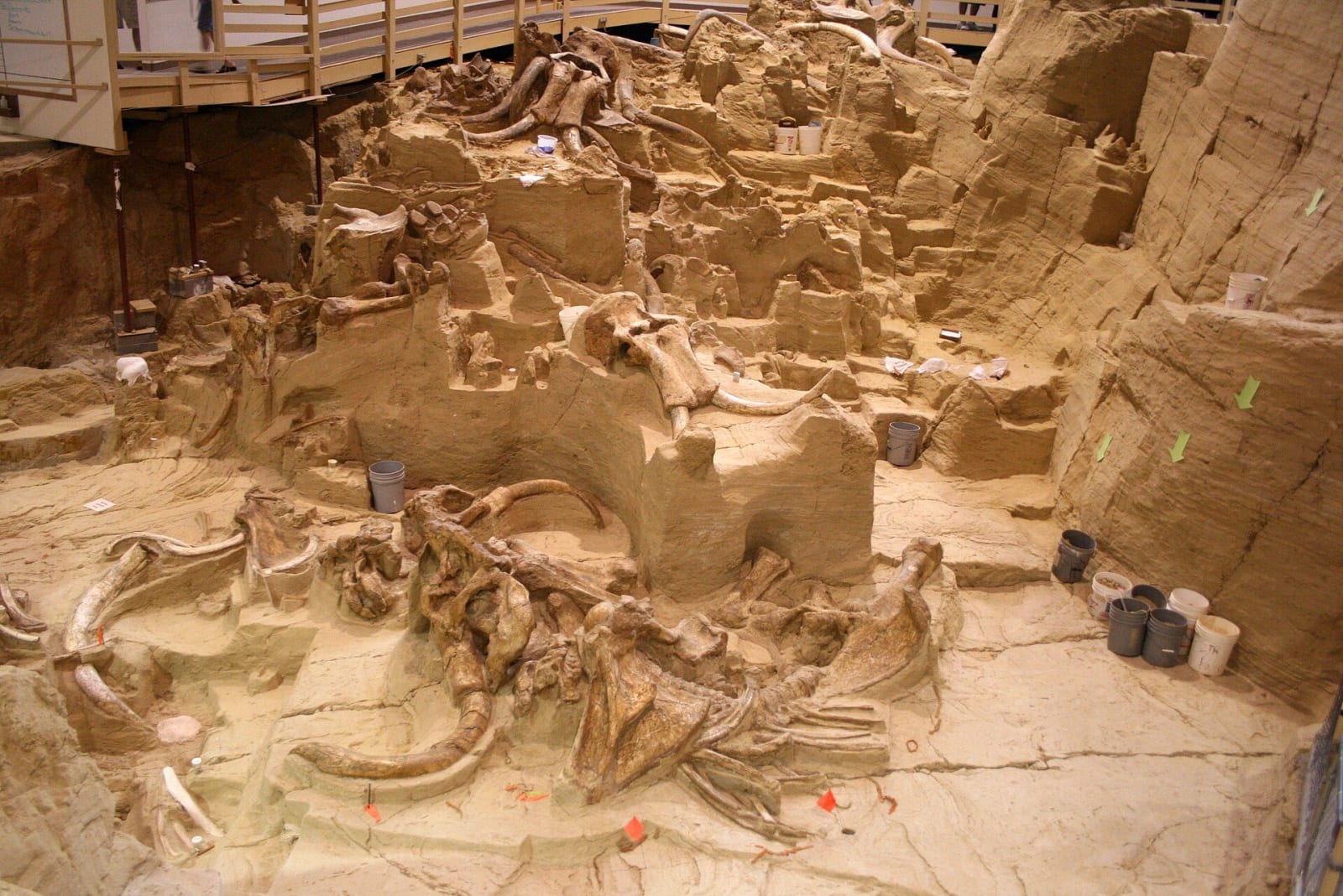
The hill had been a sinkhole, a pond fed by a warm spring, with steep walls of slick shale. Animals that came down to drink or graze and slipped in could not climb out. Excavators have found fifty-eight Columbian mammoths and three woolly mammoths, mostly young males, along with a giant short-faced bear, camels, wolves and smaller animals. The bones are soft, never turned to stone, and they stay where they were found, under a climate-controlled roof over the old pond, with a working dig in progress on the floor below the walkways.
Visitor Info
On the Map
Nearby
The closest stops worth working into your route