Custer State Park & the Southern Hills
Maka Oniye, the breathing cave the Lakota came up from, the Custer State Park bison herd, the Needles Highway, Jewel Cave, and Hot Springs' mammoth sinkhole.
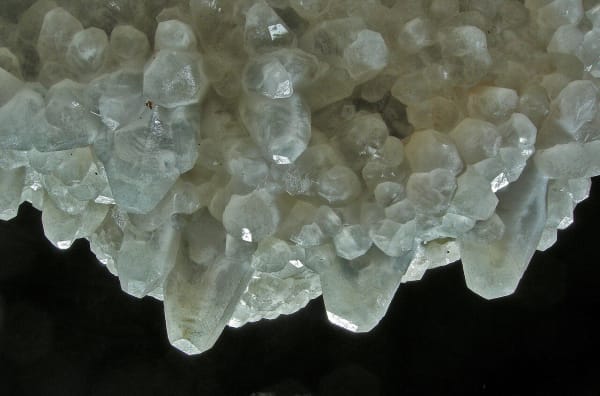
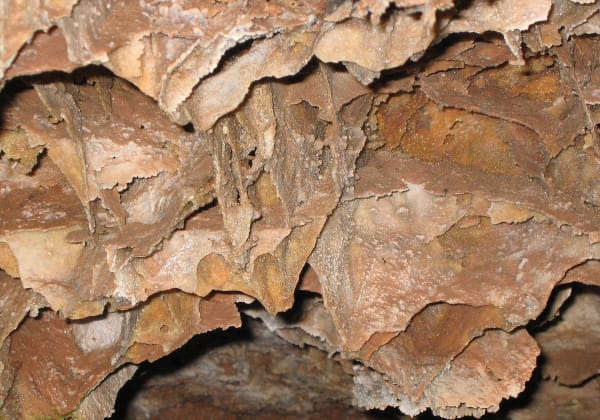
In the southern hills the ground breathes. Wind rushes in and out of a small opening in the limestone at Wind Cave, and Lakota oral tradition remembers it as Oniya Oshoka, the passage through which the first people and the bison came up onto the earth; in modern Lakota it is Maka Oniye, the breathing earth. In 1903 it became the first national park made to protect a cave, and bison graze the prairie above it. Jewel Cave, west of Custer, is one of the longest caves known.
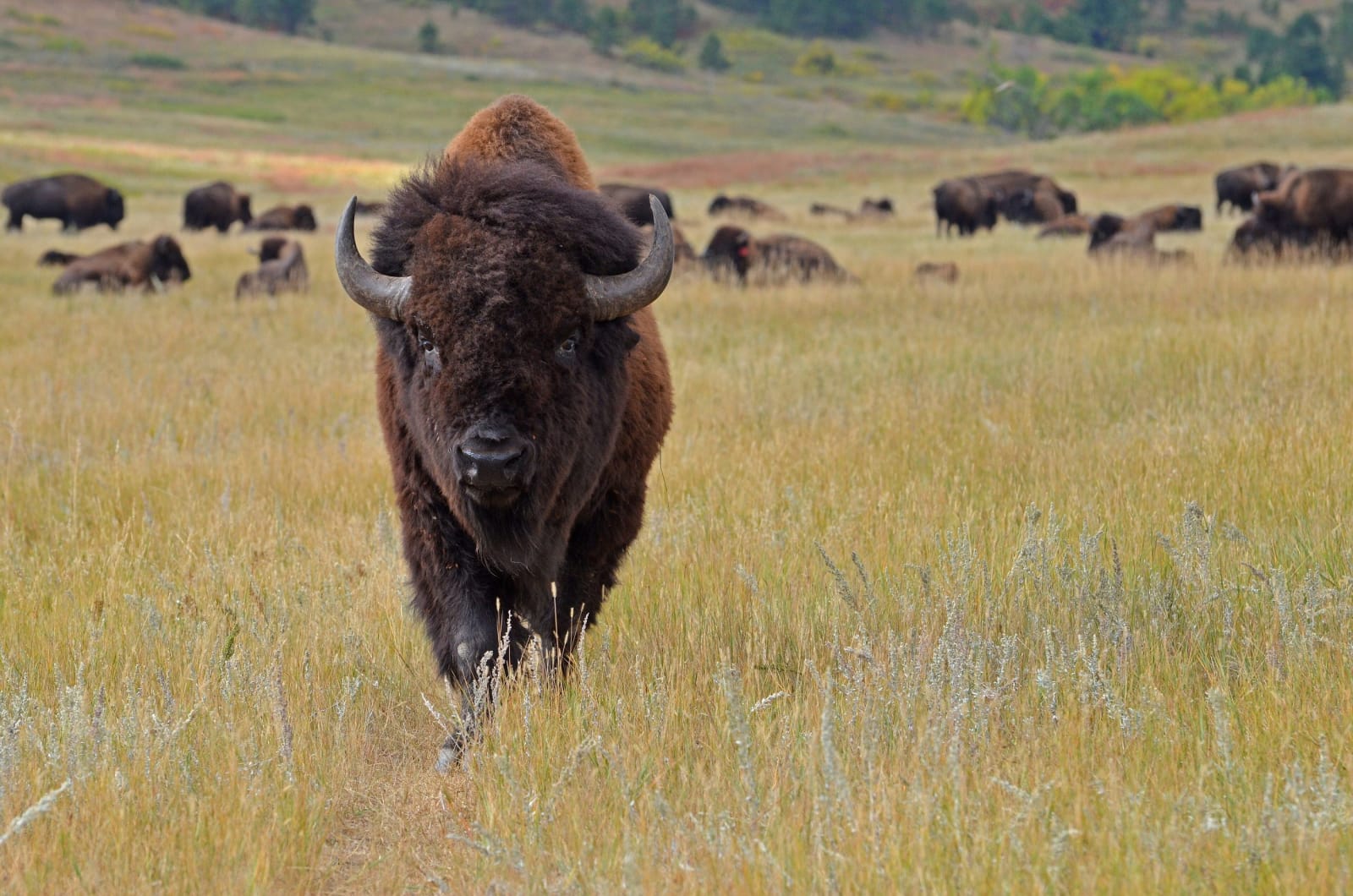
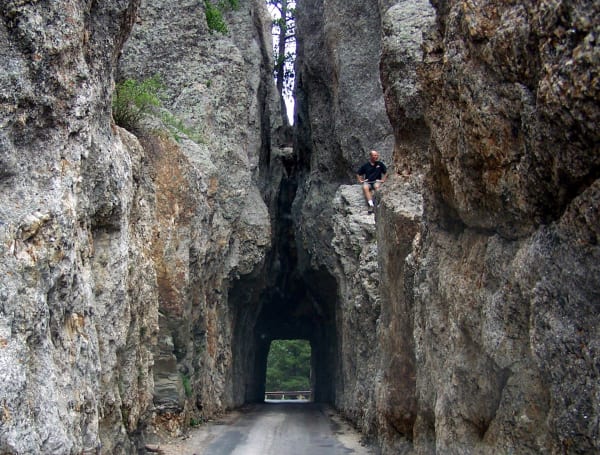
French Creek is where Custer's 1874 expedition reported gold, the news that broke the treaty and filled the hills with miners, and the town that took his name sits beside it. To the east Custer State Park holds granite spires, the Needles Highway threaded between them through tunnels barely a car wide, and one of the largest publicly owned bison herds anywhere, driven in off the hills each fall at the Buffalo Roundup.
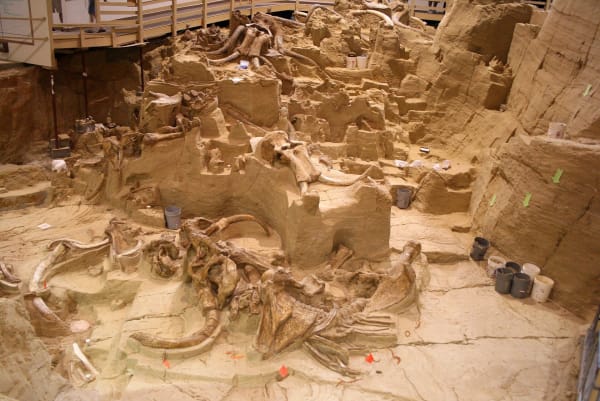
At Hot Springs warm water still rises from the ground, and on the edge of town a sinkhole that trapped Columbian and woolly mammoths has been roofed over, the bones left where they lie. Dating published in 2026 puts the bone bed at roughly 160,000 to 230,000 years old, far older than the 26,000 years long claimed for it.
What to See in Custer State Park & the Southern Hills
5 places across the region, grouped by what they are.
Geology & Rock Formations
Natural Areas
Architecture
Scenic Drives through Custer State Park & the Southern Hills
Stories from Custer State Park & the Southern Hills
Custer State Park & the Southern Hills rewards the unhurried. Pick a base, fan out, and let the country between the headline stops surprise you.
← Explore more of Open Road Guide