 Acroterion / CC BY-SA 4.0 via Wikimedia Commons
The Story
Butte's Chinatown filled the blocks around China Alley, between Galena and Mercury streets, and for its first two decades the town's unions tried to get rid of it. In 1884 they ordered the Chinese to leave Butte, and almost no one went. A boycott of Chinese-owned businesses in 1891 and 1892 collapsed for lack of public support. In December 1896 the unions tried again with the Chamber of Commerce behind them, calling on the town to shun every Chinese and Japanese business and every employer who hired Chinese or Japanese workers. Hundreds of people left.
Those who stayed went to court. Hum Fay, who ran the Palace Restaurant, Dr. Huie Pock and other merchants sued Frank Baldwin, a union waiter, and twenty other union men in federal court, with Wilbur F. Sanders, who had been one of Montana's first two U.S. senators, as their lawyer. The case was heard in Butte in 1898. They won an injunction and their legal costs, but never collected for the business the boycott had cost them. The community recovered slowly, and the 1914 city directory listed sixty-two Chinese businesses.
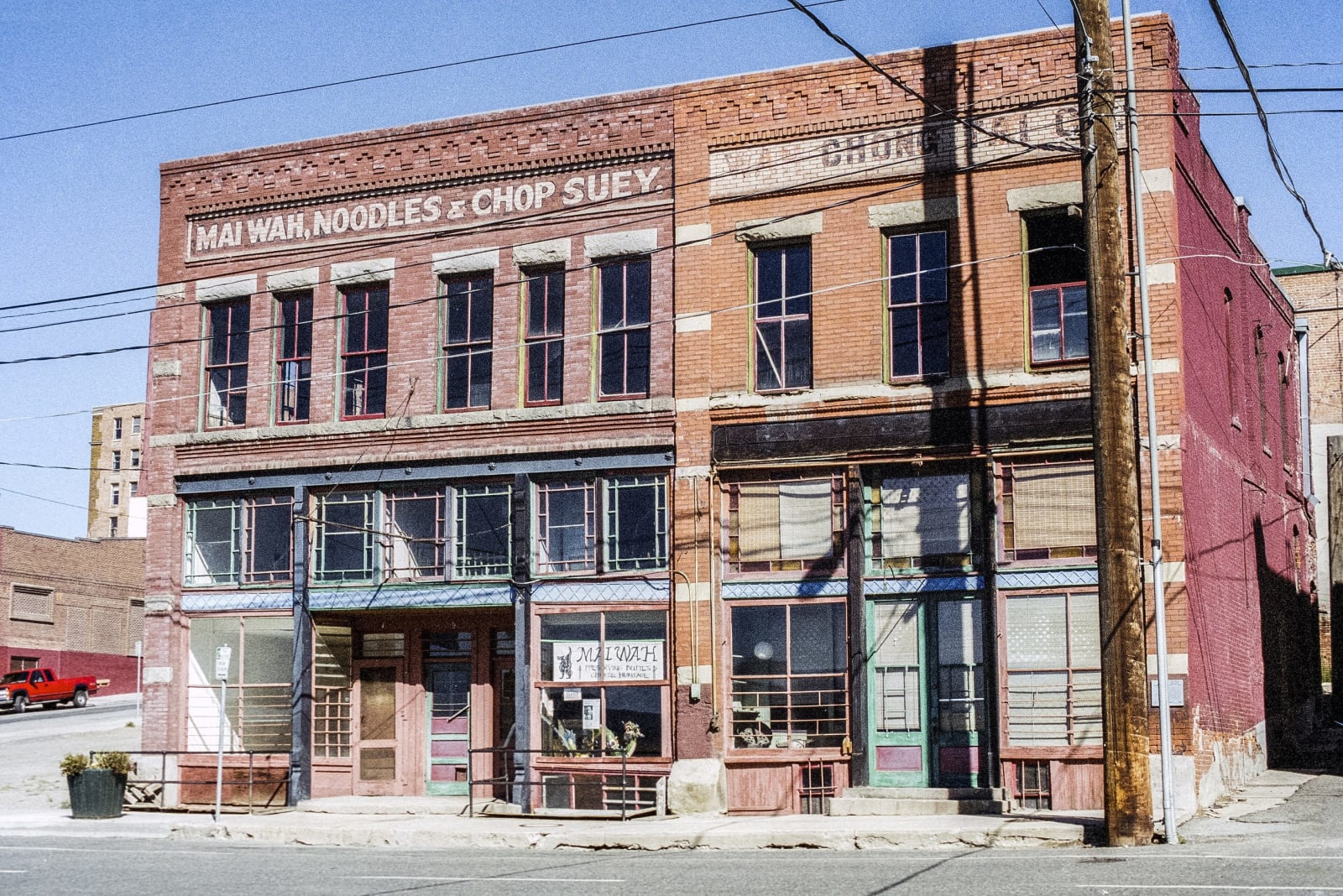
These two buildings are what is left. The Wah Chong Tai Company, a branch of a Seattle mercantile, put up its brick store on the corner of Mercury Street and China Alley at the end of the 1890s, and in 1909 built the noodle parlor next door, with the Mai Wah upstairs. After the store closed in the 1940s, Charles Bovey bought its entire contents, shelving and all, for his outdoor museum at Nevada City. The Mai Wah Society, formed in 1991 to save the buildings, negotiated them back, and since 2012 the Wah Chong Tai has stood restocked with some 2,500 of its own goods.
Visitor Info
On the Map
Nearby
The closest stops worth working into your route