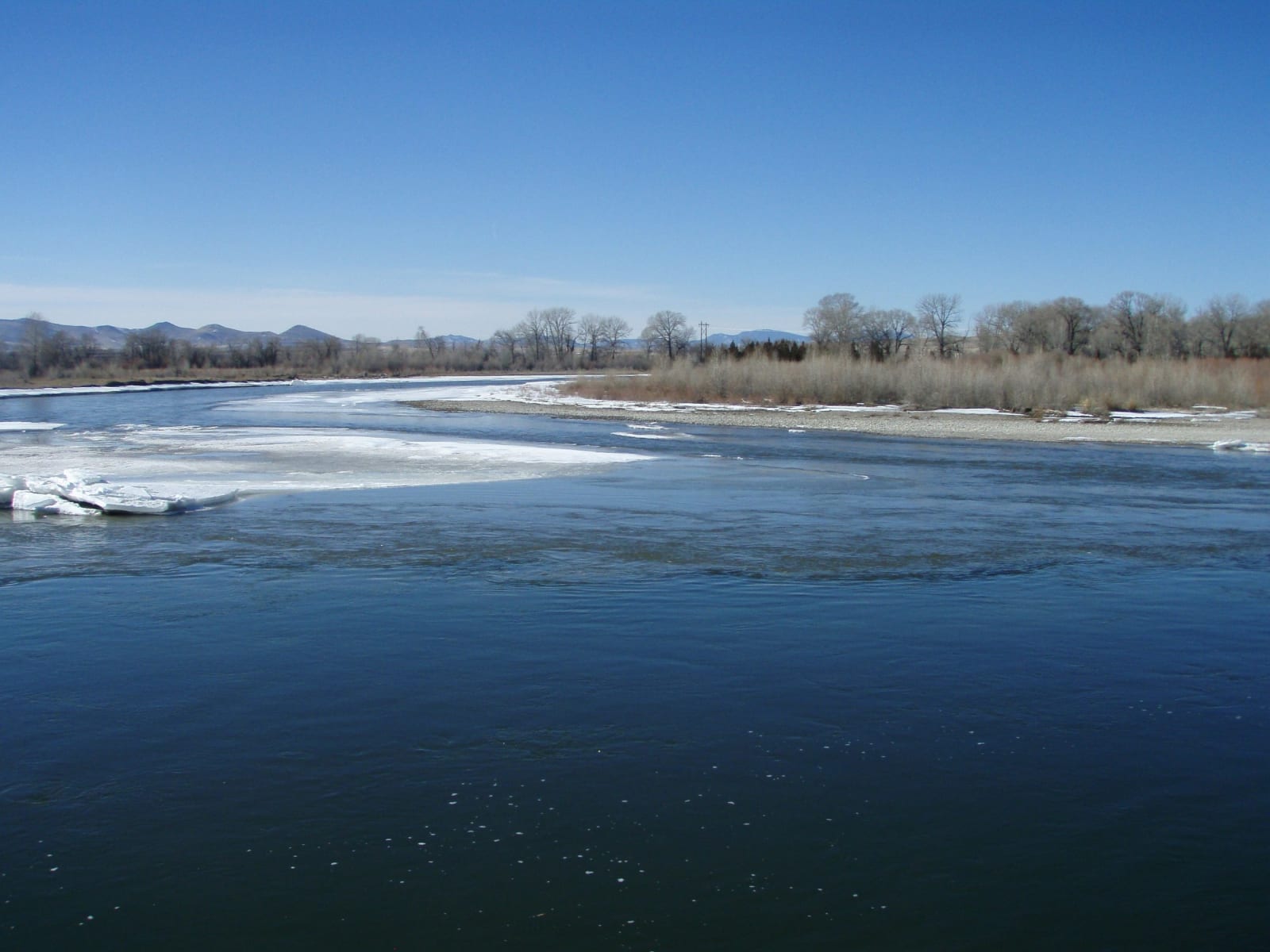
 Mike Cline / public domain via Wikimedia Commons
The Story
The three forks were a crossroads long before anyone named them. Plains and mountain nations alike came here to hunt and trade, the Shoshone among them, faded pictographs mark the cliffs, and it was here, about five years before the expedition arrived, that a Hidatsa war party took a Shoshone girl captive; the expedition knew her as Sacagawea. William Clark reached the confluence on July 25, 1805, Meriwether Lewis two days later, and on July 28 they named the rivers for President Jefferson, Secretary of State Madison and Treasury Secretary Gallatin before choosing the Jefferson to follow west.
Some of their men came back. Released from the expedition, John Colter and John Potts returned to trap this country, and George Drouillard with them, and the Blackfeet, who did not want American trappers on their hunting grounds, made their feelings plain. Potts was killed on the Jefferson and Colter, stripped naked, outran his pursuers. In April 1810 a party of the Missouri Fur Company began a palisaded post here; within days Blackfeet attacked a camp of its trappers, and in May they killed Drouillard. The company gave up the headwaters that year.
Gallatin City was laid out on the point in the 1860s, moved across the river when the stage road went elsewhere, and faded; its 1869 hotel still stands in the park. A retired smelterman, Clark Maudlin, bought land at the confluence and gave it to the state, and the park opened in 1951. Trails climb the limestone bluff Lewis climbed for his first look, and interpretive signs mark the campsite.
Visitor Info
On the Map
Nearby
The closest stops worth working into your route