 USFWS / public domain via Wikimedia Commons
The Story
When Grand Coulee Dam went up without fish passage, it cut salmon off from the whole upper Columbia and its tributaries. The government's answer was the Grand Coulee Fish Maintenance Project: hatcheries on the rivers below the dam, where salmon bound for the blocked country could be raised instead. Leavenworth was the first and biggest. Authorized in 1937 and built by the Bureau of Reclamation, it opened in 1940 as the largest salmon hatchery in the world, followed by Entiat in 1941 and Winthrop in 1942. In its first years, adult salmon trapped downstream on the Columbia were brought here to spawn.
The hatchery sits where Icicle Creek leaves its canyon, on the ground the 1855 treaty had set aside as the Wenatshapam Fishery, the Wenatchi reservation that was never created. To run the ponds, the builders diverted the creek into a channel and put structures across its old bed, and for decades salmon and steelhead could not get past the hatchery into the miles of creek above it. Conservation groups took the hatchery to court over it.
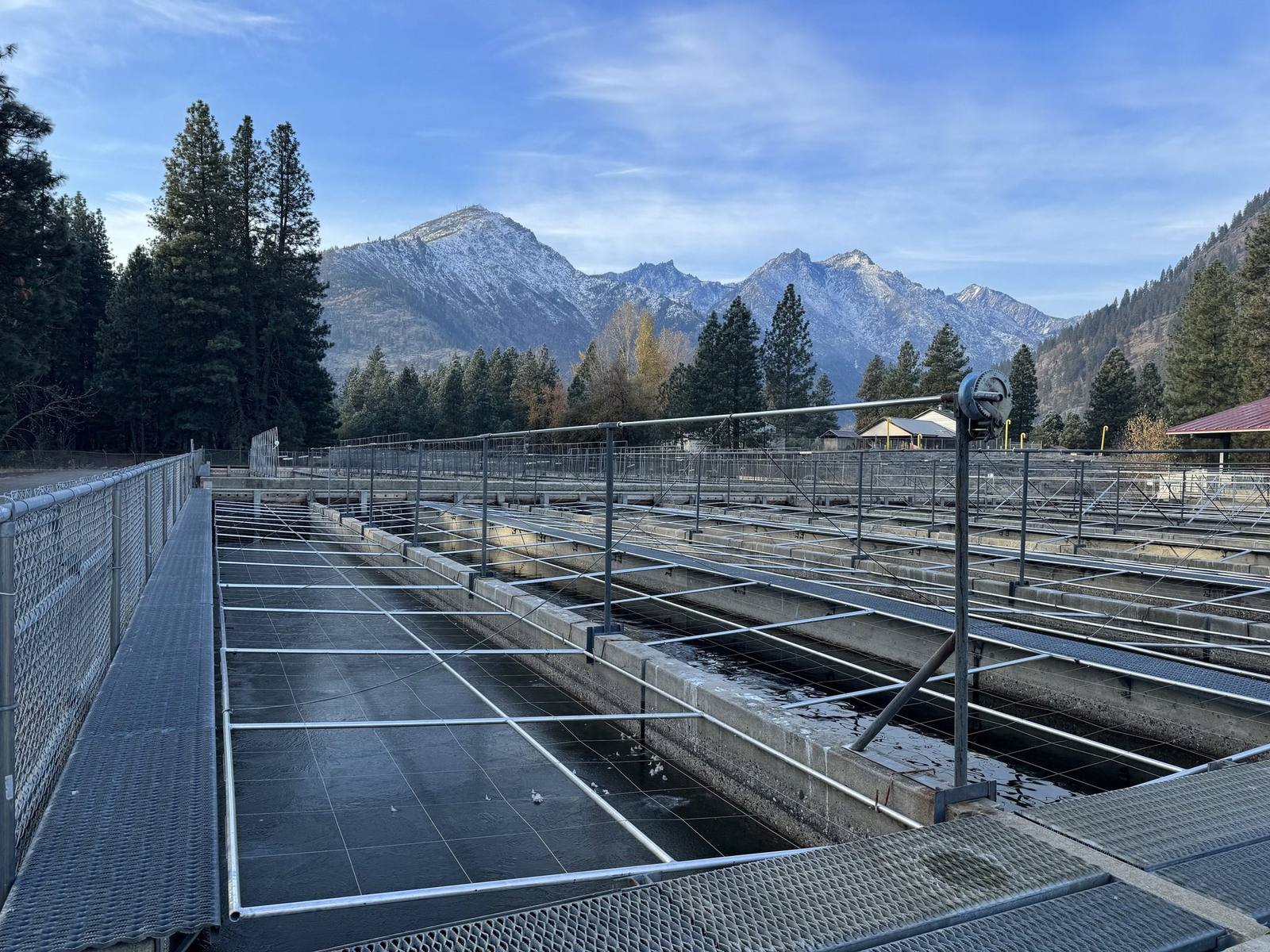
The hatchery now releases more than a million young spring Chinook into Icicle Creek each April, and the adults come back to it in late spring and summer, climbing the ladder into the holding ponds. Nearby, fishing platforms built by Native fishermen stand over the creek. The grounds are open, with exhibits, the raceways and a trail along the water.
Visitor Info
On the Map
Nearby
The closest stops worth working into your route
Historical markers nearby
Roadside plaques and monuments within a short detour