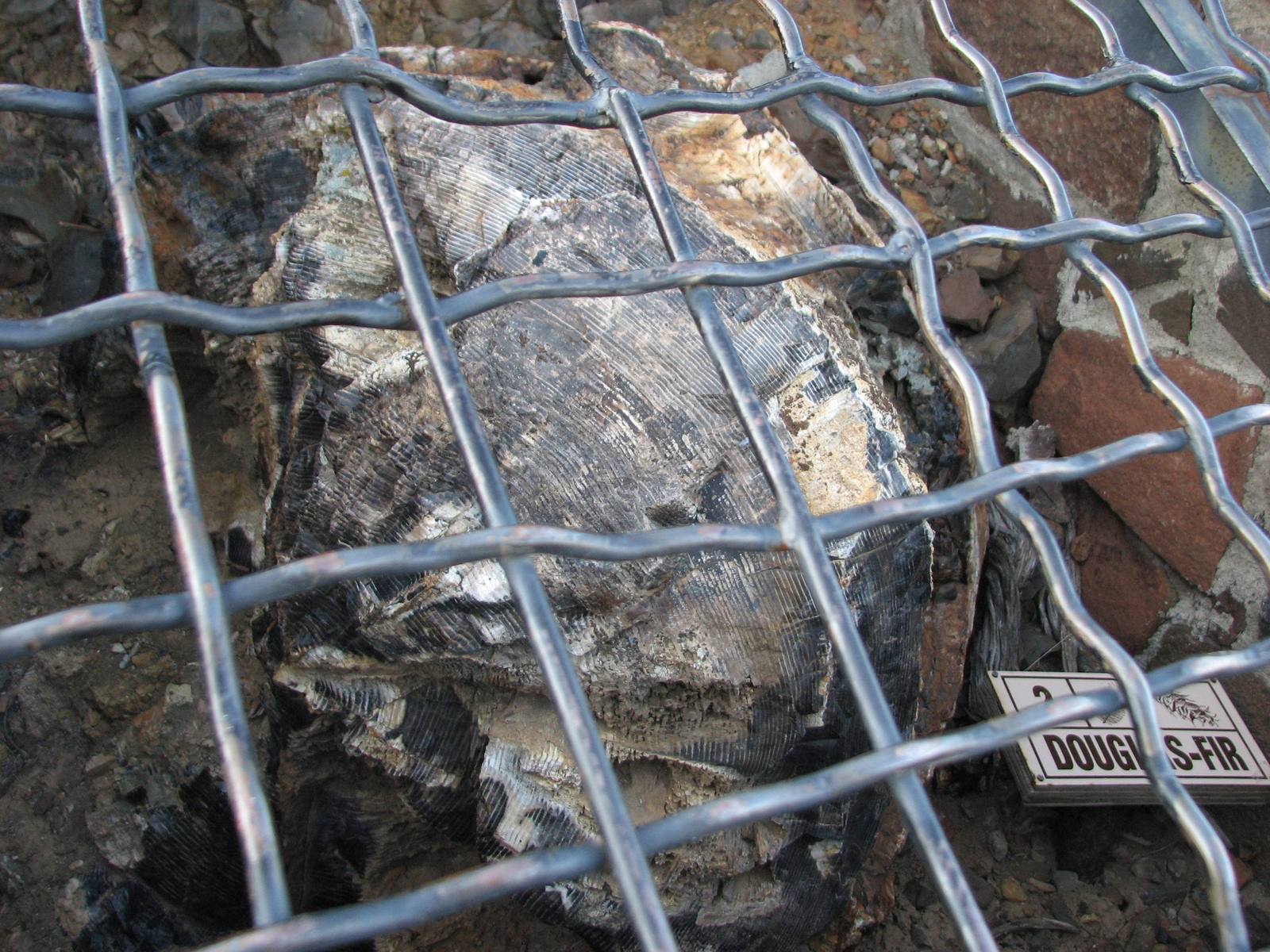
 Steven Pavlov / CC BY-SA 4.0 via Wikimedia Commons
The Story
Road crews building the Vantage highway kept turning up stone logs in the late 1920s, and in 1931 a teacher at the normal school in Ellensburg began studying them properly. George Beck had been hired to teach music and introductory science. On the afternoon of November 29, 1932, he and four students dug a soft, opaline log two feet across out of a slope in Ryegrass Coulee and found under the microscope that it was ginkgo, the first complete petrified ginkgo log recorded. Only a handful of the thousands of logs here are ginkgo, but the rarity named the park.
The forest did not grow together. Fifteen to sixteen million years ago, mudflows off the rising Cascades carried spruce, redwood and Douglas fir down into a lowland swamp of elm, sycamore, walnut and ginkgo. Then a basalt flow poured into the water, sealed the logs from the air, and silica from the cooling lava replaced the wood cell by cell.
Beck wanted the logs left where they lay. The Civilian Conservation Corps arrived in October 1935 and built the Trees of Stone trail, a small trailside museum and stone-and-iron cages over nearly two dozen logs in place, and the interpretive center on the bluff above the river was finished in 1938. Beside it are petroglyphs that a retired mason, Bob Atwell, and a neighbor cut from the basalt and rafted across the Columbia in 1958 and 1959 ahead of Wanapum Dam, losing some pieces overboard.
Visitor Info
On the Map
Nearby
The closest stops worth working into your route
Historical markers nearby
Roadside plaques and monuments within a short detour