 Carol M. Highsmith / public domain via Library of Congress
The Story
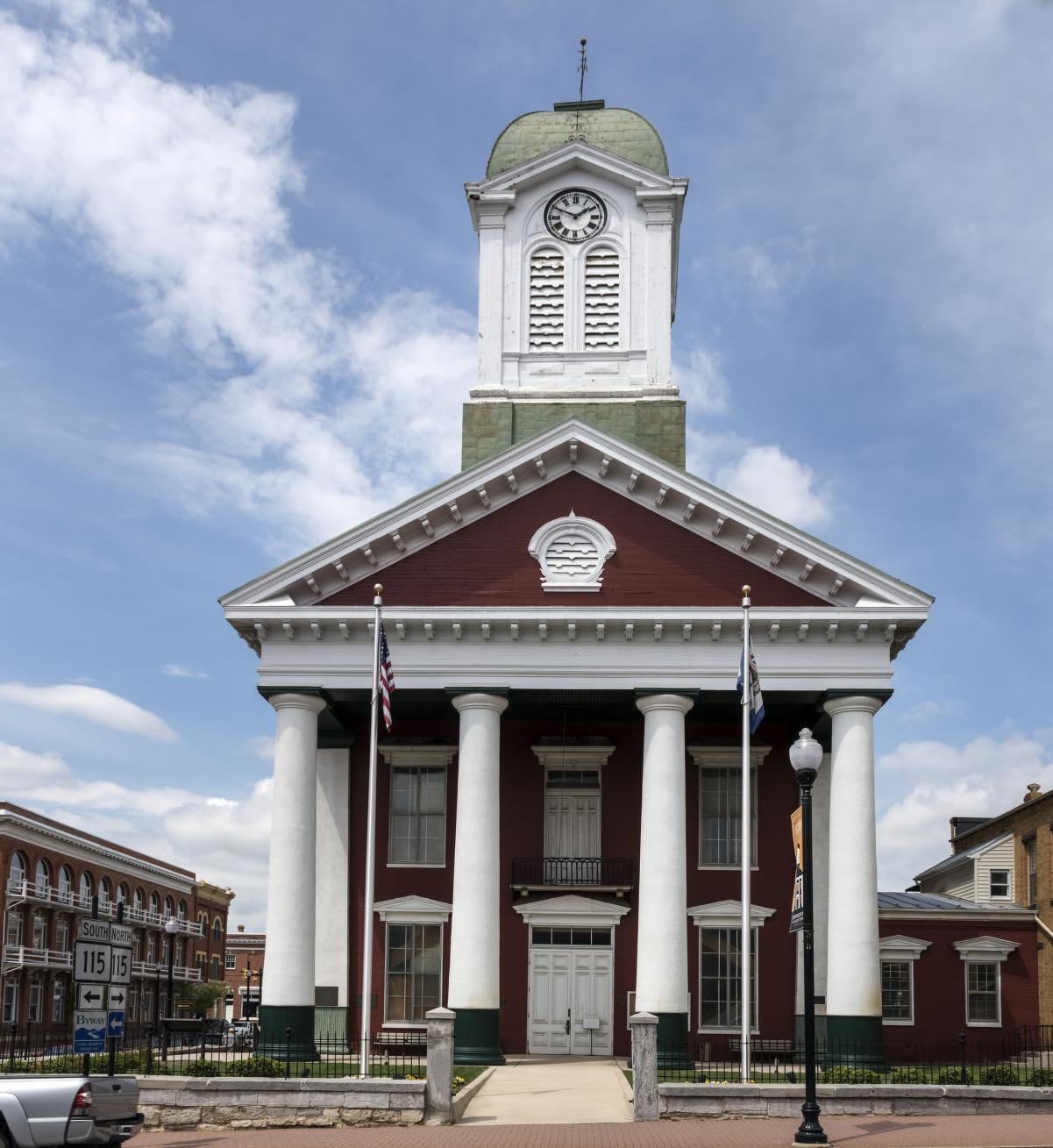
Two treason trials were held in this building sixty-three years apart. In late October 1859 John Brown, still weak from a Marine's saber, lay on a cot in the courtroom through a five-day trial before Judge Richard Parker, himself an enslaver and slave trader, and an all-white jury that included enslavers. The jury took 45 minutes: guilty of murder, of treason against Virginia and of inciting slave insurrection. Brown was hanged in Charles Town on December 2, and John Copeland and Shields Green, two of the five Black men who had followed him, were hanged there on December 16 after their own trials.
Shelled in the Civil War and left empty until 1872, the 1836 courthouse was rebuilt inside its old front, and the tall clock cupola dates from then. In 1922 coal miners stood trial in it. After the 1921 armed march on Blair Mountain the state charged union leaders and marchers with treason against West Virginia, and the cases were moved here, far from the coalfields, with coal company lawyers prosecuting. On May 27, 1922, the jury acquitted Bill Blizzard of the United Mine Workers; Walter Allen, a Cabin Creek miner, was convicted of treason, and the trials drained the union's treasury for years.
The courthouse became a National Historic Landmark in 2023 for the mine-war trials. It is a working county building at George and Washington streets; a 1986 plaque honoring Jefferson County's Confederate soldiers was voted off its entrance in 2018. Martin Delany, born in Charles Town, had helped Brown frame his provisional constitution.
Visitor Info
On the Map
Nearby
The closest stops worth working into your route
Historical markers nearby
Roadside plaques and monuments within a short detour