Home / West Virginia / Harpers Ferry & the Eastern Panhandle / Storer College
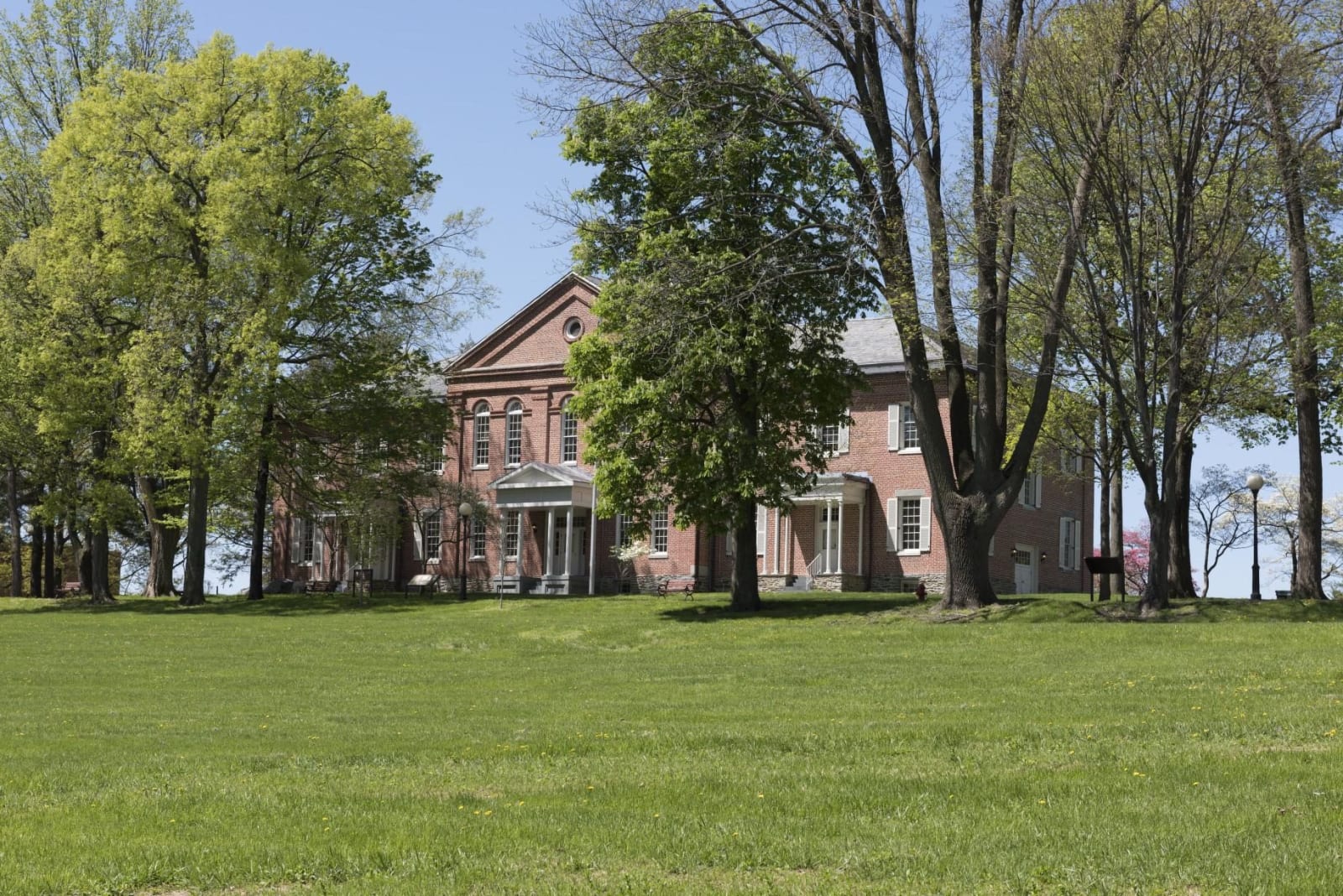
Anthony Hall, a red brick building with a gabled center, seen across a wide lawn through tall spring trees on Camp Hill.Carol M. Highsmith / public domain via Library of Congress
🏛️Historical

Storer College

Part ofHarpers Ferry & the Eastern Panhandle

The Camp Hill campus where Freewill Baptists opened a school for freed people in 1867, the only college in West Virginia open to Black students until 1891, and host of the Niagara Movement in 1906.

⏱
Duration
Thirty minutes to an hour.
🎟
Admission
Included with the Harpers Ferry National Historical Park entrance pass: $20 per vehicle or $10 per person on foot or bicycle (NPS, 2026).
📅
Best Season
Year round; the park is open daily except Thanksgiving, December 25 and January 1 (NPS, 2026).

The Story

When the war ended, more than 30,000 people newly freed from slavery lived in the Shenandoah Valley, and thousands had found refuge at Harpers Ferry behind Union lines. Nathan Brackett, a Freewill Baptist missionary from New England, worked from the Lockwood House on Camp Hill setting up primary schools across the Eastern Panhandle; by 1867 he supervised 16 teachers and 2,500 students. That year, with a matching gift from John Storer of Maine and help from the Freedmen's Bureau, the mission became Storer College, open to women and men of every race. White neighbors answered with mobs, vandalism and stones thrown at teachers in the street. For 25 years it was the only school in the state where a Black student could study past the primary grades.

Frederick Douglass, a trustee, spoke here in 1881. On August 15, 1906, the Niagara Movement opened its first public meeting on this campus: five days that included a barefoot walk to John Brown's Fort and W. E. B. Du Bois's Address to the Country, claiming every right of a freeborn American. The college's white presidents were less steady. In 1931 President Henry McDonald and the Storer singers took part in dedicating a tablet to Heyward Shepherd raised by Confederate memorial groups, a Lost Cause monument Du Bois and the NAACP had opposed.

Richard I. McKinney became the first Black president in 1944. Storer closed in 1955, after Brown v. Board, when the state ended its yearly stipend; more than 7,000 students had studied here. The Park Service owns the surviving buildings on Camp Hill.

Visitor Info

⏱
Time Needed
Thirty minutes to an hour.
🎟
Admission
Included with the Harpers Ferry National Historical Park entrance pass: $20 per vehicle or $10 per person on foot or bicycle (NPS, 2026).
📅
Best Season
Year round; the park is open daily except Thanksgiving, December 25 and January 1 (NPS, 2026).
🛣️
Highway
US 340

On the Map

Nearby

The closest stops worth working into your route

historical0.6 mi away
John Brown's Fort
The 1848 armory fire-engine house where John Brown's raiders made their last stand in October 1859, moved four times and now back in Lower Town near The Point.
historical1 mi away
Harpers Ferry National Historical Park
The river town in the Blue Ridge water gap where the Potomac meets the Shenandoah: the old U.S. Armory grounds, Lower Town's museums, Jefferson Rock and the Appalachian Trail.
historical1.3 mi away
Murphy-Chambers Farm
Fields and earthworks above the Shenandoah where A. P. Hill's 1862 flank attack forced the Harpers Ferry surrender, and where John Brown's Fort stood from 1895 to 1909.
historical6.8 mi away
Jefferson County Courthouse
The Charles Town courthouse where John Brown was tried for treason in 1859 and Bill Blizzard and the Blair Mountain miners in 1922, a National Historic Landmark since 2023.
historical8.1 mi away
Shepherdstown Historic District
A Potomac river town at Pack Horse Ford, chartered in 1762, where James Rumsey ran his steamboat in 1787 and German Street is still the main road through town.
historical12 mi away
Waterford Historic District
A Quaker mill village of about 1733 that sided with the Union, raised the Loudoun Rangers, and kept its 1867 Black schoolhouse and 1891 church.

Historical markers nearby

Roadside plaques and monuments within a short detour

Marker0 mi away
Storer College Veterans Memorial Gate
Harpers Ferry
Marker0.1 mi away
Harpers Ferry / John Brown's Fort
Harpers Ferry
Marker0.6 mi away
Lewis and Clark
Harpers Ferry
Marker0.6 mi away
"I just had to speak out" - Pearl Tatten
Harpers Ferry
Marker0.6 mi away
Short-lived Sanctuary
Harpers Ferry
Marker1.4 mi away
Union Skirmish Line
Harpers Ferry