 Carol M. Highsmith / public domain via Library of Congress
The Story
Five of the men who came into Harpers Ferry with John Brown on the night of October 16, 1859, were Black. Dangerfield Newby, born enslaved in Virginia and freed in Ohio, had tried to buy his wife and children and been refused; he was the first raider killed, and letters from his wife begging him to come for them were found on his body. She and the children were sold after his death. Lewis Sheridan Leary, who had left a wife and baby in Oberlin, was mortally wounded crossing the Shenandoah. His nephew John Anthony Copeland, an Oberlin student, and Shields Green, who had escaped slavery in South Carolina and met Brown through Frederick Douglass, were captured here and hanged at Charles Town on December 16. Osborne Perry Anderson got away to Canada and wrote A Voice from Harpers Ferry.
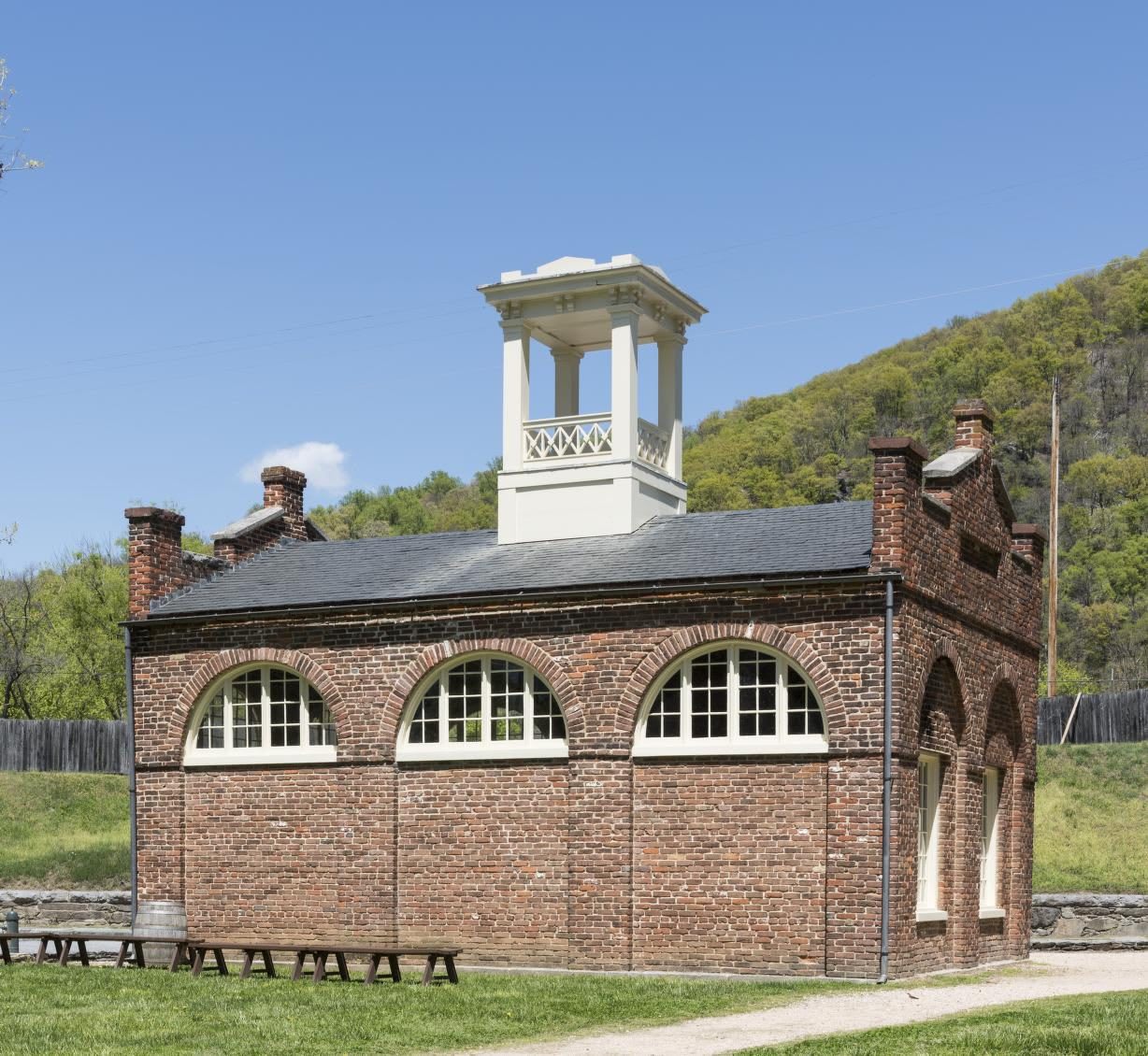
The building was the armory's fire-engine and guard house, finished in 1848. Brown's men held their hostages inside until Marines broke a door with a ladder on the morning of October 18. The first person killed in the raid had been Heyward Shepherd, a free Black baggage porter at the station; ten of Brown's eighteen men died.
Then the building traveled. It went to Chicago in 1891 beside the World's Columbian Exposition and drew almost no one, came back in 1895 to the Murphy farm above the Shenandoah, moved to Storer College in 1909, and returned to Lower Town in 1968, about 150 feet from its first site, which lies under a railroad embankment. It is the last building on Shenandoah Street before The Point.
Visitor Info
On the Map
Nearby
The closest stops worth working into your route
Historical markers nearby
Roadside plaques and monuments within a short detour