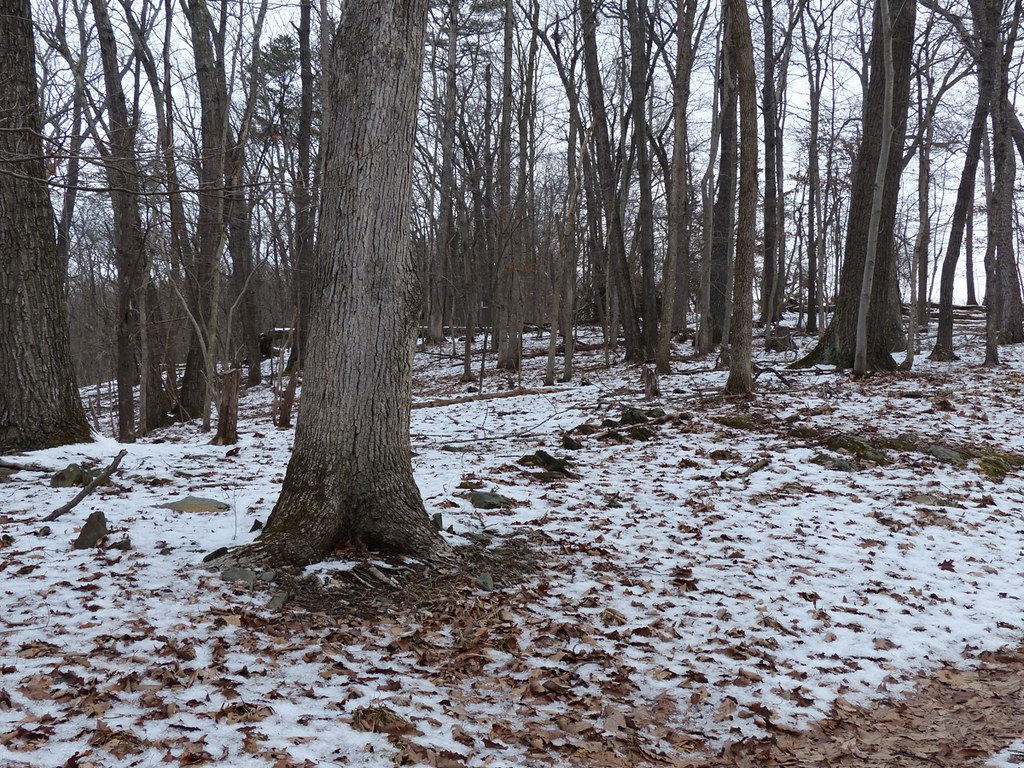
 NatureServe / public domain via Flickr
The Story
On September 15, 1862, Confederate troops under A. P. Hill came around the Union left across these fields above the Shenandoah, the blow that forced the Harpers Ferry garrison of about 12,500 to surrender to Stonewall Jackson, the largest surrender of United States troops in the war. Union soldiers had already pushed out Edmund Chambers, the farm's owner since 1848, and in 1864 Philip Sheridan's men dug the earthworks that still run through the woods.
The surrender had a cost the battle maps leave out. That summer about 5,000 people who had escaped or been taken from slavery were living in camps in and around the town. The Union commander refused to let them go north, and after the surrender Hill's soldiers searched Harpers Ferry for Black residents, free or newly freed, and drove them south; some were returned to enslavers and some sold at auction in Richmond. Estimates of those seized in the campaign run from about 1,000 to as many as 4,000. A week later Lincoln signed the preliminary Emancipation Proclamation.
In 1895 Alexander Murphy, the farm's new owner, let John Brown's Fort be rebuilt on the bluff and opened it to visitors, and in 1906 delegates of the Niagara Movement made their pilgrimage to it here. Its footprint sits near the Shenandoah overlook, and Murphy's descendants kept the farm for well over a century. Walk in from the visitor center, or park on Murphy Road for an easy three-quarter-mile stroll to the overlook past cannons and earthworks; please stay off the fragile earthen walls.
Visitor Info
On the Map
Nearby
The closest stops worth working into your route
Historical markers nearby
Roadside plaques and monuments within a short detour