 Acroterion / CC BY-SA 4.0 via Wikimedia Commons
The Story
Adam Stephen, a Scottish-born physician, shared command of the Virginia frontier with George Washington in the French and Indian War and came through Fort Necessity and Braddock's defeat with his name intact. In the Revolution he rose to major general, until his conduct at Brandywine and Germantown in 1777 ended his army career. Back in the valley he pressed for the creation of Berkeley County in 1772, served as its first sheriff, and laid out Martinsburg on land from Thomas Bryan Martin, Lord Fairfax's nephew; the town was chartered in 1778. Stephen was the county's largest landowner, with two mills, a distillery and a gun factory along Tuscarora Creek, and in 1788 he helped persuade Virginia's convention to ratify the Constitution. He died in 1791.
The county he founded was slaveholding country. The 1830 census counted 1,919 enslaved people among Berkeley County's 10,518 residents, and some plantations held 100 or more.
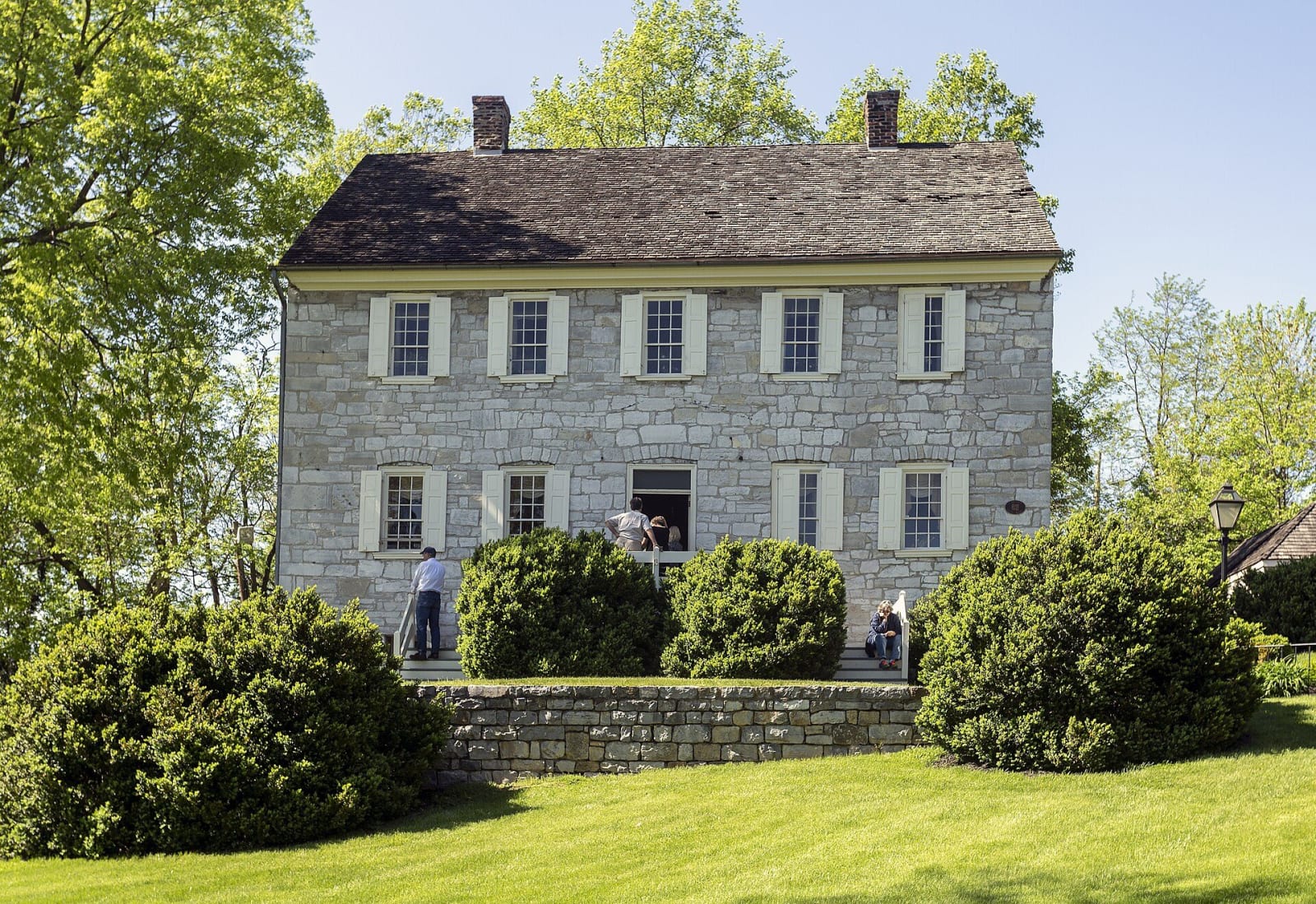
His two-and-a-half-story house of shaped limestone, built between 1772 and 1789, stands on a prominent stone ledge, with stone steps leading from the basement down into a natural cave that local cavers have been digging out since 2002. Nearly ruined by the 1960s, it was restored by the General Adam Stephen Memorial Association. Beside it, built into the railroad embankment about 1875, is the Triple Brick House, split into three dwellings for B&O workers and now a museum of local quilts, uniforms and railroad pieces. The house is open for tours on weekends from May through October.
Visitor Info
On the Map
Nearby
The closest stops worth working into your route
Historical markers nearby
Roadside plaques and monuments within a short detour