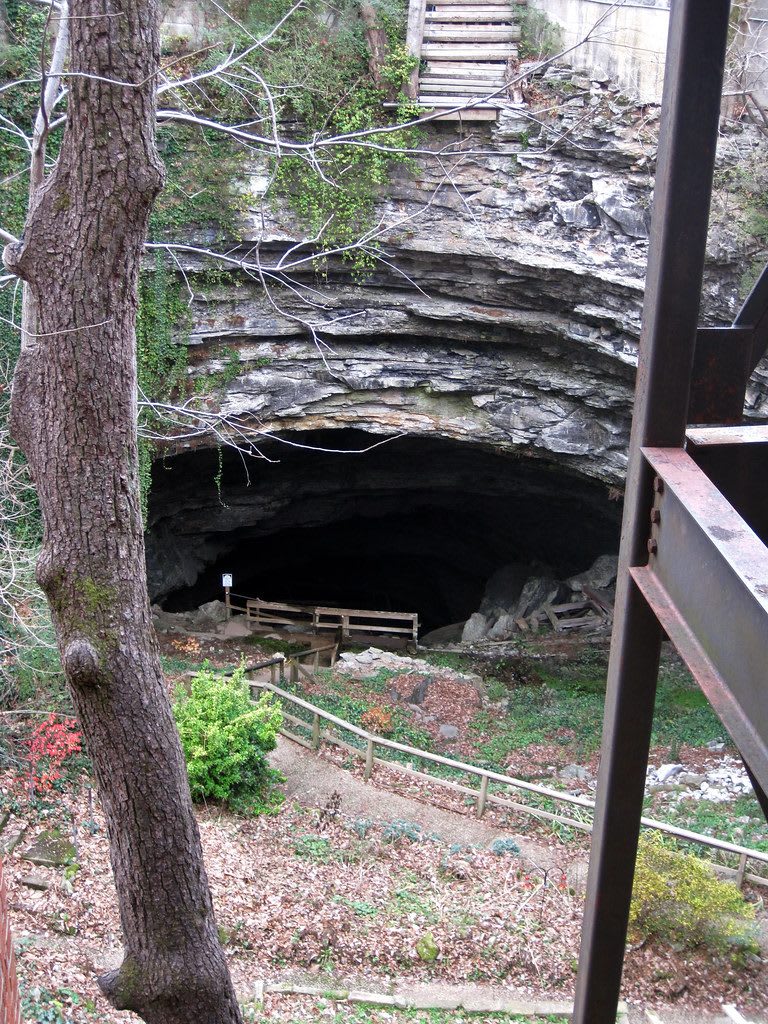
 James St. John / CC BY 2.0 via Flickr
The Story
Horse Cave grew up over the hole. The town's main street runs past a great sinkhole, and at the bottom of it an underground river comes into the light and goes back under. Native people and then settlers lived around this water long before it had a commercial name. In 1879 the town tried to draw its public water from the cave, and after Dr. George A. Thomas bought it in 1889 he put in a turbine and, in 1892, a generator, giving Horse Cave early electric light. In 1916 he opened half a mile to visitors, and a naming contest called it Hidden River Cave.
Then the town ruined it. Homes and businesses sent sewage and trash into wells, sinkholes and the cave itself, and by the mid-1930s the water supply was badly fouled. Thomas sued a landowner over the dumping in 1939 and lost, and the smell closed the tours in 1943. A 1963 treatment plant drained into dry wells that ran back into the cave, and gasoline leaked into the system in 1975.
The recovery is why to stop. The American Cave Conservation Association moved here from Virginia in 1987, a regional sewage system came online in 1989, and by 1991 the water held enough oxygen for crayfish again. A 2013 survey counted 21 cave species, among them eyeless crayfish and southern cavefish. The American Cave Museum opened in 1992 above the sinkhole, and in 2020 tours reached Sunset Dome for the first time in 76 years.
Visitor Info
On the Map
Nearby
The closest stops worth working into your route
Historical markers nearby
Roadside plaques and monuments within a short detour