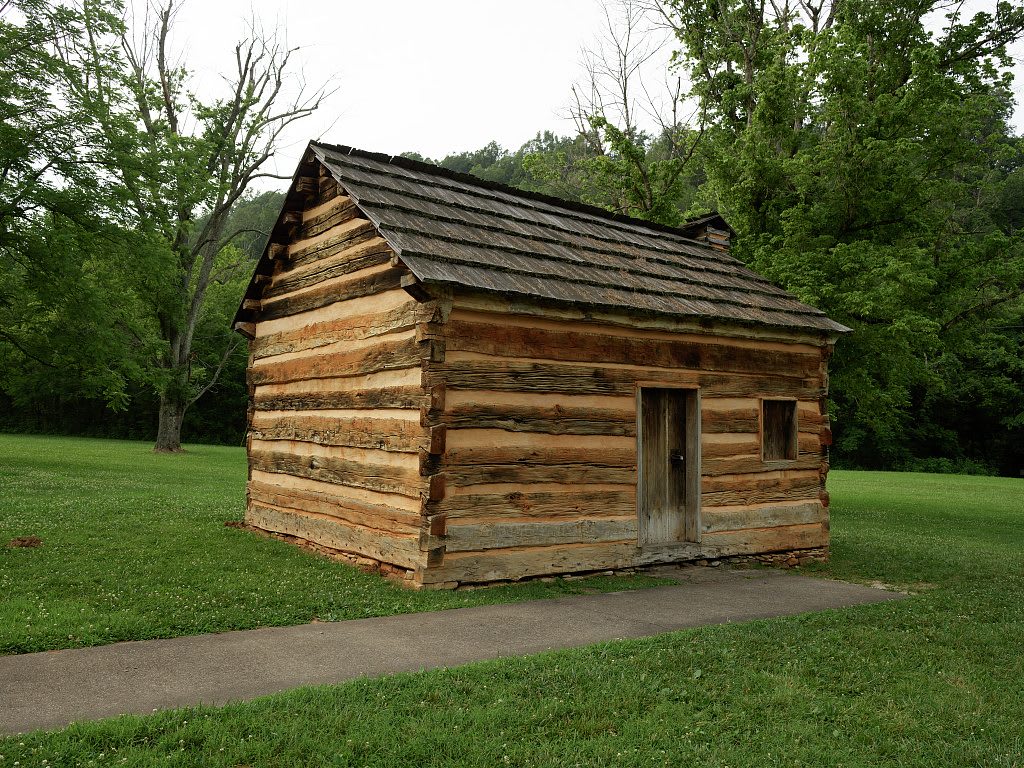
 Carol M. Highsmith / public domain via Library of Congress
The Story
"My earliest recollection is of the Knob Creek place," Lincoln wrote in June 1860 to Samuel Haycraft of Elizabethtown, who had invited him back to Kentucky. The family came here in 1811, after losing the Sinking Spring farm, and worked 30 acres of a 228-acre tract in the valley under the knobs, leased beside the Old Cumberland Road that ran from Louisville to Nashville. They stayed until December 1816, when they crossed into Indiana.
Lincoln remembered a lot of this place: carrying water and wood, his mother reading from the Bible, a baby brother, Thomas, born and buried here, and planting pumpkin seeds in every other hill of a field that a flash flood washed away overnight. He and his sister Sarah walked to short subscription schools kept by Zachariah Riney and Caleb Hazel. Austin Gollaher, a neighbor boy, pulled him out of the swollen creek with a branch when neither could swim. Historians believe it was on this road that he first saw enslaved people driven south to be sold.
The Lincolns' cabin is gone; Gollaher later used its logs for a stable that a flood carried off. The cabin on the site, built about 1800, is thought to be the Gollaher family's, moved here to show what the Lincolns' looked like. The log Lincoln Tavern beside it went up in 1933 as a roadside dance hall for the Lincoln tourist trade and later served as a museum. Larue County bought the farm and it joined the national park in 2001.
Visitor Info
On the Map
Nearby
The closest stops worth working into your route
Historical markers nearby
Roadside plaques and monuments within a short detour