 Carol M. Highsmith / public domain via Library of Congress
The Story
Thomas Lincoln bought the Sinking Spring farm, named for the spring that drops into a limestone hollow below the hill, in December 1808, and his son Abraham was born in a one-room log cabin here on February 12, 1809. The Lincolns kept the farm only about two years: a dispute over its title, one of the boundary tangles that plagued Kentucky land, sent them to a leased farm on Knob Creek in 1811.
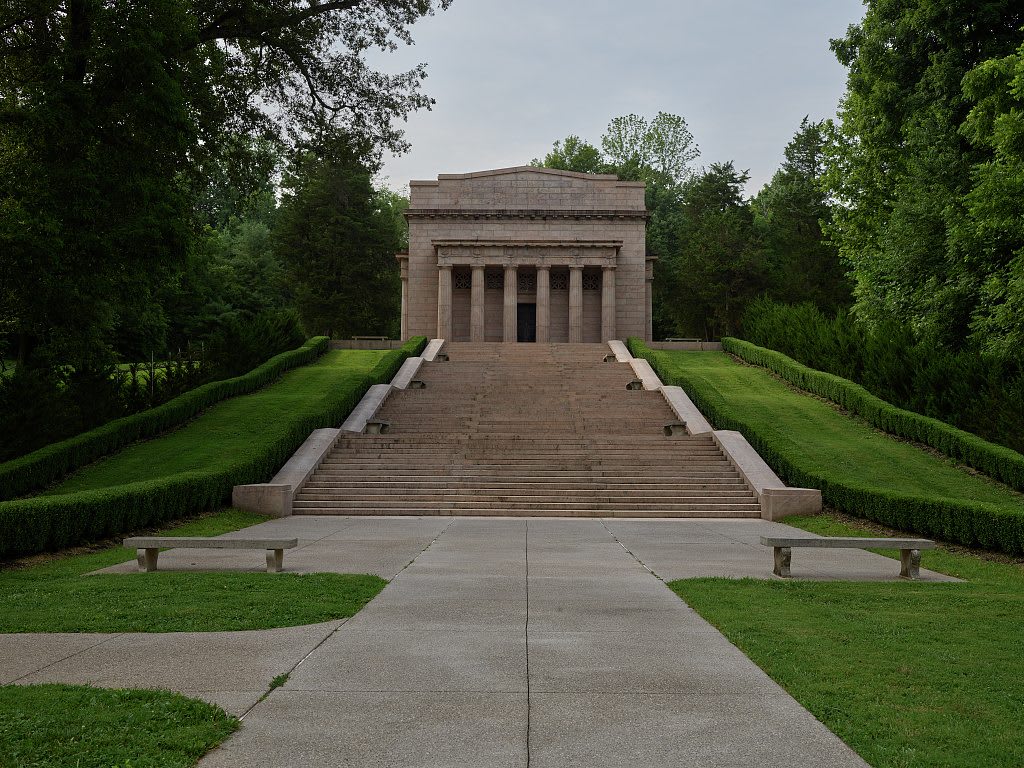
The cabin itself was gone before 1865. A New York businessman, Alfred Dennett, bought the farm in 1894 and toured a reassembled "birth cabin" around the country, its logs eventually mixed with others said to come from Jefferson Davis's birthplace. The Lincoln Farm Association bought the land and its logs, and on the centennial, February 12, 1909, Theodore Roosevelt laid the cornerstone of a granite memorial by John Russell Pope. William Howard Taft dedicated it on November 9, 1911. Its 56 steps stand for the years of Lincoln's life and its 16 windows for the sixteenth president. Inside sits a cabin cut down to fit, now called symbolic: most of its logs date from the 1840s.
The association gave the site to the nation in 1916; the War Department ran it until 1933 and the National Park Service since, and the boyhood farm at Knob Creek, ten miles northeast, joined it in 2001. Start at the visitor center for the film and exhibits, climb to the memorial, then walk down to the spring, the family's water, and the site of the Boundary Oak that marked the farm's line.
Visitor Info
On the Map
Nearby
The closest stops worth working into your route
Historical markers nearby
Roadside plaques and monuments within a short detour