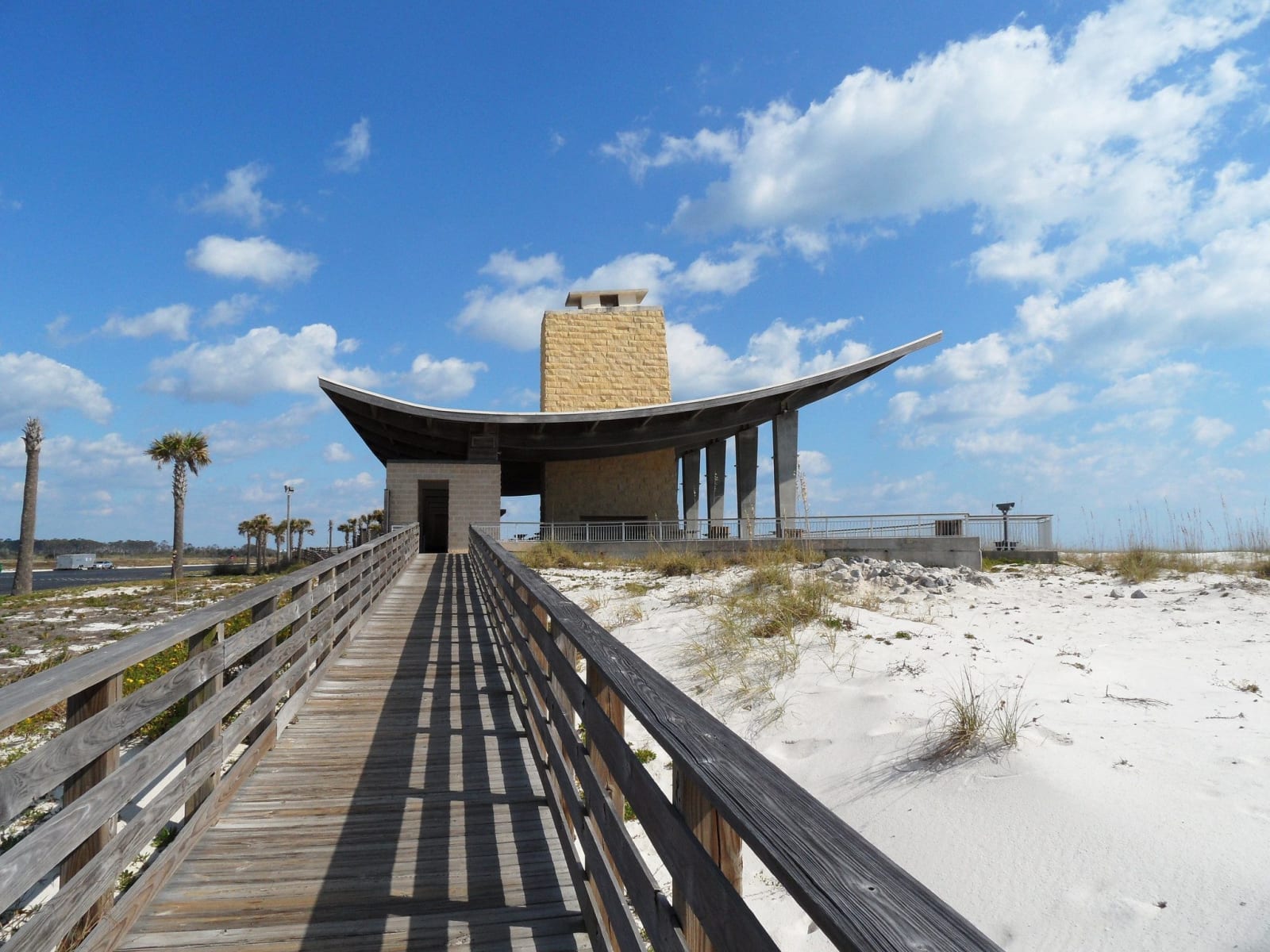
 Ken Ratcliff / CC BY 2.0 via Flickr
The Story
The federal government deeded this stretch of coast to Alabama, and the park opened in 1939. Young men of the Civilian Conservation Corps built its first cabins and a beach casino in the 1930s, and the park has been rebuilt more than once since; Hurricane Ivan wrecked most of it in 2004. Its 6,150 acres take in two miles of white Gulf beach, dunes, marshes, tea-colored streams, pine forest and Lake Shelby, a freshwater lake of some 900 acres a short walk from the surf.
The beach is the draw, and from May to October loggerhead sea turtles come ashore to nest on it. The fishing pier runs 1,540 feet into the Gulf, billed as the longest on it; Hurricane Sally tore out its middle in 2020, a day after an upgrade was finished. Bass and bluegill come out of Lake Shelby, and the park is a stop on the Alabama Coastal Birding Trail.
For walking and cycling, the Hugh S. Branyon Backcountry Trail strings paved paths and boardwalks through the park's quieter interior, past the lakes and under live oaks, all of it flat. The Nature Center near the campground keeps live native snakes and alligators. The Lodge at Gulf State Park, paid for with Deepwater Horizon recovery funds over the objections of critics who wanted the money spent on the coast itself, opened on the beach in 2018. The campground holds about 500 sites, and there are cabins and cottages on Lake Shelby.
Visitor Info
On the Map
Nearby
The closest stops worth working into your route
Historical markers nearby
Roadside plaques and monuments within a short detour