The Story
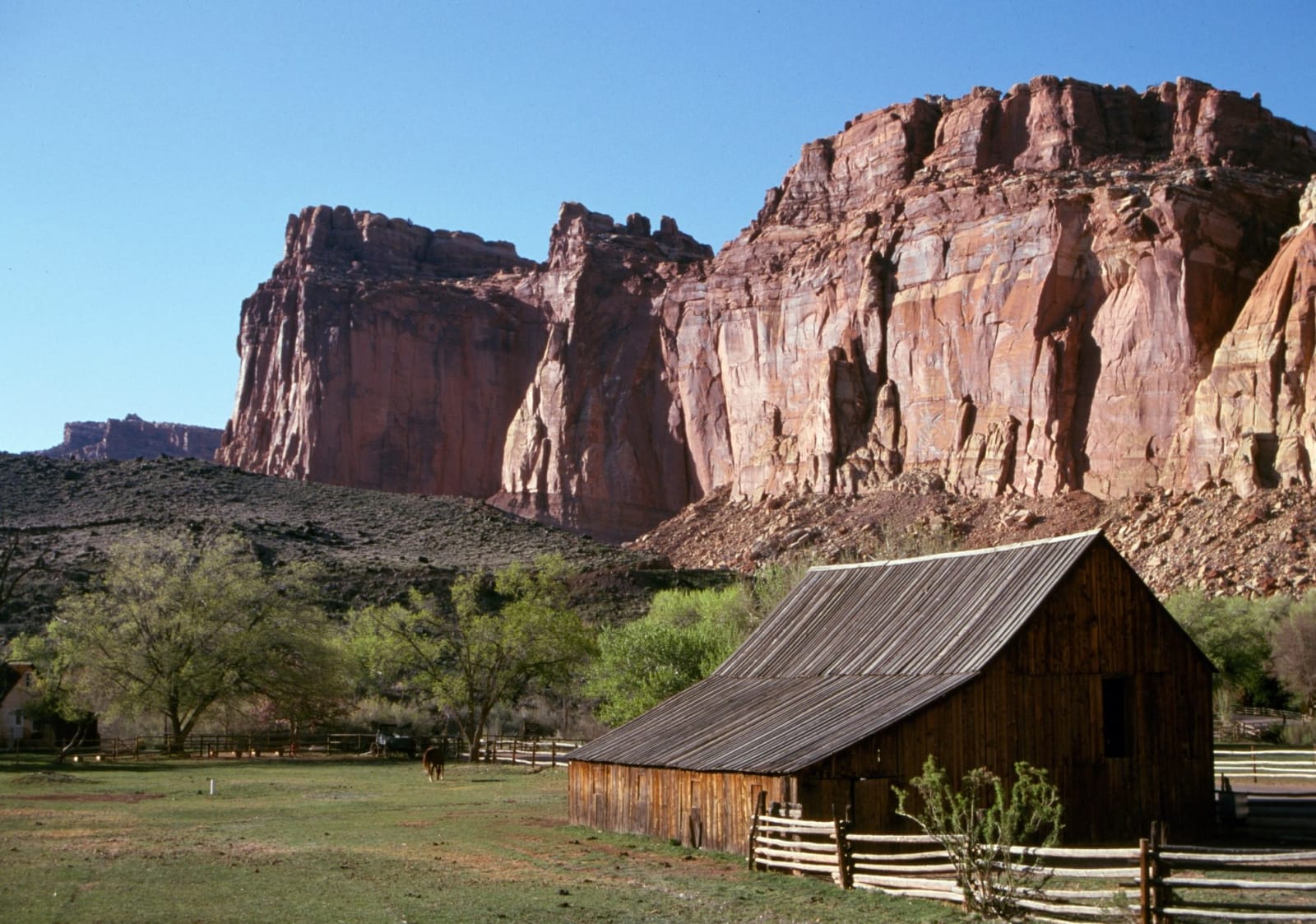
The Gifford Homestead is the place where the national park system sells you a pie, and it might be the best transaction the federal government has ever offered. This small pioneer farmhouse in the Fruita Historic District of Capitol Reef National Park operates as a combination museum, gift shop, and bakery, and the fresh mini pies — baked from fruit grown in the park's own pioneer orchards — are the reason a startling number of visitors cite Capitol Reef as their favorite Utah national park. Not the Waterpocket Fold. Not the Cathedral Valley. The pies.
The homestead was built by the Gifford family, who farmed this narrow river valley from 1928 to 1969. When the National Park Service acquired the property, they restored the farmhouse and outbuildings and converted them into a window on pioneer life in one of the most isolated agricultural communities in the American West. The Fruita settlement — named for the fruit trees that made it viable — was never large. At its peak, roughly ten families worked small orchards and gardens along the Fremont River, connected to the outside world by dirt roads that were impassable for much of the year. The families grew apples, cherries, peaches, pears, and apricots in a microclimate created by the canyon walls, which trapped heat and protected the trees from the worst of the wind and frost.
The orchards survive. The Park Service maintains roughly 3,000 fruit trees planted by the original settlers, and during harvest season — roughly June through October depending on the variety — visitors can pick fruit directly from the trees for a small per-pound fee. The experience is quietly extraordinary. You walk into an orchard flanked by thousand-foot sandstone cliffs, the Fremont River murmuring nearby, deer browsing at the edges of the grove, and you pick a ripe apricot or peach off a tree that was planted by someone who hauled water with a mule. The fruit is warm from the sun, the juice runs down your chin, and for a moment the distance between you and the pioneer who planted that tree collapses to nothing.
The pies are made from this same fruit, baked fresh daily in the homestead kitchen by park volunteers and concession staff. The selection varies with the season — cherry in June, peach and apricot in July and August, apple in September and October — and they sell out regularly, often by early afternoon. The pies are small, roughly the size of a generous hand, and they cost a few dollars each. They are not fancy. They are not artisanal in the modern, Instagram-ready sense. They are simple fruit pies made from fruit that grew fifty yards away, baked in a kitchen that smells like butter and sugar, and eaten on a bench outside the farmhouse while looking at red rock cliffs. They are perfect.
The homestead itself is a modest but well-preserved example of early twentieth-century rural Utah architecture. The main house is a simple frame structure with a kitchen, living area, and bedrooms, furnished with period-appropriate items that give a sense of how the Gifford family lived. A root cellar, a smokehouse, and a barn round out the complex, and interpretive signs explain the agricultural practices that sustained the Fruita community. The scale is intimate — this was not a wealthy family or a grand estate. This was a working farm in a remote canyon, and the homestead reflects the practical, no-frills approach to life that isolation demanded.
The broader Fruita Historic District extends beyond the homestead to include the orchards, a one-room schoolhouse, a blacksmith shop, and the campground — which, not coincidentally, is set among the fruit trees and is one of the most coveted campgrounds in the national park system. Reservations fill months in advance, and campers who secure a site spend their evenings watching mule deer wander through the orchard while the canyon walls turn orange and red in the fading light.
The Gifford Homestead sits along the Scenic Drive, the main road through Capitol Reef, and it is impossible to miss — the parking area is small and usually full, which is itself a testament to the drawing power of fresh pie. The homestead is open seasonally, typically from mid-March through mid-October, with hours that vary. Arriving in the morning gives you the best chance of finding the full pie selection, and combining the visit with a fruit-picking session in the adjacent orchards makes for a morning that is both historically enriching and calorically rewarding.
There is something fundamentally right about the Gifford Homestead. The national parks exist to preserve landscapes, but landscapes include the people who shaped them, and the Fruita orchards are as much a part of Capitol Reef as the Waterpocket Fold. The pioneers who planted these trees transformed a remote river canyon into a functioning community, and the pies baked in the homestead kitchen are the most delicious possible proof that their work endures. The trees still bear fruit. The kitchen still bakes pies. The canyon walls still glow at sunset. Some things, given enough care, last.
Visitor Info
On the Map
A story featuring this place
Go deeper into the history and character of this stop
Nearby
The closest stops worth working into your route
Historical markers nearby
Roadside plaques and monuments within a short detour