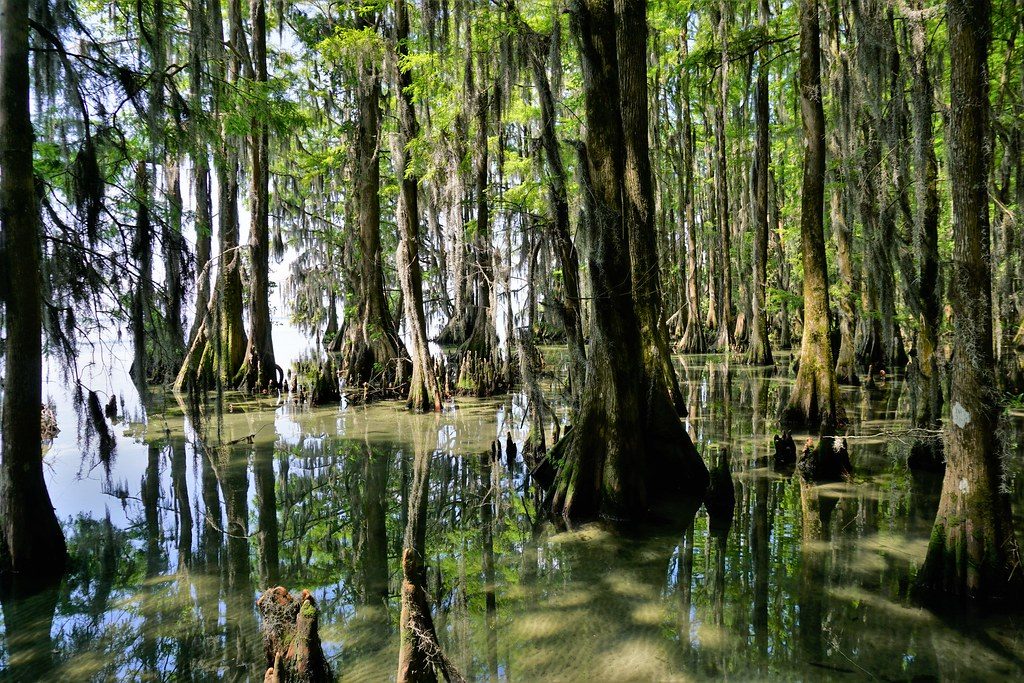
 ncwetlands.org / CC0 via Flickr
The Story
Lake Phelps is one of the Carolina bays, the oval lakes scattered down the Atlantic coastal plain from New Jersey to Florida, perhaps more than 38,000 years old. No stream runs into it. Rain and springs alone fill it, and since no creek carries in mud from the fields, its water is unusually clear for a lake about five miles across and four and a half feet deep on average.
That clear, still water kept what people left in it. Around the lake archaeologists have found pottery, points and other signs of people as far back as about 8000 BC, and from the lake bottom some thirty dugout canoes, burned and scraped out of cypress logs. The oldest are around 4,400 years old. Algonquian peoples came here in season to fish and hunt, and they may have sunk their canoes on purpose to keep them safe until they came back the next year. English settlers did not see the lake until 1755, when a hunting party pushing through the swamp found it and named it for Josiah Phelps, the first of them to wade in.
The park started in 1939 on land the federal government had bought during the Depression. It is named for J. Johnston Pettigrew, a Confederate general who grew up on the neighboring plantation, led a division in Pickett's Charge at Gettysburg and is buried in a family plot inside the park. Boardwalks and trails run along cypress shores whose trunks open into wide hollow arches. Somerset Place is next door.
Visitor Info
On the Map
Nearby
The closest stops worth working into your route
Historical markers nearby
Roadside plaques and monuments within a short detour