 Carol M. Highsmith / public domain via Library of Congress
The Story
Big Will's Valley, between Sand Mountain and Lookout Mountain, was Cherokee country, and Willstown was its largest town. Sequoyah lived there for years with his mother, Wurteh, farming, smithing and working toward the syllabary he finished in 1821, which made most of the Cherokee Nation literate within months. In 1838 Capt. John Payne oversaw a stockade here to hold Cherokee families before they were marched west on the Trail of Tears. The soldiers called it Fort Payne, and the town kept the name.
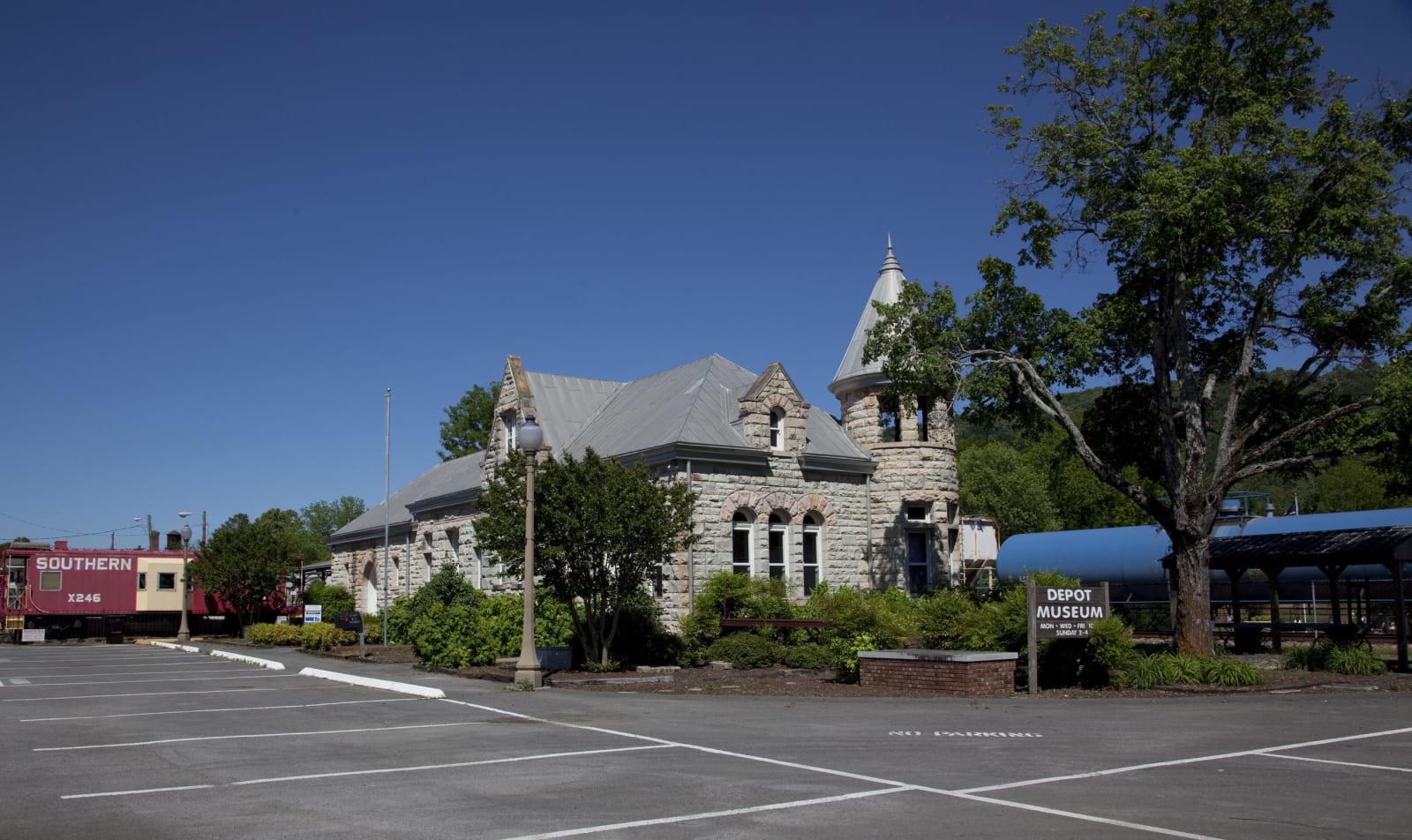
The town grew after the railroad came through the valley, and in 1889 New England investors in the Fort Payne Coal and Iron Company set off a four-year boom of furnaces, an opera house and a 125-room hotel that collapsed when the ore proved unprofitable. The Alabama Great Southern built this depot in 1891 of pink sandstone with a copper roof. It handled passengers for 79 years, and under segregation a partition split its baggage room into white and Black waiting areas.
Passenger trains stopped in 1970 and freight in 1983. Landmarks of DeKalb saved the building from demolition and opened the museum on October 12, 1986. The left-hand room holds its most visited collection, more than 600 Native artifacts given by Gussie Killian, along with an exhibit on Nancy Dollar, a local herbalist known as Granny. A Norfolk Southern caboose outside holds a model railroad.
Visitor Info
On the Map
Nearby
The closest stops worth working into your route
Historical markers nearby
Roadside plaques and monuments within a short detour