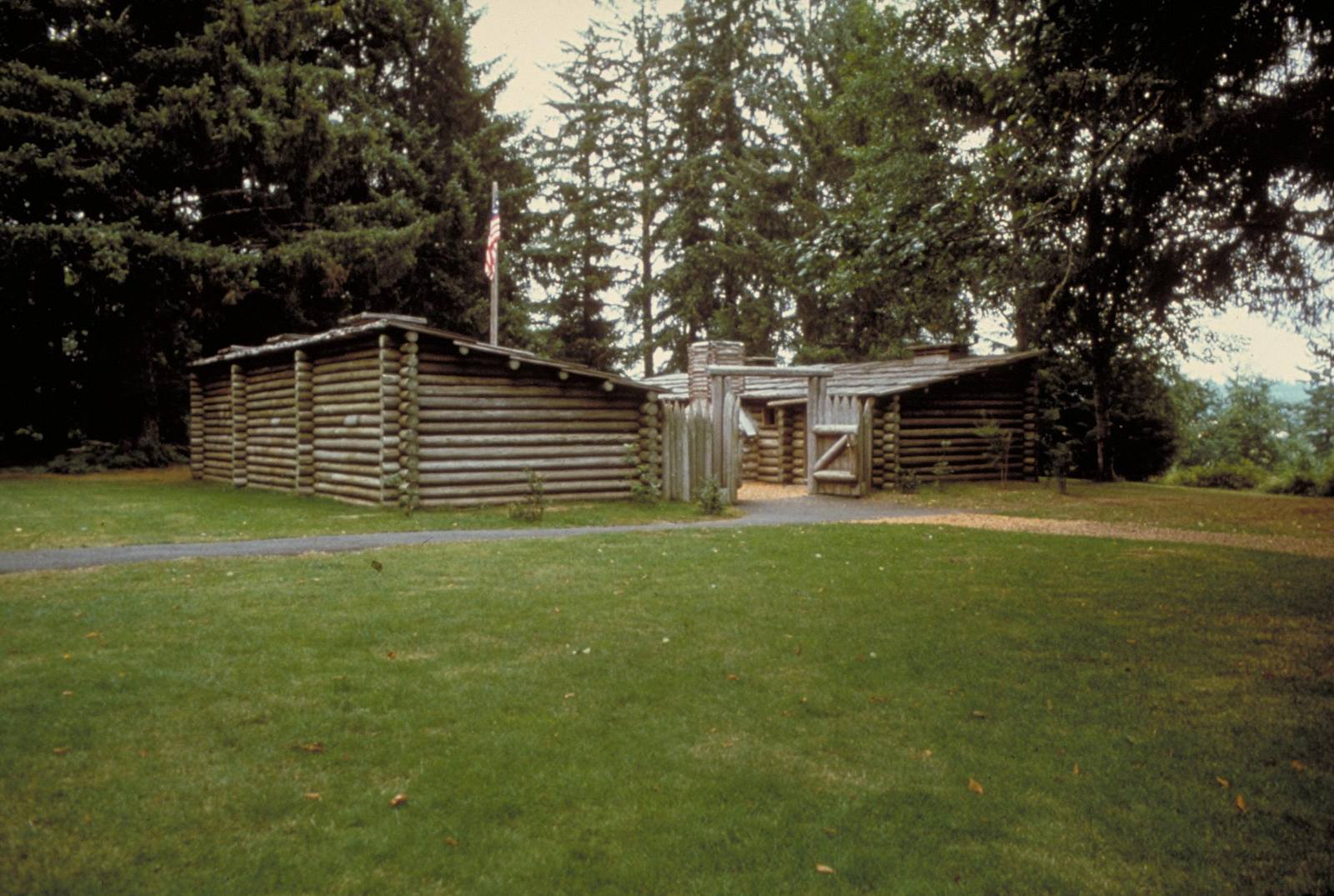
 National Park Service / public domain via Wikimedia Commons
The Story
The Clatsop lived on the south shore of the Columbia's mouth, Chinookan-speaking people in cedar plank houses, and their headman Coboway was among the first visitors when the Lewis and Clark party began building here in December 1805. Through a wet winter of more than a hundred days the Clatsop came to trade fish, roots, sea otter pelts and woven hats, and the captains named the stockade for them, fifty feet square, while keeping them at arm's length.
In March 1806, short of canoes for the trip upriver and unable to buy one, the captains sent four men to take a Clatsop canoe and hide it near the fort; Lewis justified it in his journal as payment for six elk he said the Clatsop had taken that winter. On the eve of leaving they gave the fort and its furniture to Coboway, who came back to it for years as a winter hunting camp. The logs had rotted away by the middle of the century.
The fort you walk through is the second replica. Astoria residents built the first in 1955 from a floor plan William Clark sketched on the elkskin cover of his field book. It burned on October 3, 2005, weeks before the bicentennial, and volunteers had a new one dedicated by December 2006. It is the center of Lewis and Clark National Historical Park, with a visitor center, rangers in period dress in summer, and the Fort to Sea Trail running to the ocean at Sunset Beach.
The Clatsop were never removed to a reservation; their 1851 treaty was never ratified, and Congress named them in its 1954 termination act. Descendants are enrolled at Siletz, and the Clatsop-Nehalem Confederated Tribes, some of them Coboway's descendants, are still seeking federal recognition. In 2020 a land trust returned 18.6 acres of salt marsh and spruce at Neawanna Point in Seaside to them.
Visitor Info
On the Map
Nearby
The closest stops worth working into your route
Historical markers nearby
Roadside plaques and monuments within a short detour