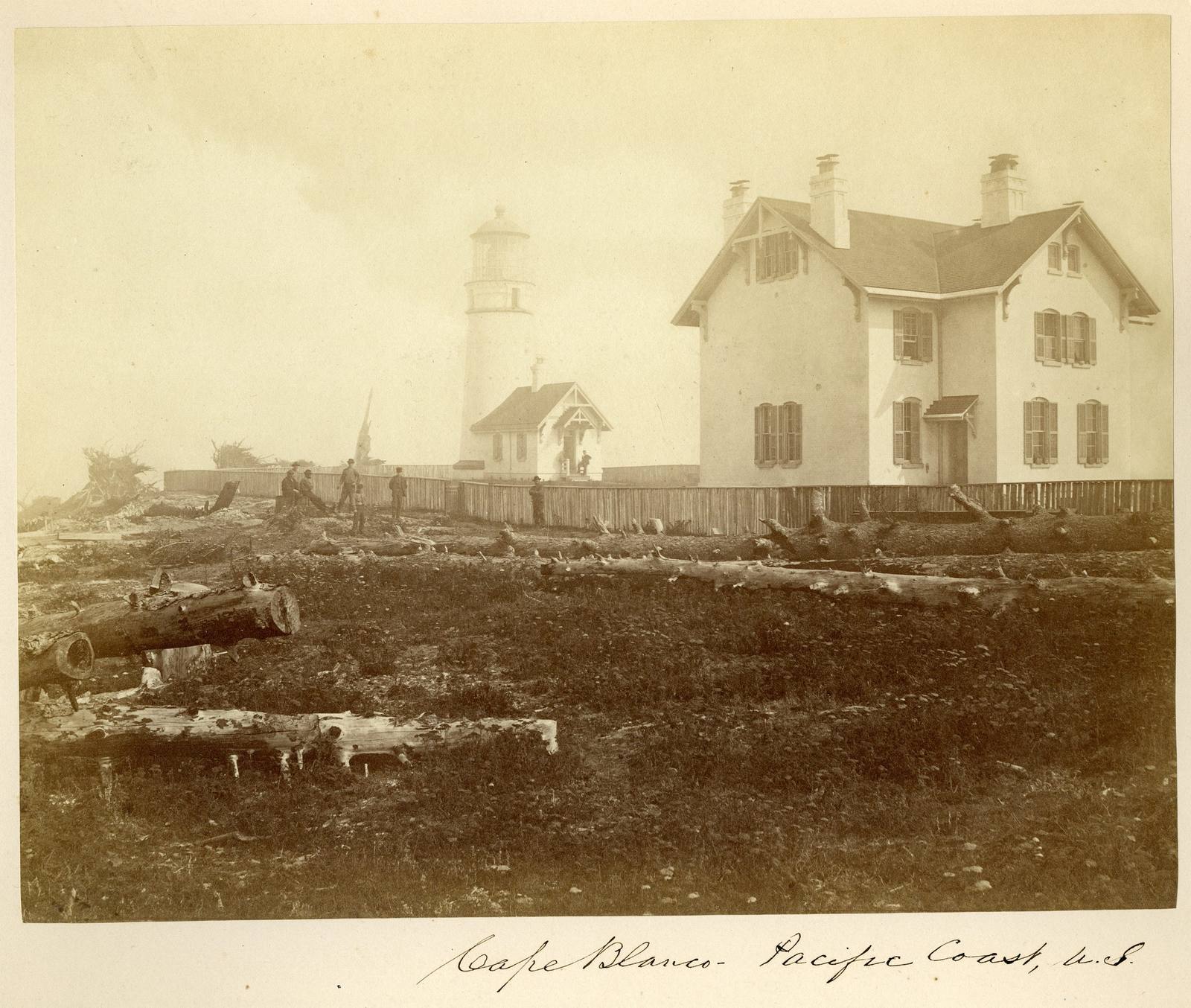
 Unknown photographer, Bureau of Land Management collection / public domain via Wikimedia Commons
The Story
Cape Blanco reaches farther into the Pacific than any other point in Oregon, and the stretch of sea off it, with Blanco Reef and winds that can reach a hundred miles an hour, was brutal for ships. The lighthouse was first lit on December 20, 1870, by Harvey Burnap, who had been serving at Oregon's first lighthouse at the mouth of the Umpqua when it collapsed in 1863. Its light stands about 250 feet above the sea, the highest focal plane in the state.
The station's history is mostly its keepers. James Langlois kept the light for forty-two years and James Hughes for more than thirty, each his entire career, a span no other West Coast light can match. Hughes grew up next door, the second son of Patrick and Jane Hughes; Patrick had come to the cape looking for gold in 1860, and the couple built a dairy ranch of two thousand acres along the Sixes River; their restored 1898 Queen Anne house, paid for by decades of butter shipped to San Francisco, stands on the road out to the cape. In March 1903 Mabel Bretherton, whose husband had died that winter while keeping the Coquille River light, passed the civil-service examination with a score of 94.8 and was appointed assistant keeper here, the first woman to keep a light in Oregon. That same year the steamer South Portland ran onto the reef in fog and sank.
The light was electrified in 1936 and the last resident keeper left in the 1980s, but the lens still turns. The station is open through a partnership that includes the Bureau of Land Management, Oregon State Parks, the Confederated Tribes of Siletz Indians, the Coquille Indian Tribe, Curry County and the Cape Blanco Heritage Society, and volunteers lead visitors up the tower in season.
Visitor Info
On the Map
Nearby
The closest stops worth working into your route
Historical markers nearby
Roadside plaques and monuments within a short detour