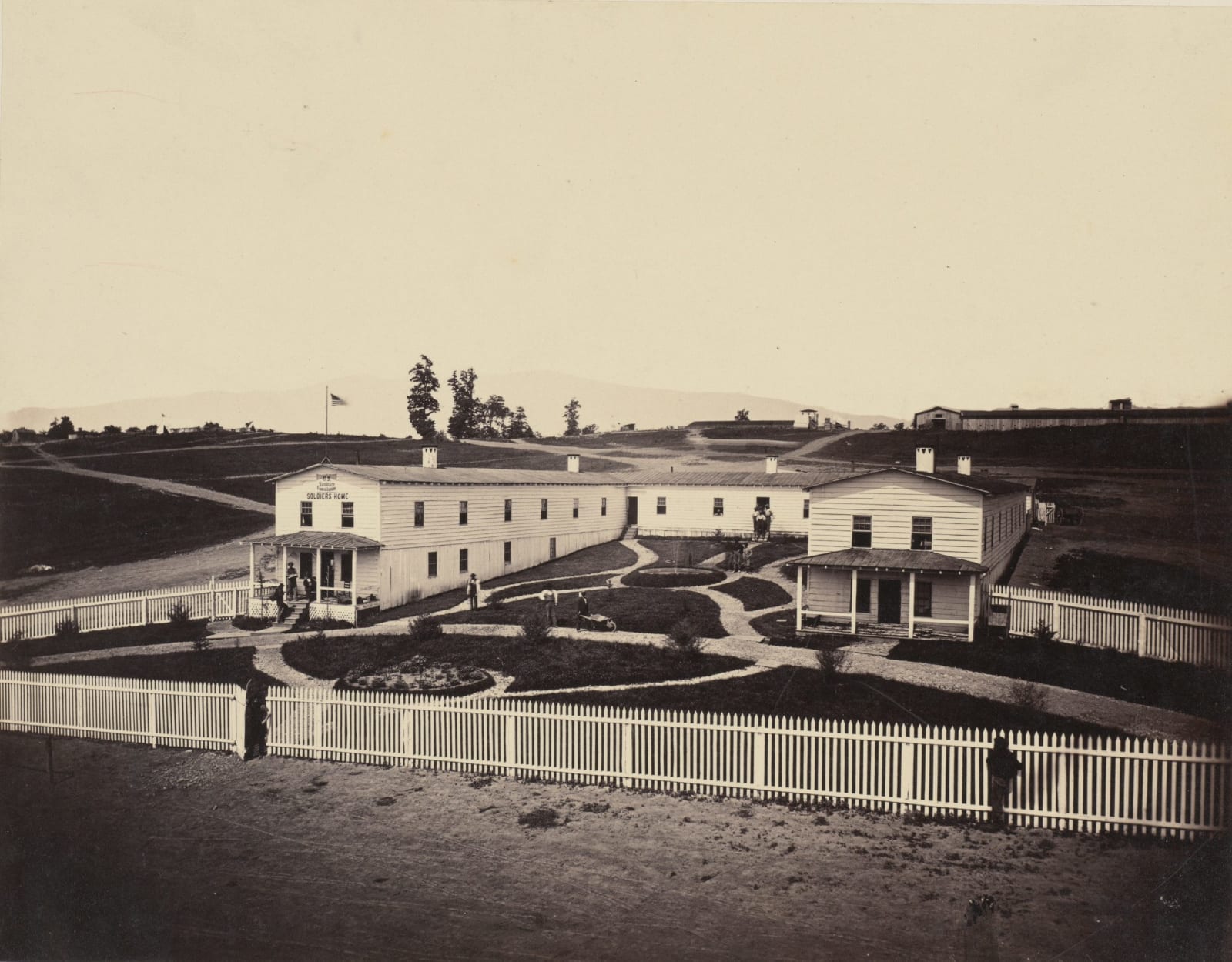
 G. W. Foster, 1863-64 / public domain (CC0) via The Metropolitan Museum of Art
The Story
The Union army laid out Camp Nelson in 1863 beside Hickman Bridge, the only bridge over the Kentucky River upstream of Frankfort, where palisade cliffs of 400 to 500 feet guarded three sides and only the north needed earthworks. It grew into a supply depot of some 300 buildings, and much of it was built by about 3,000 enslaved men the army impressed from central Kentucky farms that year, with their wages paid to the men who held them.
Kentucky stayed in the Union and kept slavery, so the Emancipation Proclamation did not reach it. From 1864 enslaved men could win freedom by enlisting, and more than 10,000 did so here, making Camp Nelson the largest recruiting and training ground for the U.S. Colored Troops in the state. Many came under threat; Peter Bruner was seized and jailed in Nicholasville on his first try. Their wives and children followed and built huts, and in November 1864 the post commander, Speed S. Fry, drove about 400 women and children out in freezing weather and had the huts burned. Of them, 102 died of exposure and disease. Public outcry forced the army to build a Home for Colored Refugees, and on March 3, 1865, Congress freed the wives and children of Colored Troops soldiers.
The site became a national monument in 2018. The visitor center stands just inside the gates off U.S. 27, with a museum, a short film and reconstructed barracks with soldiers' and refugees' stories. About five miles of trails pass the fortifications and waysides, and Camp Nelson National Cemetery lies a mile south.
Visitor Info
On the Map
Nearby
The closest stops worth working into your route
Historical markers nearby
Roadside plaques and monuments within a short detour