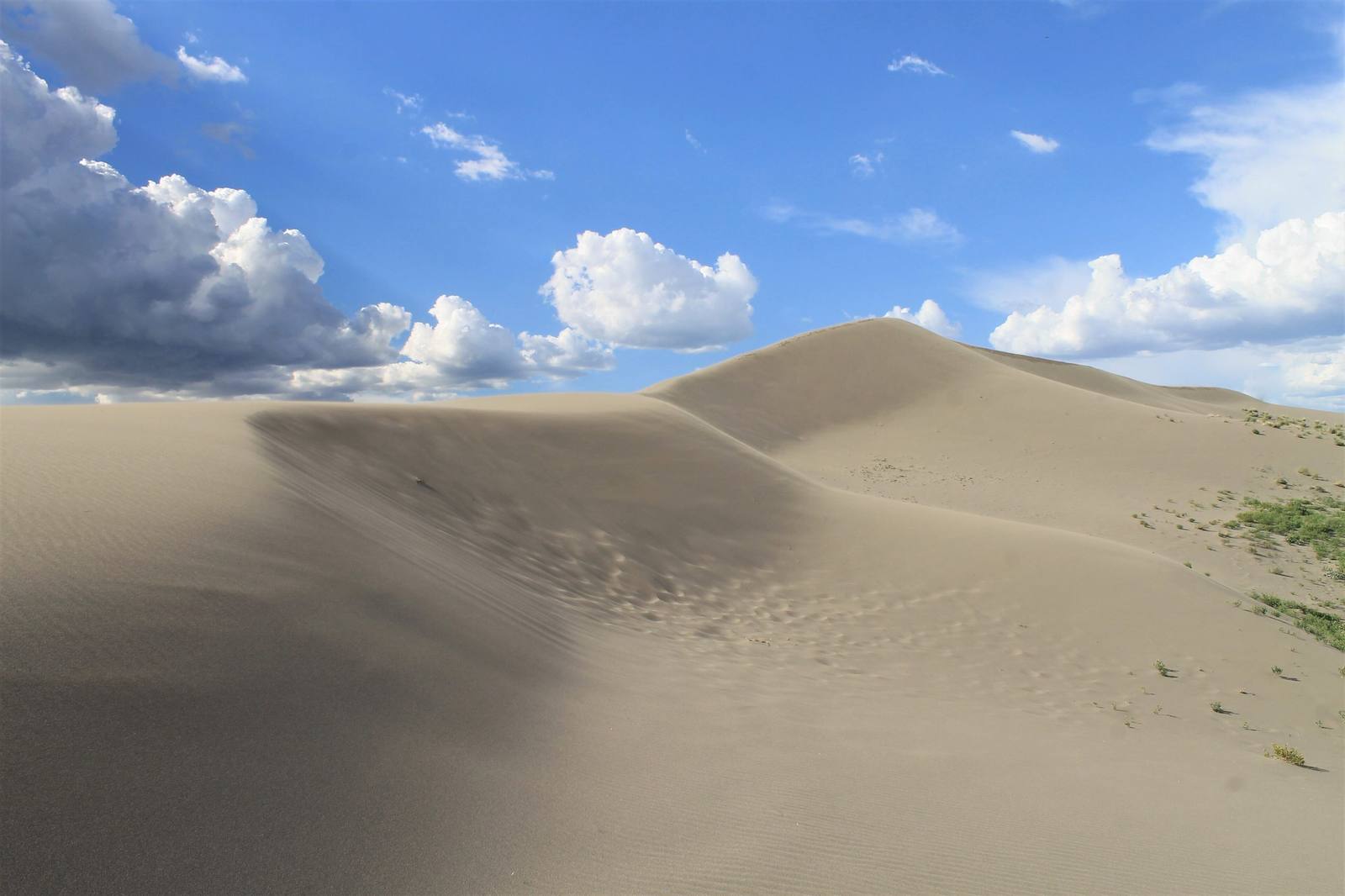
 Rickmouser45 / CC BY-SA 4.0 via Wikimedia Commons
The Story
Most dunes walk. Wind from one prevailing direction lifts sand off the windward face and drops it over the crest, and the whole dune creeps downwind year by year. The dunes at Bruneau hardly move, because the wind here comes nearly as often from the southeast as from the northwest, and each season's drift is undone by the next. They sit in Eagle Cove, a horseshoe-shaped bowl about three and a half miles across that was once a meander of the Snake River, and the bowl has been trapping blowing sand for more than twelve thousand years.
The sand may have started with the Bonneville Flood, when Lake Bonneville overtopped its rim at Red Rock Pass, in what is now southeast Idaho, about fifteen thousand years ago and poured down the Snake. As the water swirled through this cove it dropped sand and pulverized rock, and the wind has been working the pile ever since. The tallest dune rises about 470 feet; the park calls it the tallest single-structured sand dune in North America. It can be climbed, though the soft ridge is harder going than it looks, and people ride sandboards down it. The two small lakes at its foot did not exist a century ago: they rose as irrigation along the Snake lifted the water table.
After dark the park changes use. Tucked below the rim of the plain, it is screened from the lights of Mountain Home, and it has been certified an International Dark Sky Park. On Friday and Saturday nights from June into October the park's observatory opens its large reflecting telescopes to the public.
Visitor Info
On the Map
Nearby
The closest stops worth working into your route
Historical markers nearby
Roadside plaques and monuments within a short detour