 Rickmouser45 / CC BY-SA 4.0 via Wikimedia Commons
The Story
Boise holds one of the largest Basque communities in the United States, and one short block of Grove Street downtown is where it keeps its house.
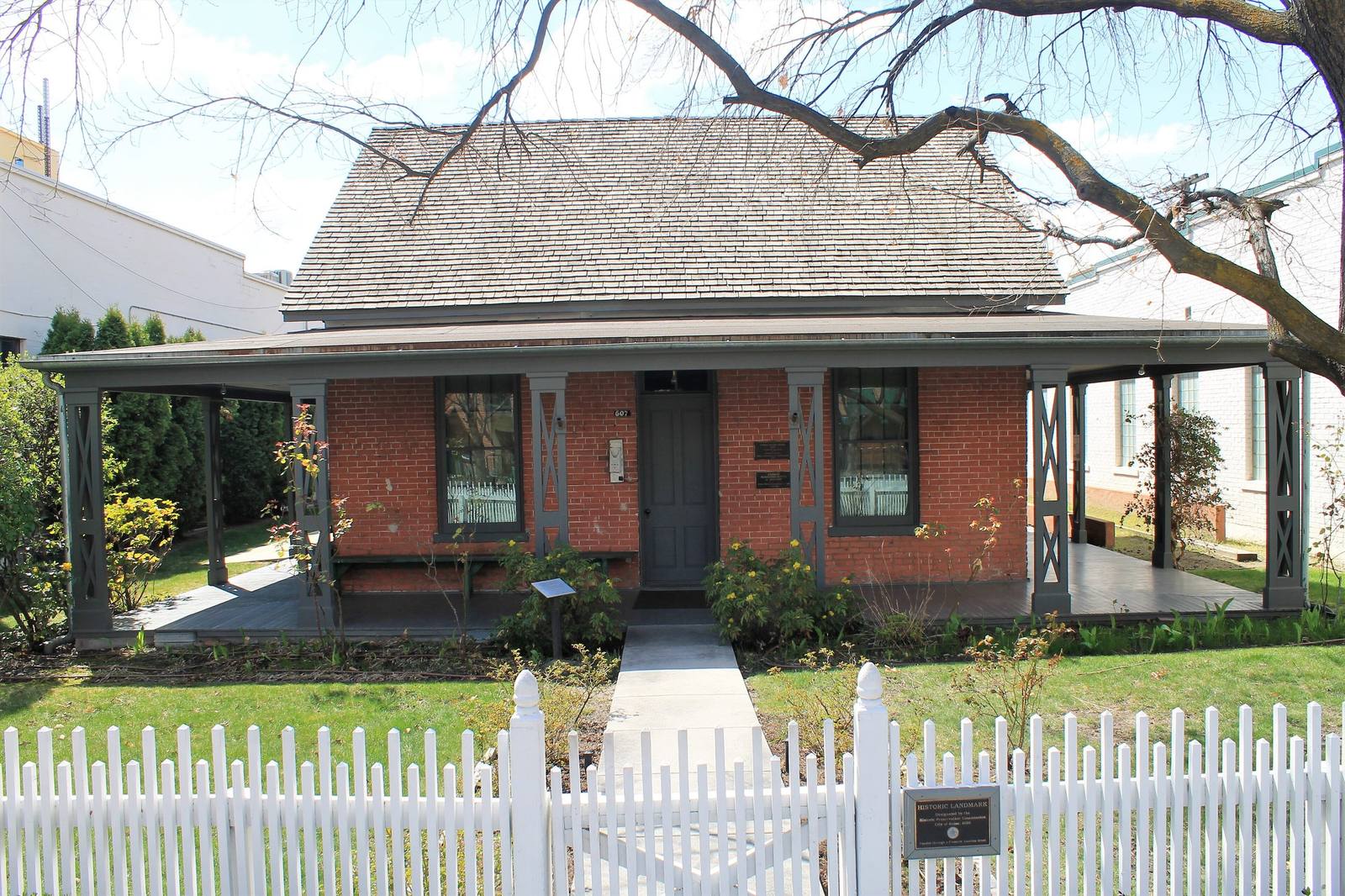
In 1864 a merchant named Cyrus Jacobs built a small brick house here for his family, two blocks from his store; he later served as mayor. After he and his wife died, the house passed to Basque families — first the Galdos, then the Bicandis, and from 1917 Jose and Hermenegilda Uberuaga — and became a boardinghouse. Men came from the Basque Country, often with little English, to herd sheep across the high desert of southwest Idaho, and between seasons or jobs they came here: a room, meals at a long table, mail from home, and people who spoke Euskara. Some of the Uberuagas' boarders worked on the Arrowrock Dam up the Boise River. The brick walls of the porch still carry the marks where tired men struck matches to light their cigarettes.
The Uberuagas took boarders until 1969. When the house stood empty and failing in the early 1980s, Adelia Garro Simplot bought it to save it, and the Basque Museum and Cultural Center next door has cared for it since, restoring the rooms and digging hundreds of artifacts out of its floors and yard. Staff and volunteers lead tours through it.
The rest of the block grew around the same needs. The Anduiza building, another boardinghouse, put up in 1912, still holds its original fronton court for pilota, the Basque handball game. The Basque Center, finished in 1951, is where the Oinkari dancers rehearse. Every five years, around the feast of San Inazio at the end of July, the Jaialdi festival fills the street with dancers, pilota matches and tens of thousands of visitors.
Visitor Info
On the Map
Nearby
The closest stops worth working into your route
Historical markers nearby
Roadside plaques and monuments within a short detour