 mark6mauno / CC BY-SA 2.0 via Wikimedia Commons
The Story
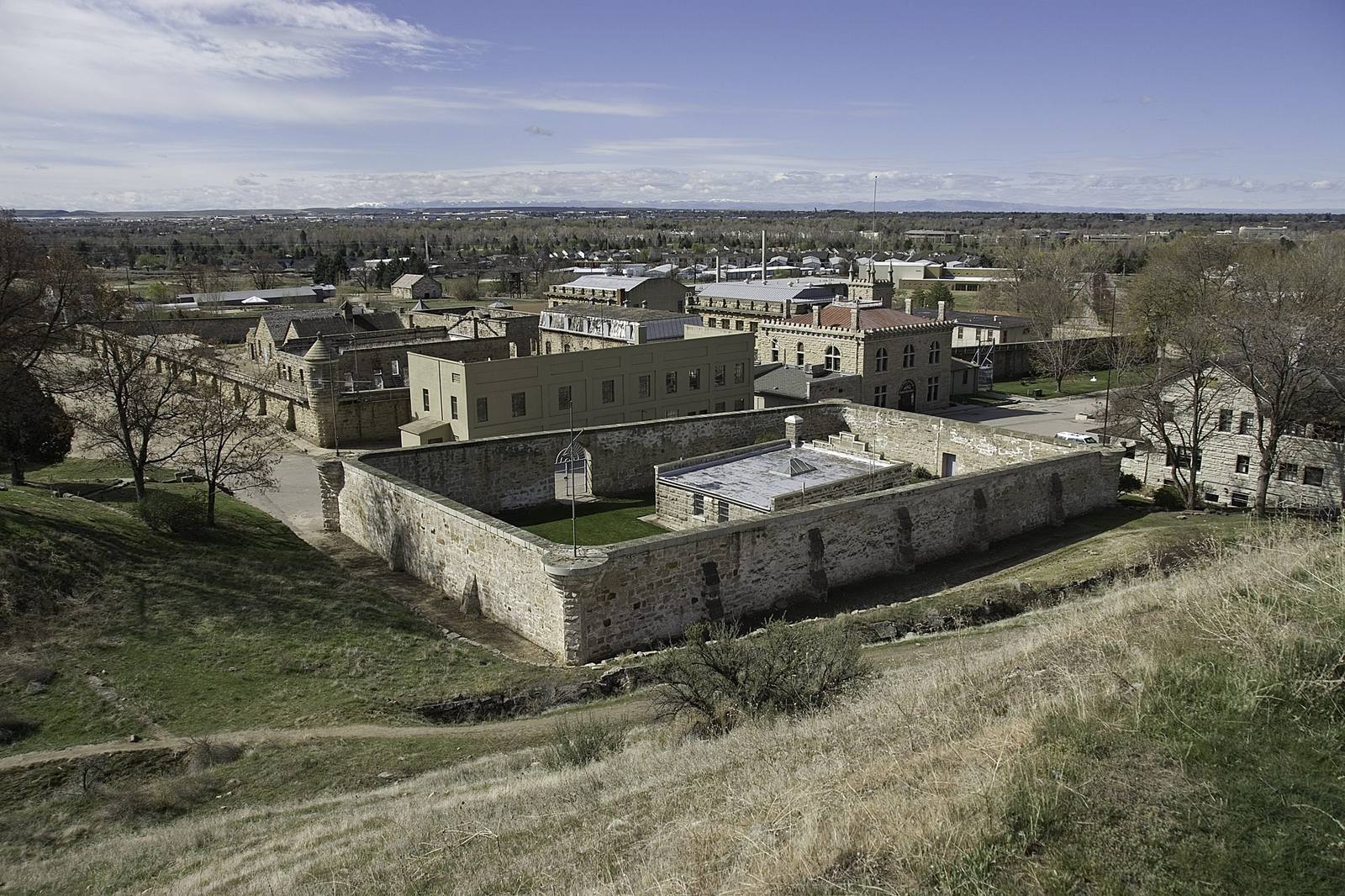
The Territorial Prison opened east of Boise in 1872 with a single cell house and eleven men sent over from the Boise County jail. It was put at the foot of the foothills for a practical reason: the Table Rock sandstone quarry was a short walk uphill, and prisoners could cut the stone themselves. Over the following decades they built most of what stands inside the wall, down to a dining hall one of them designed.
What they did not get, for most of a century, was much else. The New Cell House of 1889 held three tiers of steel cells, the top tier nearest the gallows yard serving as death row. In the North Wing, finished ten years later, each two-man cell had a bucket for a toilet. There was no real heating or cooling in a city of hundred-degree summers and hard winters, and the aging water system was unsanitary. Prisoners rioted over it in 1952, again in 1971, and in March 1973, when they burned the old territorial cell house, then serving as a chapel, the dining hall and the North Wing.
That was the end. The state moved its 416 remaining prisoners to a new institution south of Boise, and the Old Pen closed on December 3, 1973. In 101 years it had held more than thirteen thousand people, 215 of them women. Its best-known prisoner, Harry Orchard, confessed to the 1905 bombing that killed former governor Frank Steunenberg and spent the rest of his life here.
The Idaho State Historical Society runs it now. Visitors walk the yard, the cell houses, the solitary cells and the women's ward, and the fire damage of 1973 is still on the walls. The Idaho Botanical Garden grows on the prison's old farm next door.
Visitor Info
On the Map
Nearby
The closest stops worth working into your route
Historical markers nearby
Roadside plaques and monuments within a short detour