 Knowledgeum / CC BY-SA 3.0 via Wikimedia Commons
The Story
Big Oak Tree State Park is a forested island in the cropland of the Bootheel, and it shows what the lowland looked like before it was drained. Flooding over long ages kept much of the old forest wet, and the New Madrid earthquakes of 1811 sank parts of the region and added to the swamp. From the late 1800s timbermen cut the giant trees, and drainage districts formed in the early 1900s turned more than 2 million acres of forest into fields of wheat, soybeans and corn.
In the 1930s people in southeast Missouri set out to save one great oak and the 80 acres around it. Gov. Lloyd Stark asked the Mississippi Valley Hardwood Company to spare them, but in the Depression the state could not pay for the land, so businesses and residents gave money and schoolchildren gave nickels and dimes. About 1,007 acres were bought and dedicated as the park in 1938. The oak had stood nearly 400 years when it died in 1952 and was cut down.
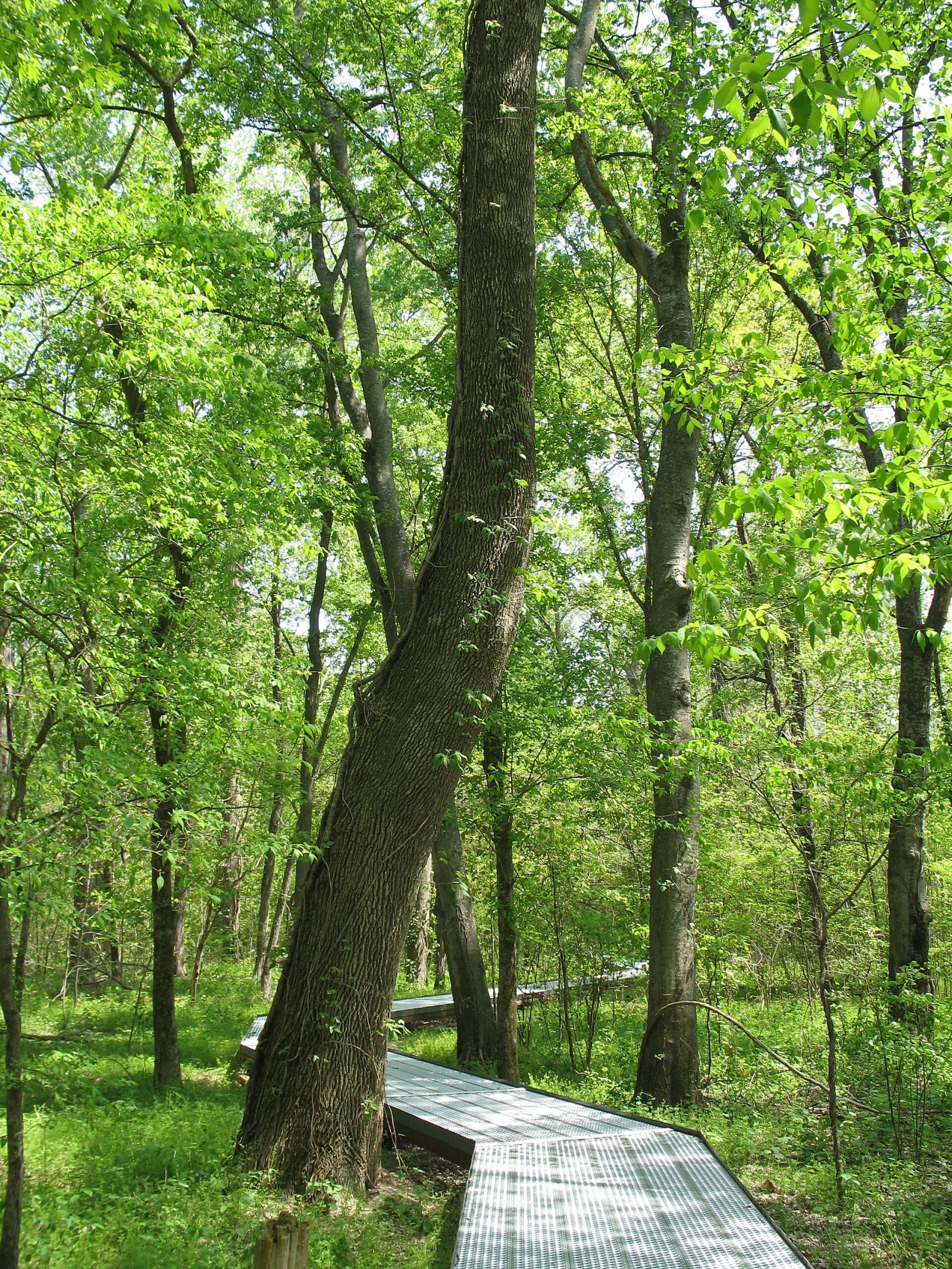
The 80-acre tract of virgin bottomland hardwood forest around it is a National Natural Landmark. The canopy averages 120 feet, several trees pass 130, and four are state champions for their species; one champion persimmon is 132 feet tall, where 60 feet is usual. The park also holds the state park system's only cypress swamp. A boardwalk winds past the biggest trees, and more than 150 bird species have been seen, among them Mississippi kites in summer, bald eagles in winter and the prothonotary warbler.
Visitor Info
On the Map
Nearby
The closest stops worth working into your route
Historical markers nearby
Roadside plaques and monuments within a short detour