 Carol M. Highsmith / public domain via Library of Congress
The Story
The first great national railroad strike began in this yard. In July 1877, after the Baltimore and Ohio cut wages ten percent on top of earlier cuts, its firemen walked out and strikers at Martinsburg refused to let trains leave. Governor Henry Mathews sent the local militia, many of them railroad men or their kin, to guard a train out. At the switch a striker, William Vandergriff, seized the lever; he and a militiaman, John Poisal, exchanged shots, and Vandergriff was hit in the hip, hand and arm. His arm was amputated, and he died of his wounds. The militia went home rather than move the trains. Federal troops arrived on July 19, and by then the strike had spread along the rails from Baltimore to Chicago.
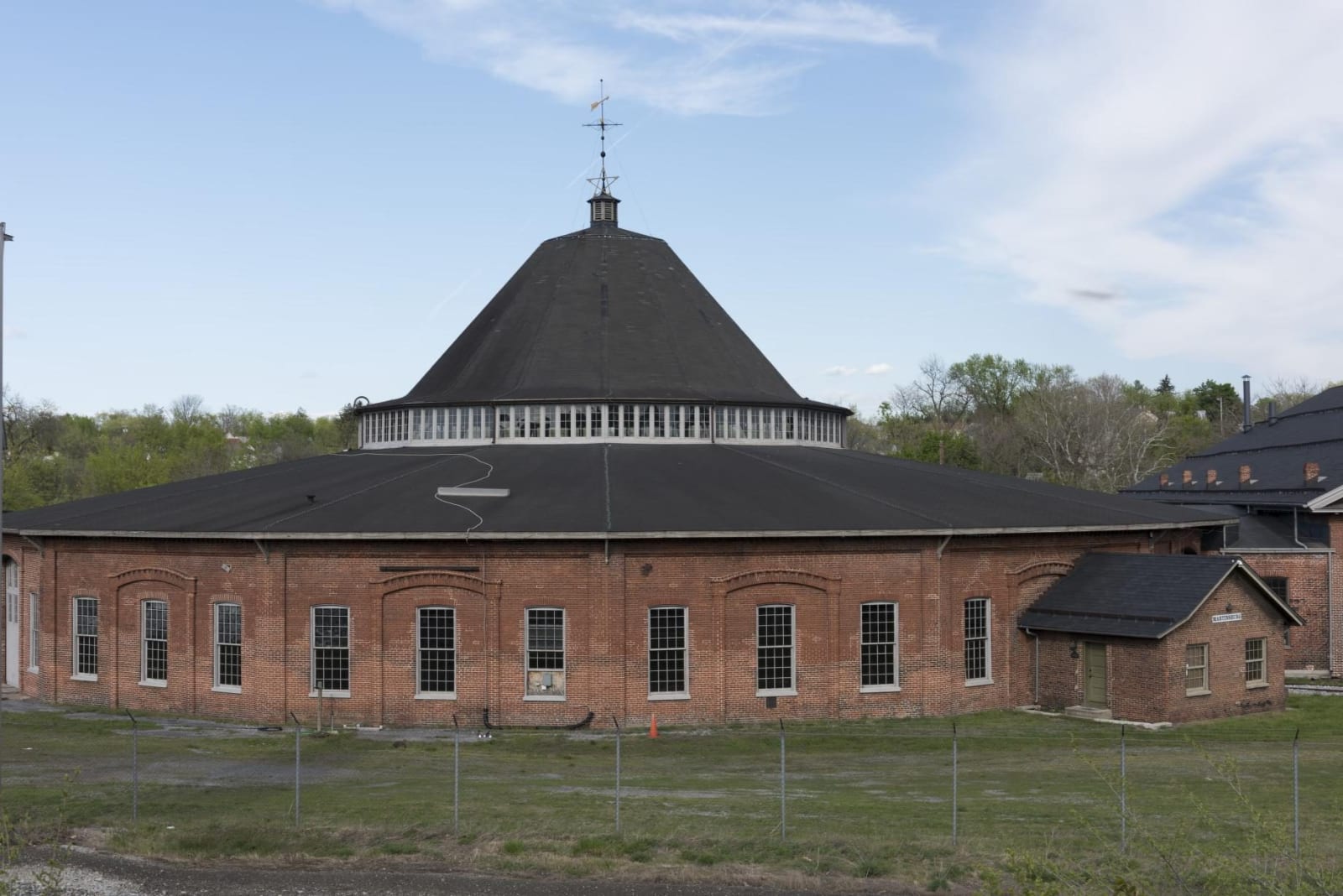
The shops the strikers stood in were new. Stonewall Jackson's troops wrecked the B&O works here in 1861 and burned them in 1862, and the railroad rebuilt from 1866. The roundhouse, designed by the German-born engineer Albert Fink, is a full circle of brick around a 50-foot turntable and 16 locomotive bays, its roof carried on an iron frame that leaves more than 20,000 square feet open beneath, an ancestor of the skyscraper frame. It is the oldest surviving domed roundhouse in the United States.
CSX left the complex in the late 1980s, a local authority restored it, and the shops became a National Historic Landmark in 2003. It is an event hall now, beside the Caperton station where passenger trains still stop. Guided tours run from April through October and must be booked ahead.
Visitor Info
On the Map
Nearby
The closest stops worth working into your route
Historical markers nearby
Roadside plaques and monuments within a short detour