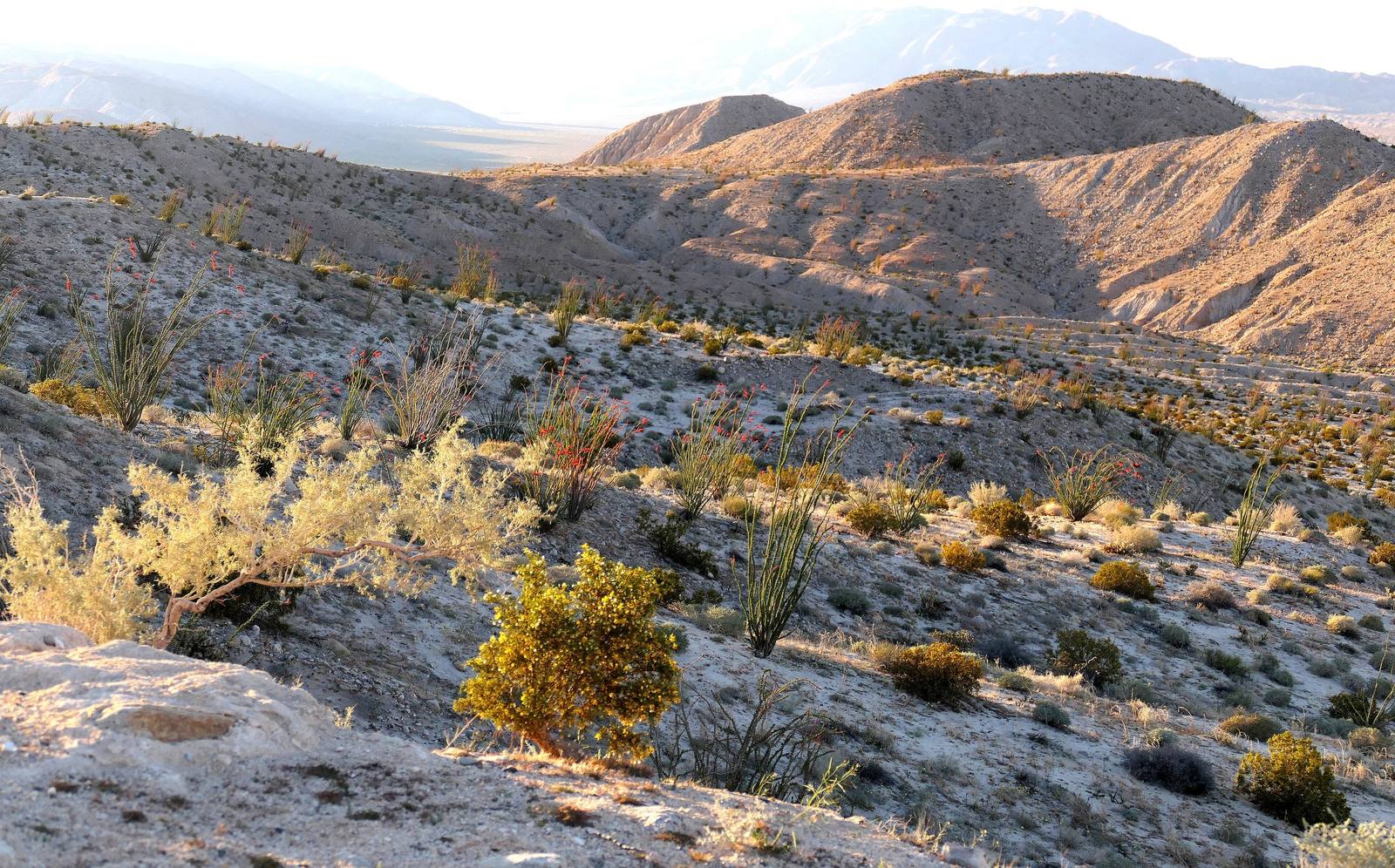
 Alan Schmierer / CC0 via Wikimedia Commons
The Story
Anza-Borrego covers about six hundred thousand acres, a fifth of San Diego County, which makes it the largest state park in California and one of the largest in the country. The name pairs Juan Bautista de Anza, who came through in 1774, with borrego, the Spanish word for the bighorn sheep that still work the rocky canyons above the desert floor. Five hundred miles of dirt road cross it, along with a dozen wilderness areas, and outside the developed corners you can go a long time without seeing another vehicle.
The variety is the surprise. Wind and water have cut the Borrego Badlands into ridges best seen from Font's Point at sunset, and cut slot canyons narrow enough to touch both walls. Springs feed palm oases where the California fan palm grows, the only palm native to this state; the three-mile walk up Borrego Palm Canyon from the campground ends in a grove of them.
In years when the winter rain lands right, the desert floor goes off. Sand verbena, desert sunflower, and dune evening primrose can carpet whole washes from late February into early April, and the park runs a wildflower hotline because the timing is never the same twice. Dogs stay off the trails here, which protects the endangered peninsular bighorn. The town of Borrego Springs sits in the middle of it all.
Visitor Info
On the Map
Nearby
The closest stops worth working into your route
Historical markers nearby
Roadside plaques and monuments within a short detour