 NPS Photo / public domain via Wikimedia Commons
The Story
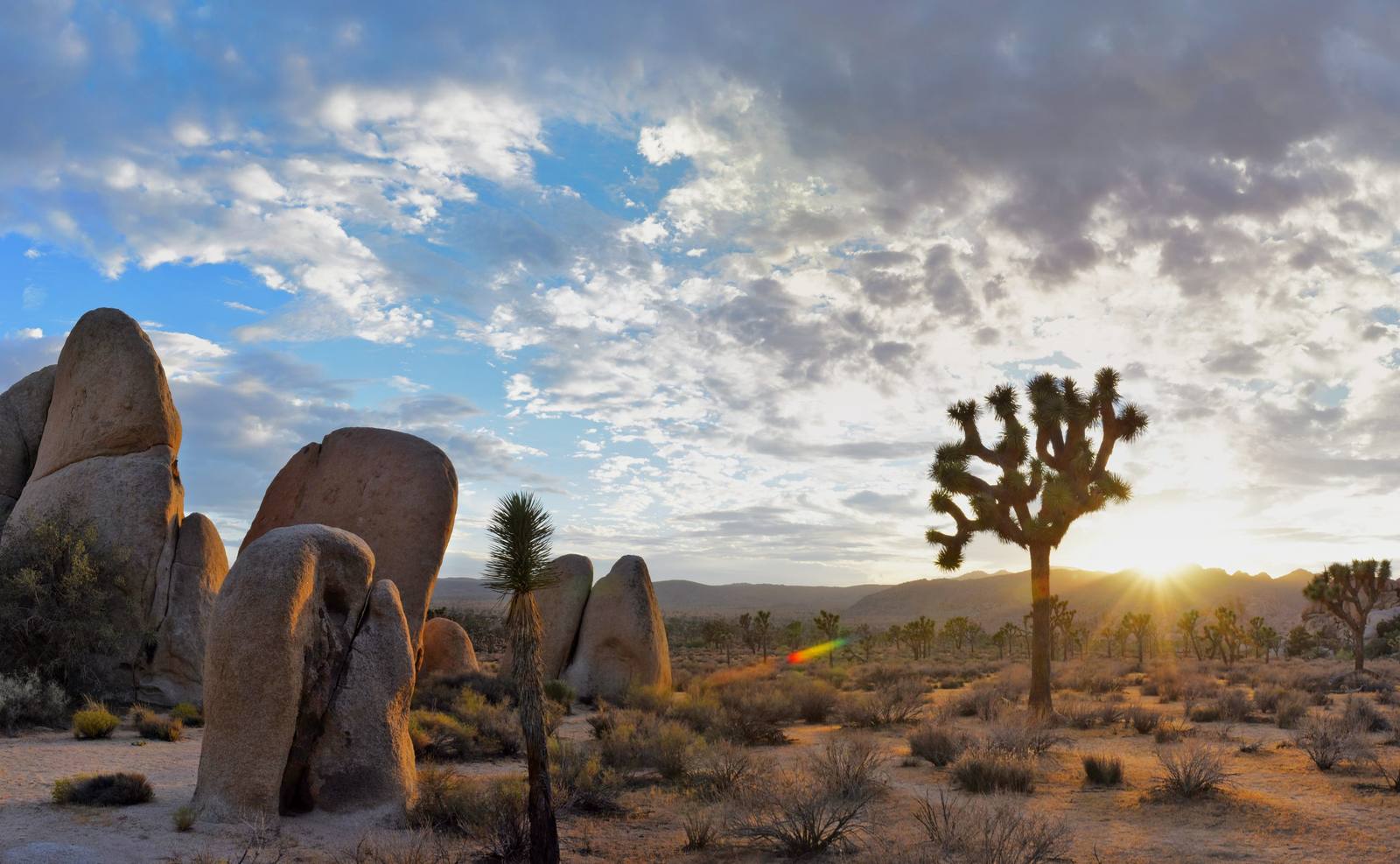
The park is a seam. Above about three thousand feet you are in the Mojave, cooler and wetter by desert standards, and that is where the Joshua trees grow among heaped domes of monzogranite. Drop east and the land falls into the Colorado Desert, hotter and drier, where creosote, ocotillo, and cholla take over and the Joshua trees quit entirely. Two ecosystems divided by elevation, with the boundary visible from the road.
The trees themselves are not trees. Yucca brevifolia is a yucca, closer kin to asparagus than to pine, and it grows in slow fits with no rings to count. Its pollination depends almost entirely on the yucca moth, and researchers expect its range inside the park to shrink considerably as the climate warms.
Protection came from Minerva Hoyt, a Pasadena gardener who watched collectors strip desert plants for Los Angeles yards and campaigned until Franklin Roosevelt set aside 825,000 acres as a national monument in 1936. Mining interests clawed back a quarter million acres in 1950; the California Desert Protection Act made it a national park on October 31, 1994, and it now runs near 792,000 acres, three-quarters of that designated wilderness.
Climbers come for the granite, everyone else for the boulder scrambles at Hidden Valley and Jumbo Rocks and the view from Keys View across the San Andreas to the Salton Sea. It became an International Dark Sky Park in 2017. Fill your tank and carry water; there is none inside.
Visitor Info
On the Map
Nearby
The closest stops worth working into your route
Historical markers nearby
Roadside plaques and monuments within a short detour