Home / Colorado / The Arkansas Valley & the Santa Fe Trail / Amache National Historic Site
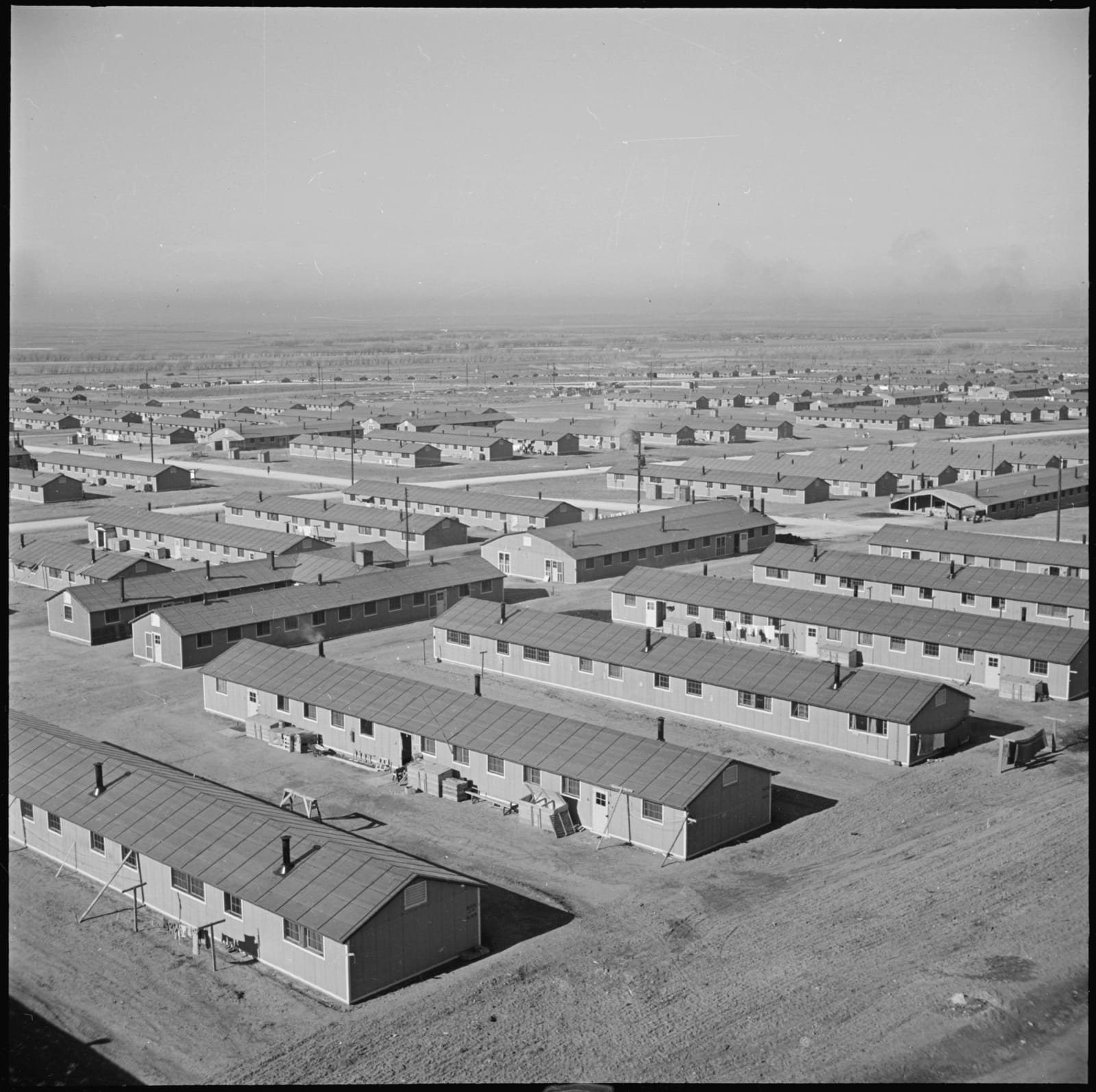
Rows of barracks at the Granada War Relocation Center, Amache, photographed by the War Relocation AuthorityTom Parker / public domain via Wikimedia Commons
🏛️Historical

Amache National Historic Site

Part ofThe Arkansas Valley & the Santa Fe Trail

A Japanese American incarceration camp kept from vanishing by a Granada social studies teacher and three decades of his high school students, a national park unit since 2024.

Off the Beaten PathSpringFallJapanese American HistoryFree
⏱
Duration
One to two hours with the museum.
🎟
Admission
Free.
📅
Best Season
Spring and fall.

The Story

From 1942 to 1945 the government held more than seven thousand people of Japanese ancestry, most of them American citizens, behind wire on a square mile of sand hills west of Granada. Its official name was the Granada Relocation Center. Because the camp's mail kept getting mixed up with the town's, it came to be called Amache. When the war ended the barracks were sold off and hauled away, and what remained was concrete foundations, the water tower, a reservoir, the road grid, the cemetery and the trees the incarcerees had planted.

In 1990 John Hopper, a new social studies teacher at Granada's school, took his students out to the site, and that year founded the Amache Preservation Society. For more than three decades successive classes have mowed and repaired the cemetery, interviewed survivors, gathered donated belongings into a small museum in an old house in town, and written the roadside exhibits now on the site. The Denver Central Optimists Club, founded in 1983, organized yearly pilgrimages and paid for a stone memorial at the cemetery to the incarcerees and to the men who left the camp to fight for the United States. The University of Denver runs archaeological field schools here, with Granada students working alongside.

The site became a National Historic Landmark in 2006. The Amache National Historic Site Act was signed on March 18, 2022, and after the town of Granada donated the land, the site was established as a unit of the National Park System on February 15, 2024. A reconstructed barrack, a guard tower and a water tower stand on Block 12H; the museum in Granada still opens by appointment.

Visitor Info

⏱
Time Needed
One to two hours with the museum.
🎟
Admission
Free.
📅
Best Season
Spring and fall.
🛣️
Highway
US-50

On the Map

Nearby

The closest stops worth working into your route

historical36 mi away
Sand Creek Massacre National Historic Site
Lost even to the survivors' descendants for more than a century, and found again in 1999 by tribal oral history, archives and a metal detector working together.
historical60 mi away
Bent's Old Fort National Historic Site
A cornfield with foundations in it by the 1960s, rebuilt from an army lieutenant's 1845 drawings in 160,000 machine-made adobes for the Bicentennial.
historical126 mi away
Beecher Island Battleground
A battlefield whose island is gone: the veterans' memorial of 1905 washed away in the flood of 1935, its pieces reset on the riverbank, the reunion still held every September.
historical131 mi away
Ludlow Tent Colony Site
The coal miners' union bought the ground, raised a granite monument over the pit in 1918, and restored it after someone knocked the heads off its figures in 2003.
geological149 mi away
Garden of the Gods
Named in 1859 by a surveyor who wanted no beer garden there, and given to the city in 1909 on the condition it stay free, dry and unbuilt.
historical151 mi away
Manitou Cliff Dwellings
A pueblo from McElmo Canyon, dismantled, shipped across the Rockies by rail and set in cement into a dynamited overhang as cliff dwellings it never was.