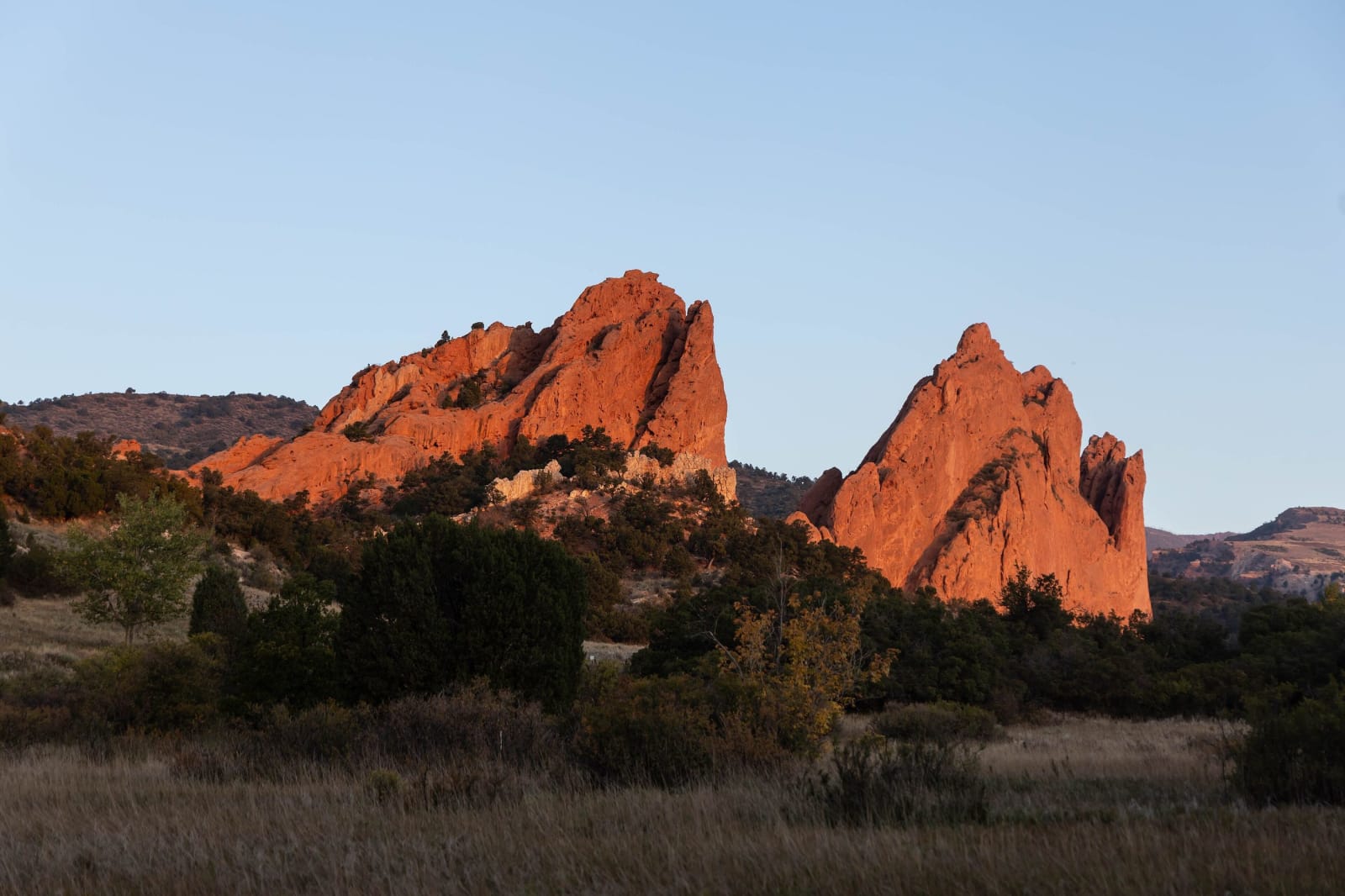
 mark byzewski / CC BY 2.0 via Wikimedia Commons
The Story
The fins of red and white sandstone stand on end along the foot of Pikes Peak, the same layers that lie flat under the plains tipped upright where the mountains rose. People camped among them for thousands of years, and the Ute Trail ran past them toward Ute Pass and the mountain parks; the Utes count this country as their homeland, with no story of coming from anywhere else.
The name came in August 1859, when two men laying out Colorado City, Melancthon Beach and Rufus Cable, rode through. Beach thought it would make a fine place for a beer garden; Cable, the younger and more romantic of the two, said it was fit for the gods to gather. Twenty years later the railroad man Charles Elliott Perkins, urged on by William Jackson Palmer, bought the core of the garden for a summer home he never built, and left it open to anyone who walked in.
After Perkins died, his children gave his 480 acres to Colorado Springs on Christmas Day 1909, with conditions written into the deed: the park would always be free to the public, it would always be called the Garden of the Gods, no liquor would be made or sold there, and nothing would be built but what the park needed. In the 1890s a merchant named Edwin Rice had in fact run a beer stand just east of the Kissing Camels, until Palmer bought him out. The park has since grown to more than 1,300 acres, and the paved Perkins Central Garden Trail runs among the tallest fins.
Visitor Info
On the Map
Nearby
The closest stops worth working into your route