 Jenshields1972 / CC0 via Wikimedia Commons
The Story
The tent colony at Ludlow was the largest of the camps the United Mine Workers set up in September 1913, when striking coal miners and their families, most of them immigrants from southern and eastern Europe and Mexico, were evicted from company housing in the southern coalfield. Its tents stood on land the union leased beside the railroad. After the attack of April 20, 1914, nothing of the colony was left standing but a pit under one of the burned tents.
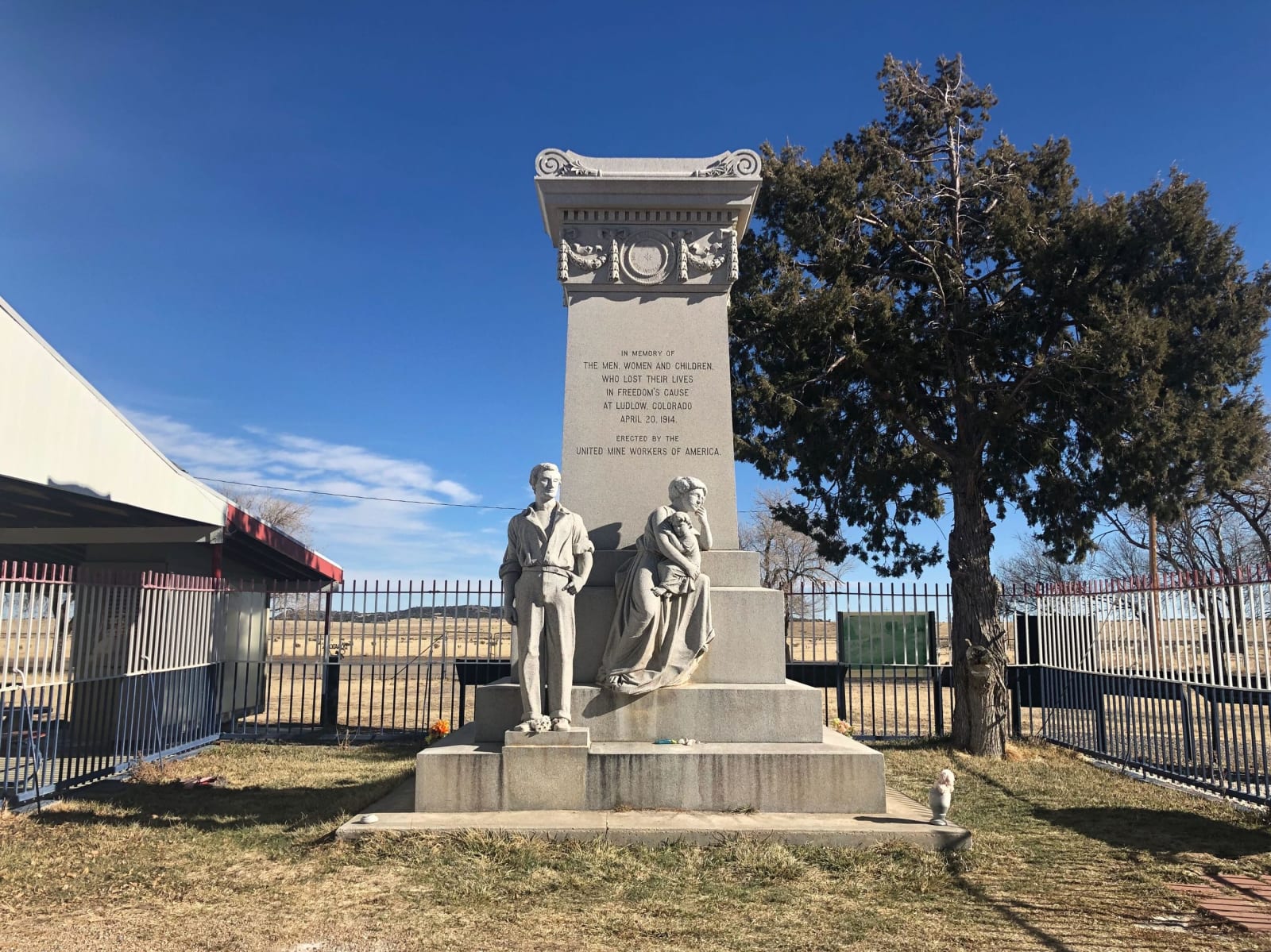
The union bought the site and dedicated a monument there on Memorial Day 1918: a granite shaft with the figures of a miner, and of a woman holding a child, at its base, made by a Springfield, Illinois, firm of Vermont granite. Steps lead down into the pit itself, now lined and roofed, where the women and children were found. The union still owns the ground and holds a memorial service every June, and people from the coal towns still come who descend from miners, guardsmen and company men alike.
Between May 7 and May 8, 2003, someone took a hammer to the monument and knocked the heads off the miner and the woman. No one was ever charged. The union raised the money to repair it, and the restored monument was rededicated in 2005. From 1997, archaeologists from the University of Denver and Binghamton University excavated the colony's tent floors and trash pits, recovering the toys, buttons and dishes of the families who had lived there. The site became a National Historic Landmark in 2009. It sits a mile west of Interstate 25 at the Ludlow exit, twelve miles north of Trinidad.
Visitor Info
On the Map
Nearby
The closest stops worth working into your route